Our words define us in many ways. As I write this, we are in Kigali, Rwanda, doing work and being inspired by the people and the wildlife we’ve seen on our travels around the country. This evening, I noticed a Facebook post by Michael Barth regarding the word, “Ubuntu.” I went to Wikipedia and found a lot of variations of this word in the Bantu languages of the southern parts of Africa, but all had similar philosophical meanings.
Archbishop Desmond Tutu gave a definition in his 1999 book, A person with Ubuntu is open and available to others, affirming of others, does not feel threatened that others are able and good, based from a proper self-assurance that comes from knowing that he or she belongs in a greater whole and is diminished when others are humiliated or diminished, when others are tortured or oppressed.
Peace and reconciliation are the terms often used to describe the work being done after the genocide, civil wars and guerrilla conflicts in many African nations. Those words embody the spirit of “Ubuntu” (“umunthu” in Malawi or “unhu” in Zimbabwe). The sense of respect and responsibility for others seems to be in each of these variants as part of a philosophy not too unlike the “golden rule” of western countries.
The idea of ubuntu just fell out of the Facebook cybersky, but it has been around a long time. U.S. President Theodore “Teddy” Roosevelt talked about the principle of ubuntu in a 1903 speech:
It is all-essential to the continuance of our healthy national life that we should recognize this community of interest among our people. The welfare of each of us is dependent fundamentally upon the welfare of all of us, and therefore in public life that man is the best representative of each of us who seeks to do good to each by doing good to all; in other words, whose endeavor it is not to represent any special class and promote merely that class’s selfish interests, but to represent all true and honest men of all sections and all classes and to work for their interests by working for our common country…
In these waning days of the election in the U.S., I hope we remember what unites us as humans and quit dwelling on that which divides us. We need a spirit of Ubuntu to find solutions to the many social, economic and environmental problems that plague us in the United States and abroad. It’s time to lay down the rhetoric and find a better way for America and the world. In a word – Ubuntu.
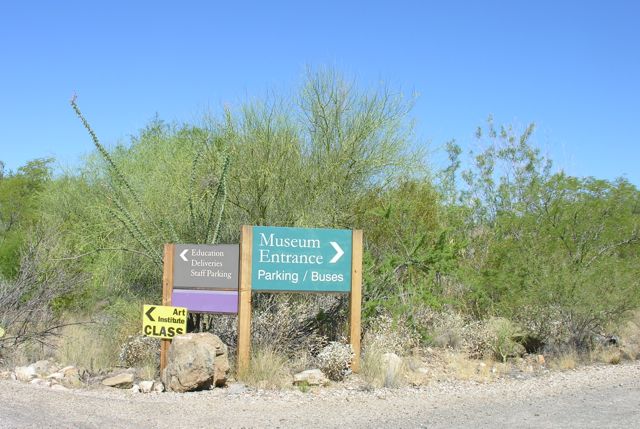
Great signs prepare people for a visit to an aquarium or other community attraction.
Much of what we do in life, travel and tourism is about expectations. About twenty years ago, I was leading an ecotour in Belize. I had two very unhappy ladies at a four-star resort, who could not believe there was no bathmat in their room. The food was great, the rooms were beautiful, the beds comfortable, the service was spectacular and the location was perfect on a gorgeous jungle river – but no bathmats. They expected a bathmat. I was taking them to the Jaguar Reserve the next night to sleep on cots in a concrete block building with scorpions hanging from the ceiling. The pit toilet was fifty feet behind the building in total darkness at night in jaguar and venomous snake country. I painted such a bleak picture of the next night’s venue, that on arrival, they commented kindly, “This is really much nicer than we expected.” Whew, I was glad I underpromised and overdelivered.
David Ausubel wrote about advance organizers in 1960. They help people understand what will happen next so that they are more likely to pay attention. In a presentation, the theme statement at the beginning is an advance organizer. If it is thought provoking and telegraphs the essence of the talk, my audience will stay tuned. If it is vague and topical, they do not know what to expect.
At a resort or in a community, the signs, brochures, Internet websites and advice from a travel consultant are advance organizers. If they are accurate or even suggest a little less than what we discover on arrival, it is good. If they set up an experience as world class and it’s not, we are disappointed.
Nametags on staff are advance organizers. Even uniforms that telegraph a worker’s role give advance information to visitors and make it easier for visitors to find the right person to talk to.
Many of us use TripAdvisor.com as our advance organizer. It does not give the company line about a tourism or community experience. It is the voice of other travelers telling us what we will find or may not find. Not all of us have the same experience at a place so the high and low scores may be suspect but a good strong 4 bubble score average tells me the place was pretty good by all accounts. And when a destination or attraction has fifty or sixty reviews, I have more confidence than when only three reviewers tell me glowing things or how the experience lacks in charm. I especially like the feature on TripAdvisor.com that allows the reviewer to give personal advice about which cabin or room to select at a hotel or resort. Nuanced decisions can make or break an experience.
In a seminar, training event or on a tour, the itinerary or agenda suggests what will happen and when. It is good to make the advance organizer as helpful as possible without being too specific. If you promise the morning break at 10:30 AM, some people will be unhappy with a 10:40 break. If you say “mid-morning break for coffee and snacks,” you have some wiggle room on when the break will occur.
Nametags are friendly cues about more than the person’s name when it includes a work title and professional affiliation.
A lot of what we call “culture shock” is the way advance organizers vary from nation to nation and community to community. Some cultures have very few cues about what will happen in a park or community experience. Attracting American or European guests may require a destination to work at some details as advance organizers. And, of course, not every American or European is the same. We live in sub-cultures that are slow in some geographic areas and fast in others. We have varied expectations, based on where we grew up or have spent most of our lives.
Great experiences are planned and executed by people who understand cultural competencies and know who their guests are likely to be. We can start to make more of our guests happy by providing a great Internet site that explains options and gives thoughtful advance information. We can greet guests with advance emails, appropriate signs, and excellent reception services and orientation. I love the fruit juice and warm wet towel offerings in East Africa on arrival at a hotel or safari lodge. It starts the conversation and experience in just the right way.
Advance organizers help people relax and enjoy an experience. They keep us from running away when we simply fear what will happen next at a place. Planning and training your staff to prepare for guests/visitors/tourists can make a big difference. If you need help in determining what your best advance organizers might be, let us know. We can help you improve your visitor experience and encourage guests to write that five bubble review at TripAdvisor.com.
Last weekend we visited Vandalia, Illinois, where I was raised. My old house is no longer there, but the memories remain. As we drove down eighth street, my mind drifted to summer evenings playing Kick the Can in the street. Some of my neighborhood friends from the 50s were at the all-class reunion, another reminder of childhood games in our yards and along the stream by the Scout house nearby.
I saw a very small child of five or six operating a lemonade stand in the front yard with a patient father sitting next to her, knowing she might be young for this business. But he didn’t tell her she was too young. He sat with her and did business. I remember the railroaders that would stop at my lemonade stand to buy a glass of lemonade or Koolaid for a nickel, more to encourage than for the quality of the beverage I would guess.
My dad sold lawn mowers, so we had dozens of big boxes to throw out each week. My lemonade stand was a modified 36” riding mower box. We built mazes and forts out of the large cardboard boxes before they met their fate in the ash pit (long before box recycling was considered). Richard Louv chronicles the power of building forts and hideouts for children in his book, Last Child in the Woods. Creativity is alive and well when kids have a chance to invent, fantasize and collaborate in the outdoors.
Some nature centers and parks are creating playscapes that engage a child’s imagination and they vary in size, theme and objectives. Cleveland Metroparks has a great playground with mastodon bones protruding from the sand and playspace. It’s a chance for kids to play paleonotologist. Austin Nature Center in Texas has a similar play area that allows kids to sweep the sand away to discover fossils that stay permanently embedded. These are interesting thematic play structures that I think would appeal to most kids.
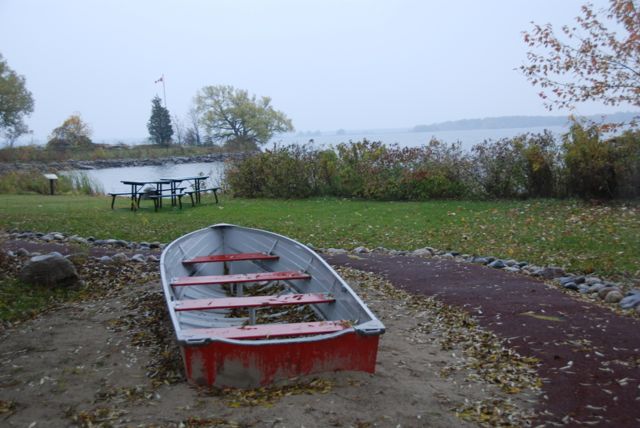
A playground in Canada along the St. Lawrence River has a boat for imaginary trips on the water in the safety of a playground.
A Canadian park along the St. Lawrence Seaway opposite New York State has a playground with a rowboat kids can sit in and play out there own adventure on the water on a padded pond with adult supervision. They also have a cabin with several levels and most of the walls missing, allowing some imaginary adventures.
But my favorites are not in my photos. They are the ones that kids pull from their imaginations. They are made of leaves, compacted snow, and discarded boxes. I am not around kids much these days. Do they still build these. I hope so. They are special because they are limited only by the child’s imagination.
Some very innovative programs are just setting aside areas in the woods and along streams where kids can still play. Wading, flipping rocks, floating stick boats and crawdad watching will always be an adventure for a child out in nature. Our electronic devices imagine games, worlds and intrigue of varied kinds. I can understand a kid being interested in these high voltage games. But the planet is still an organic place where kids can discover themselves as they imagine the fort they are building.
As we drove by the Town Branch in Vandalia, I told Lisa about the wide spot in the stream that used to freeze and we played hockey with sticks we found and any sort of puck we could create from natural debris. She reminded me she has heard this story a dozen times before. These memories carry with us through life and the creative choices we make in our work started in the woods, out in the yard and playing in a stream. We need to keep facilitating these opportunities before everything fun in nature has a sign restricting the imagination of youngsters.
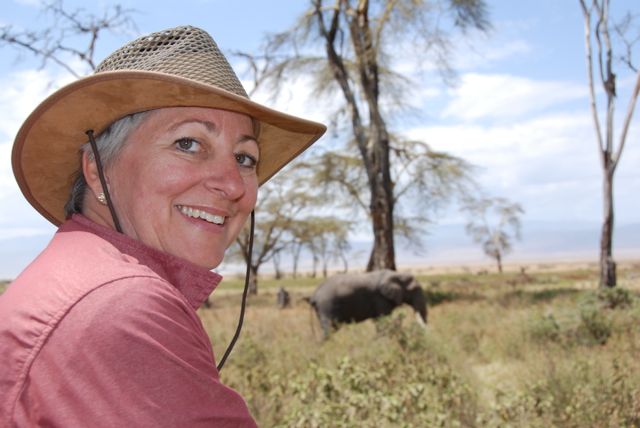
Lisa watching elephants in Ngorogoro Crater, Tanzania.
Travel is not only broadening I’ve realized, but burdening too. I carry these lives and places with me but I’m grateful for the ballast. It’s keeping me from tipping into total complacency. Judith Stone
It’s been almost ten years since I saw my first wild elephants in Kenya. They took my breath away. Having only been exposed to Asian elephants chained to a concrete floor in the zoo, I had no idea how magnificent and utterly charming they would be. They had me enchanted and are one of the major reasons I keep going back to Africa. Listening to the quiet generated by these enormous animals is a lesson in humility. Elephants, for all their size and strength, are subtle on a scale impossible for humans to understand. Their communication with each other and their obvious love of family are nothing short of inspirational. They have touched me in an unexplainable way and earned my respect and support for my lifetime.
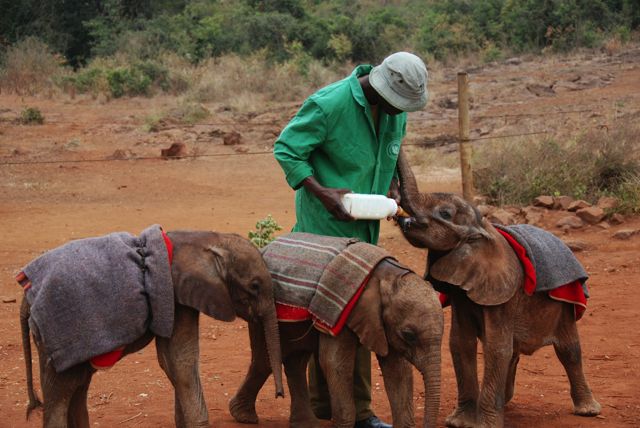
The David Sheldrick Wildlife Trust in Nairobi, Kenya, gives very special care to orphaned elephants before releasing them back to Tsavo National Park.
In 1989, trade in African elephant ivory was banned. Like most people who care about wild animals, I cheered when it seemed that elephants, as a species, were beginning to recover from the devastation of poaching and habitat loss that threatened to wipe them out before the turn of the century. In my trips to Africa, talking to elephant researchers, guides, and park rangers, I was certainly aware that the occasional poaching incident was still taking place, but I was under the impression that the 1989 ban had worked its magic and that elephants were safely ensconced in national parks, game reserves, and still roaming wild and free, without any significant danger to their numbers. I contribute to the David Sheldrick Wildlife Trust’s elephant orphanage in Nairobi, and I read the stories of the orphaned elephants that live there with great sadness. Some of the orphans are clearly the result of poaching (female elephants in Africa have tusks, unlike their Asian cousins), but many come to the facility because they were abandoned after falling into a well or after their mother dies from natural causes.
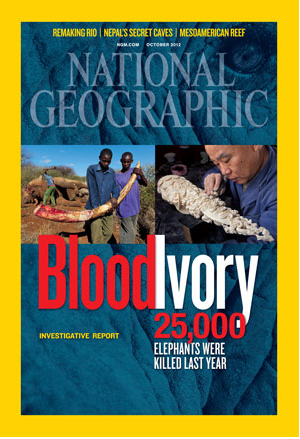
I consider myself a fairly well-informed citizen of the world, and I thought I was paying attention to elephants, so I was shocked to read the latest issue of National Geographic’s article “Blood Ivory.” Bryan Christy’s heartrending report estimates that at least 25,000 elephants are killed every year, left to rot after having their tusks hacked off for the illicit trade in ivory. With a world population of perhaps only 500,000 (after an estimated 1.3 million in 1979), that’s an appalling number, especially when it is completely unnecessary. Apparently, I haven’t been paying enough attention. Aside from wondering how on earth people could be doing something this repulsive, I wonder how on earth I didn’t know about it. I actually seek out information on elephants and I had no idea of the magnitude of the problem or that some wildlife organizations that should be helping to stop this slaughter may actually be complicit in the crimes.
It makes me wonder what else I don’t know about. How easy it is to get complacent about what’s happening in our world, our communities, our neighborhoods. How many organizations that do good things aren’t getting their messages out? How many get ignored? We live in a world that requires us to process information at an alarming rate just to keep up – the messages that matter to us may get lost amidst it all. Making your message heard isn’t necessarily about how loud, how clever, or how often it gets repeated, it’s about whether it connects with the intended audience. In short, an interpretive approach to communication that forges both emotional and intellectual connections may have better success.
An African elephant female cares for her youngster for years.
Bryan Christy and National Geographic convinced me I need to pay better attention to my beloved elephants. It’s not just about the numbers of elephants in peril, it’s about what they mean to me. If it matters, then complacency is not an option. I’m not sure what I can do, but I intend to start figuring that out. I hope other science organizations, social organizations, and individuals with important messages to share will find better ways to keep us all from slipping into total complacency.
Each September the Sustainable Living Fair is held in Fort Collins. We look forward to it. It is one of those organic events that appeal to lots of different kinds of folks. You can wander down the bike trail and then walk the last hundred yards to the entry gate or drive and park in several lots and walk the trail into the event.
Booths are set up in a field north of the Cache la Poudre River. Tents provide shelter for seminars with hands-on activities where people can try their hand at building a straw bale structure or weaving a rug from raw wool. A large stage with straw bale seating provides an open-air theater. We could hear the sounds of a bluegrass group tuning up when we arrived on Sunday. Soon the chorus of “Fox on the Run” was drifting through the air. Planet Bluegrass is a co-sponsor of the event along with New Belgium Brewery, City of Fort Collins, Re-Direct Guide, The Point 99.9 FM and two dozen or more other contributors. This event captures the imagination of everyone from realtors and architects to a worm composting guru, beekeepers, outdoor clothiers, and the expected environmental nonprofits.
Keynote speakers in the past have included celebrities and sustainability experts like Woody Harrelson, Amy Goodman, Francis Moore Lappe and Ed Begley, Jr. This year it was filmmaker Alexandra Cousteau, granddaughter of Jacques Cousteau, along with Seleyn DeYarus, the CEO of Best Organics, Rachel Kaplan of Urban Homesteading fame and Dr. Wendy Pabich, a water expert who is also an artist. I confess that we skipped the keynotes this year, though I enjoyed Ed Begley’s talk last year. It’s just not what I wanted to do on a beautiful Colorado day like we were having. But these folks have great messages and many people come just for that.
We wandered down one line of exhibitors chatting with friends at Your True Nature, where I bought Advice from the Night Sky, a great glow in the dark T-shirt. We enjoyed seeing a baby alpaca with its mom and related fiber products. The green technology exhibits were in all directions from solar collectors to post and beam construction with native trees. The modern yurt is an interesting structure to tour and imagine as your personal getaway. It’s a great place to get ideas, get re-enthused about your environmental passions and just learn some new skills. Last year I listened to the bee guardian talk and immediately ordered a top bar Kenya-type hive. I had seen them for more than a decade and did not understand why they might be better for backyard beekeeping than the traditional Langstroth Hive. I’m convinced. This event is a great place to connect with emerging technologies and some very old tried and true approaches to sustainable practices.
And then there was lunch. I like lunch a lot. We perused the offerings from gyros to Toonces (amazing turkey, cheese, avocado on a grilled wheat bun, a Pickle Barrel specialty) with kebabs and varied health foods as well. Many different food vendors were there along with New Belgium Brewing and Odell Brewing, both sponsors of the event. We were down with the Toonces and gyro, and a few homemade chocolate chip cookies. I love a great Fat Tire beer but stay away from such in the midday.
We saw every booth, chatted with many good people doing interesting work, enjoyed catching up with friends we saw there, and grabbed a grilled peach smothered with Chantilly cream on the way out in the late afternoon. As we hiked back, we enjoyed watching kids using a rope swing to get a quick dip in the chilly mountain water of the Cache la Poudre. With temperatures in the low 90s, they had the right idea. After several years of attendance, the event is predictable and that’s a compliment in my view. It provides a great outing for very little money ($8 per adult) with the opportunity to learn more about what’s going on in the community related to sustainable practices.
What’s happening in your community that brings people new ideas, great food and a chance to commune with nature? How do we work together in communities to make sustainability more than a pipe dream?
Entering the Arizona Sonora Desert Museum the scene is set with native landscaping.
Actually the plants, the landscaping and the grounds do talk. How we plan and care for the landscape at nature centers, zoos, museums, aquariums and communities tell our audience more than we think.
We see organizations that interpret nature, history and anthropology whose buildings have the same landscaping as the mall nearby or an urban boulevard. Though it may “blend” with other local landscaping, such an approach fails to communicate the theme of your unique facility. It’s a missed opportunity to reinforce your message through landscape features, upsetting the design balance of the site. A talented landscape architect plugged into an interpretive project must know what the landscaping, flow of traffic and entry experience should communicate and attempt to create balance between the building, interpretive media, and the landscape based on that message.
An organization teaching sustainability and conservation that has a bluegrass lawn and irrigation system to support it in an arid climate steps on its message. A local or regional natural history organization with non-native trees and shrubs planted around the building steps on its message. A community that wants a very strong regional identity must carefully plan streetscaping that matches the local environment to avoid looking like every other part of the country.
We teach experience planning for communities and heritage sites as having the following components: Decision – Entry – Connections – Exit – Commitment. The entry phase sets up the connection phase, the heart of an experience. If an asphalt parking lot with a few linden, locusts and junipers is the landscaping, it could be any mall in America. That generic look works well for ease of maintenance, but it does nothing to help residents or visitors connect with your identity and message.
The parking area at Arizona Sonora Desert Museum is beautifully landscaped with the native plants of that region. The hard surfaces of the parking lot disappear to some degree due to the lush growth of palo verde and other typical plants. The entire property is beautifully landscaped in native plants to look like the local landscape, purposely blending not looking planted. Jones and Jones, the landscape architects, are rightfully proud of this incredible place. They made the property seem to blend with parklands around it, which is part of that world class desert museum experience. The Lady Bird Johnson Wildflower Center in Austin, Texas uses their parking lot as an interpretive experience, having used porous materials that allows rain to soak through rather than running off as happens in a typical asphalt parking lot.
We expect an arboretum or botanical garden with an international scope of exhibits to create diverse environments. Plants are their business, but even there we prefer seeing more contextual exhibits of plants than mono-cultural plantings that would be more suitable in a backyard garden. Topiaries that tie into the theme of the place can be interesting and useful.
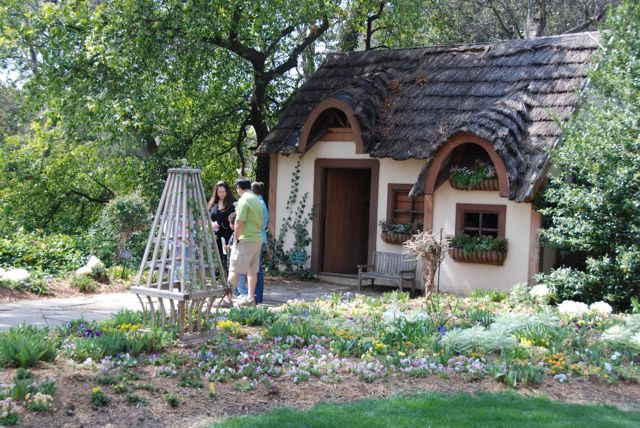
A cottage from a specific cultural period at a botanic garden is shown at its best with landscaping of a type that cottage would have had in a typical community.
When done well, landscaping can teach the concepts we hope to convey, like xeriscaping for water conservation, heirloom varieties of plants to recreate earlier cultural landscapes and the importance of pollinators with their special adaptations. The design of the grounds, trails and bridges reveals the site or community and helps create a strong sense of place. Done without consideration of the message, it creates confusion that detracts from the holistic experience.
It’s always a bit of a shock to hear that an organization has hired an architect and a landscape architect, designed the building and grounds and then wants to add the “interpretives” to finish it off. Every piece of the experience – facilities, landscape, and interpretive media – tells the story. To keep these elements in balance, hire the interpretive planner first to determine the central message so that the entire experience works together as architects, landscape architects, and designers continue to add layers of nuance. No one would design an aircraft or motor vehicle without first thinking about how it will be used . . . it’s time to give interpretive sites and communities the same regard so that we create the strong sense of place that tells the stories of our cultures, environment, and beliefs without words. It’s time to let the plants talk.
A shark topiary at an urban aquarium makes its own interesting statement about your arrival at a place of ocean animals and environments.
I have never played Fantasy Football and would not know how to start. I do watch some reality shows on TV (American Idol, The Amazing Race, America’s Got Talent, The Voice, Survivor) and that has led to my own fantasies about a new reality show, Ranger 2.0 .
The premise is to take unemployed young people from diverse backgrounds, drop them into an old Civilian Conservation Corps (CCC) or Youth Conservation Corps (YCC) Camp and have them learn the varied skills of park and forest rangers – firefighting, maintenance, trail construction, law enforcement, research and interpretation. Refurbishing the camp would be the first job they undertake. Take them each week on special outings to compete and earn special rewards. Give scholarships to those who win their weekly events or send them on special excursions to put telemetry equipment on wolves or bears.
The camp managers and drill instructors would be veterans of foreign service (Rangers, Seals, Special Forces, Recon Marines) and park/forest rangers with deep experience in diverse settings. The show would do what reality TV does so well, blend the personal stories of troubled individuals with the frustrations, conversations and grumbling that goes with any communal work camp. The transformation would be celebrated near the end with the best of the camp being hired as professional park and forest rangers.
The entire show would blend the history of the CCC and YCC camps with the modern challenge of managing forests, parks and protected areas. It would help the audience understand forest fuels accumulation, the hazards of beetle kill areas, the dangers of wildfire and the ways global climate change will have impact on public lands.
The human side of this could explore the challenge of veterans returning from war to civilian jobs as they provide discipline and structured basic training for the camp. It would share the amazing diversity of experiences of a ranger who moves quickly from mundane maintenance to varied emergency responses. It would expose the importance of interpreting thoughtfully to the public about everything imaginable from dogs off leash to the dangers of risky behavior around charismatic megafauna like bears and moose.
National Park Service photo
It could be used as a way to build a better understanding of diverse audiences about the importance of public lands and the ability of these unique jobs to transform people. CCC, YCC, Young Adult Conservation Corps and Americorps have each held very important value for people who went through those programs. They could be brought into camp to share their stories from the earlier programs (we have missed that chance for the CCC, but not the others). When I worked as a Park Ranger in an old CCC shelter converted into a Visitor Center in the 1970s, I listened to great stories from elderly men who had built the camp forty years earlier. Some of these programs are still working in parks, forests and communities and continue the legacy of transformation.
OK, so it is a fantasy. I watch episodes in my head and wonder how you would get this to be an idea that someone in TV would pursue. I’ll keep thinking about it. If you know a big time producer, pitch the idea for me. I even know where several vintage CCC and YCC camps still exist and need another adaptive reuse. When do we start?
Pipers arrive for the festival decked out in their finest.
We went to the Longs Peak Scottish-Irish Festival this past Saturday in Estes Park, Colorado. We both have some family connections to Celtic lineages, but would have gone if it had been an Icelandic Festival. We like outdoor events and we’re always curious about how they are managed, since we have run large events and know the challenges.
The music was great and all related to the theme of the event with a variety of bands, singers, and individual musicians. The food was terrific and some was related to the theme with some vendors selling meat pies, haggis, scones and other food familiar in England, Scotland, Wales, and Ireland. Other vendors fell back on American favorites with corn on the cob, barbecue, sweet potato fries, even deep fried Oreos. Local high school students directed parking around the nearby school grounds, collecting $5 per car to support their band. This well-managed effort made it clear that the money was for that purpose and I would wager that it quells any complaints about parking fees. Most of us would rather contribute to the local school than an unidentifiable entrepreneur.
The dog shows, pipe and drum bands, dance contests and color guards were terrific. We especially enjoyed the Scottish terrier bounding over six inch jumps in the agility course and a somewhat reluctant bearded collie dodging in and out of agility gates, who seemed more interested in getting petted by the crowd around the fence, which he diverted to frequently.
Delicious meat pies made a great lunch.
We spent much of our time in the music tents where groups like Brigadoon, Giants Dance, and The Black Irish Band Albannach entertained standing room only crowds with traditional music. The tattoo of drums, wail of bagpipes and trills of flutes in spontaneous jam sessions floated through the air at every turn, connecting the various venues without intention as individual musicians connected with friends throughout the grounds. I like ethnic events that stick to their theme and are not tempted to do something very out of line. We saw very little other than Scottish and Irish (Celtic) culture at the event.
Plenty of people wore kilts of all kinds – beautiful tartan plaids with all of the traditional gear that goes with both men and women’s skirts. Some preferred working kilts made of camouflage material, leather, and other utility cloths. I wore my best jeans being a mixed breed and a bit too tight to spring for a full Scottish outfit when we visited that beautiful nation a few years ago (my Scots ancestry at war internally about whether to dress the part or save the money). The great mix of individuals and their obvious pride in their heritage makes people watching a great part of this event.
Celtic music was played to Standing Room Only crowds in the tents.
Like all outdoor events we visit, there are some things we hope will improve from year to year since this is an annual event, providing the opportunity to learn from previous years. We stood in line almost 20 minutes to buy a ticket, stood in line 30 minutes to buy food, and watched others stand in line even longer to get a beer. It seems unlikely that event managers were caught by surprise by the size of the crowd, given attendance in years past, but still they didn’t seem to make some simple adjustments that might have improved the flow. The Program Guide, sold on the grounds for $5, is colorful and has lots of ads, but is in need of professional graphic design and editing. The schedule was confusing, especially since venue names were not clear and no map of the grounds was provided. We, and others, simply wandered around feeling lost, often arriving at the closing moments of a performance we wanted to catch and no idea if or when it would be repeated. The grounds lacked recycling containers so glass, plastic and paper all went with the food waste and other trash, the containers for which were too few and far between which meant that litter was everywhere. Most surrounding communities in Colorado recycle at every event so I think the lack of it gets noticed. The restrooms, on the other hand, were a real success. Portajohns, marked as being for men, women, or unisex, were readily available throughout the grounds with no lines.
We try to get to this particular festival every three years or so and we will definitely take part again. The entry fee of $25 per adult seemed reasonable for the quality and quantity of music alone. Plenty of concessions sell appropriate Celtic clothing, jewelry, icons, coats of arms, shortbread, and more, making it easy to find just the right souvenir of the day.
Any celebration of culture and community presents an opportunity to keep traditions alive. Think about the event that you could be doing that might benefit local schools and nonprofits, while celebrating cultural traditions on which your community was founded. Preparing an interpretive plan for that event ensures that it
A piper chats on his cell phone before marching onto the parade ground.
stays thematic and generates the kinds of rewards your community is looking for. Let us know if we can help.
Digital Book Today is one of of the best of several sites that will assist you in learning about digital publishing.
Digital publishing is democratizing book publishing much the way digital video recording has done with video storytelling. Anyone who is driven to write a book can self-publish without a big investment. A digital book can be put on Amazon, Apple or Smashword for the cost of having your book professionally edited, proofread and formatted for this medium, which is nothing like the cost of printing 5,000 books, the minimum number of books required to print economically just a decade ago.
CreateSpace will convert your book into a Print on Demand (POD) book for Amazon. Buyers can order a physical book that is perfect bound and attractive. Again the investment is minimal compared to printing a large order of books that invariably live in storage for months, years, or even decades. Digital output offset presses are also making it reasonable to print small runs of just hundreds of a book at a reasonable price instead of thousands. Gone are the color separations and extreme printing setup costs, a result of digital files and amazing photo and color editing processes by computer software.
Kindle Direct Publishing is Amazon’s program for self-publishing and they provide many free book resources to assist you.
But if Amazon is putting up 3,000 new books a day, most of which will not find much of an audience, isn’t it still impossible to sell your book? Most people who self-publish a book use the “message in a bottle” marketing approach. They put it on Amazon as a Kindle file or on Apple and hope that it sells. It usually will sell a very few to friends and relatives this way. Granted, some books do not deserve much of an audience, but a well-written and well-edited book should find a readership, provided you work hard to promote the product and it has enough of an audience interested in the subject matter.
The resources to teach you are everywhere and inexpensive. The online community of writers, book promoters and publishing experts is vast and they will talk to you through regional publishing networks, online forums, blogs and their digital books for sale at Apple.com or Amazon.com or Smashwords.com. Dan Poynter’s self-publishing books are some of the best resources for budding self-published authors.
So what are the opportunities for communities to take advantage of the shift in the publishing industry? It was once very expensive to encourage niche books about your community, local heroes, and very specific resources or scenery in your area. Now the barriers to publishing micro-niche books are gone.
Here are five things any community can do that might help the community and local talent.
1. Encourage local authors and photographers through workshops and symposia, editorial assistance and grants to put local stories and resources in print (novels, cookbooks, natural and cultural history books, biographies, etc.).
2. Find the existing local authors in your community and promote their work. They will appreciate it and likely will write more about your community. Link books about your community to your website as additional resources to tantalize visitors and help local people learn more about the community easily.
3. Conduct local or regional contests for books on specific themes and reward the author or photographer by paying their editing and upload costs. They make the profit, but the community or organization gets the recognition and other benefits.
4. Give annual awards to authors or photographers who publish books or videos that showcase your community or organization in a thoughtful manner.
5. Help children publish books they write or illustrate to encourage and promote better writing in local schools.
A community can hope and wait for their local stories to develop and get into print or be a partner with local writers to encourage these efforts. There can be a mutualistic relationship between a community and talented people who choose to live there. Tapping into that talent is good for everyone involved.
–Tim Merriman
P.S. From Sept. 7-9, our award winning non-fiction book, Put the HEART Back In Your Community is FREE for those who read on a Kindle, iPad or other ereader.
One of my favorite community events was held this past Saturday in downtown Fort Collins, the Thirteenth Annual Tour de Fat (TDF)sponsored by New Belgium Brewery. Bikes and beer go together in interesting ways with the New Belgium beer and bike culture.
We have always gone downtown to simply watch the bike parade – an estimated 20,000 people rode in it this year, most in unusual homemade costumes. This year, I drove to the Oak Street Farmer’s Market early to buy some I d’éclair coffee caramel eclairs (wonderful treats, Elizabeth – thanks). I was amused that two hours before the bike parade, people on Mountain Ave. were setting couches in the grass boulevard with coffee tables to watch the event. This parade is a little different because local folks have to decide, “Am I in
Some ride the parade and spend the day as thematic teams – gnomes maybe.
the parade this year or watching it and what exotic costume will I wear either way?” Both activities seem equally fun. I’ve never ridden in it, but it is hilarious to watch. Just driving toward Old Town we saw people on bikes dressed like Fred Flintstone, elves, and varied other characters from movies or their own wild imaginations. I especially enjoyed the group wearing white pants, white shirts, red sashes and red neckerchiefs. This is the traditional garb of the “incierro” in Pamplona (running of the bulls). Each of their bikes had an inflatable bull’s head on it – cute.
This year, we looked in on the part of the event we have missed in other years. As the day goes on, the event moves from the parade to an area of several blocks that encompass city parks and parking lots. A variety of stages and beer garden areas offer places where thousands of local people and out of towners gather to enjoy music and, of course, New Belgium beer.
Even Harry showed up, hmmmm.
One of the main activities at each of the fifteen Tour de Fat events around the nation is the “trade my car for a bike.” Individuals go onstage and give up a car in trade for a bike, while pledging to stay car-free for a year. The car is auctioned with funds benefitting local bike clubs. All of the TDF concessions last year in Fort Collins alone yielded $87,000 for local charities. Nationwide, the events generated $401,563 in 2011 for charity.
New Belgium Brewery, located near Old Town Fort Collins, has a great tasting room in the brewery and a wonderful interpretive tour. They measure success by the triple bottom line – economy, equity, ecology. They power the brewery with wind power and serve as advocates for keeping the Cache la Poudre River undammed. And they take their amazing spirit of community on the road via the Tour de Fat in fifteen cities. Catch one in a community near you.

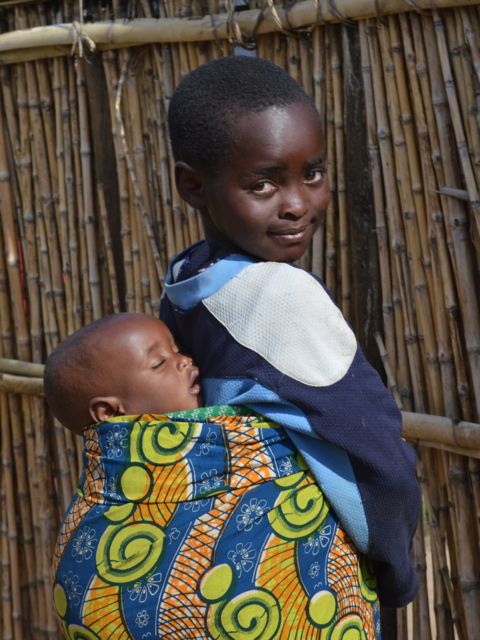 Our words define us in many ways. As I write this, we are in Kigali, Rwanda, doing work and being inspired by the people and the wildlife we’ve seen on our travels around the country. This evening, I noticed a Facebook post by Michael Barth regarding the word, “Ubuntu.” I went to Wikipedia and found a lot of variations of this word in the Bantu languages of the southern parts of Africa, but all had similar philosophical meanings.