Community Action in Action


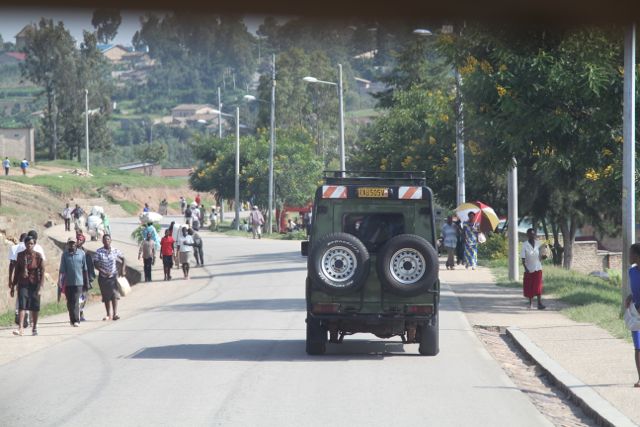
rwandaOne of the things that immediately strikes travelers to Rwanda is how clean the country is. In all the places I’ve been, including the U.S., litter on the ground is a serious issue. You see it almost everywhere, blowing in the wind, lining gutters, hanging where it’s been caught on fences, floating in waterways. What would happen if every single person, every day, no matter where they live, would think about what they use and find ways to recycle, reduce or reuse it? What would happen if for those few things that must be thrown away, every single person would dispose of them properly? And for those things that might still end up on the landscape, what would happen if every single person would bend down and pick up at least two pieces of trash every day?


In the U.S. alone, the Environmental Protection Agency estimates every person generates about 4.5 pounds of trash per day. That’s 230 million tons of trash in the U.S. every year. Only about one-fourth of it is recycled or reused and most of the rest goes into landfills or is incinerated. But what happens to the trash that never makes it into the landfill or incinerator? It’s fair to say that it lays on the land until it blows away . . . but it’s got to end up somewhere eventually when the wind stops blowing. So where does it all go? Many people have heard about the Great Pacific Garbage Patch, an area of floating debris of over 7 million square miles. According to National Geographic, the garbage patch is “so far from any country’s coastline, no nation will take responsibility or provide the funding to clean it up.” Lack of responsibility seems to be the reason for the inordinate amounts of garbage that collect everywhere on our planet. What if everyone decided it’s their own responsibility to keep our world clean?


Sadly, I’m guessing that it won’t happen voluntarily. To change the norms that allow people to blithely discard their trash, there must be a combination of incentive, enforcement, and education. What makes Rwanda so clean? The practice of umuganda has changed the norms in this small country. Once a month, on the third Saturday, everyone in the country stops what they are doing for three hours and commits to community service actions, most frequently removing any debris that has collected in public view. The amazing thing to me is that so little appears to collect in between Umuganda Saturdays. When you get used to seeing things clean, it goes a long way toward encouraging you to keep it that way. It also helps that you won’t find a plastic bag anywhere in the country. Plastic bags are not used anywhere in the entire country or even allowed to enter the country. Travelers are required to dispose of any plastic bags before exiting the airport. It’s a positive step that I’m happy to report is now occurring in many U.S. cities.


I’d like to challenge everyone who reads this to commit him or her self to encourage community action in action. If you can’t initiate an Umuganda approach on a large scale, start small. Pledge to pick up two pieces of litter on the landscape every day and encourage others to do the same. In fact, while you’re at it, decide that you’re never going to walk past a piece of litter again. If you see it, pick it up and dispose of it appropriately. Jane Goodall says that everything you do makes a difference one way or another and only you can decide what you want that difference to be. I agree wholeheartedly. Individually, we may not be able to make what feels like significant change, but we can all be responsible for the decisions we make every day.


– Lisa Brochu


Crowdfunding – No Silver Bullet


Screen Shot 2014-05-16 at 6.20.04 AM
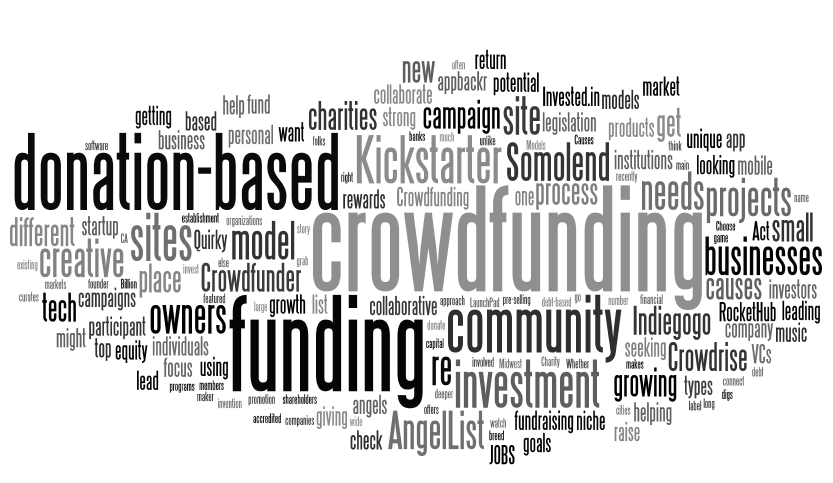
If you manage a program, I’m guessing one of the things constantly on your to-do list is raising funds for a variety of projects. It’s a great fantasy to imagine there’s some new simple system, a silver bullet that will eliminate the hard work traditionally associated with fundraising. The ease of Internet access in the last few years brought us the new trend of crowdfunding that promised to be one of the easiest ways to generate funds from the broader public. My optimistic side continues to believe that. My pessimistic side can see the flaws in the system. But statistics tell us that crowdfunding raised 2.7 billion dollars in 2012 and nearly double that in 2013, so this young and growing approach to finding donors and investors is definitely working for some.


Forbes.com has an article entitled Top 10 Crowdfunding Sites for Fundraising. It gives some background for each site and the types of projects for which they work best. Some are better for nonprofits and worthy causes, while others work better for inventors or individuals looking for investors for their creative endeavors. Fundamentally, crowdfunding sites provide web-based software that assists you in making your case, promoting the project, collecting funds, and evaluating your progress as you go.


Recently, we selected Indiegogo.com to raise funds to buy computers for Rwandan guides at national parks. Indiegogo.com is only one of many options but we felt it matched our need better than the others.


What we learned:

• Your natural constituents or warm markets are still the most likely to contribute.

• It can take a lot of promotion and you still may get only a little return.

• Non-target messaging and news releases elicit little or no response.

• Facebook proved to be the best channel to get interest; Twitter had no impact.

• The crowdfunding sites are the big winners for they get their fees regardless of your success.

• It takes practice to use this kind of tool skillfully, particularly in learning how to state your case and promote it.

• Personal stories help get people emotionally involved, but they take some time to collect and refine into a great case statement.


We raised only $800 with an objective of $10,000 so we were very unsuccessful when you consider an 8% performance. And all donors were from predictable sources – people we know well, colleagues in our profession, and people who know something about Rwanda and the challenges created by the genocide twenty years ago. Running a campaign without a nonprofit organization umbrella is also challenging. In the past, I’ve always represented the fundraising interests of a 501c3 charity that had members, which provided a large group of dedicated constituents to ask for help in raising funds. In my current role as a private business owner and consultant, all I have now is a passion for doing good work with and for good people. I confess that it’s disappointing to learn that many people simply will not donate without the added incentive of a tax exemption, no matter how worthy the cause.


So the bad news is that crowdfunding does not seem to be a silver bullet. The great news for us is that the efforts we made through Indiegogo.com led to donations of funds that will send three PCs and one iPad to four guides in Rwanda at Nyungwe National Park on May 19 with Dr. Beth Kaplin, an ecologist from Vermont who teaches in Huye, Rwanda. All four guides are working on Master’s degrees supporting families and doing amazing work with volunteer co-ops in their communities. We owe a special debt of thanks to our donors:

Pam and Mike Neely             Mary Jane and Mike Swope

Nicole Deufel (U.K.)              Lisa Brochu and Tim Merriman

Carole Ann Moorhead and Luke George

Marji Trinen

We will not quit, though our Indiegogo.com campaign has ended. This effort was just the beginning. If you are willing to help a Rwandan National Park Guide bridge the digital divide, you can:

  1. Contact us to donate any amount you can afford towards the purchase of laptops or iPads;
  2. Donate a laptop or iPad less than 5 years old that we will refurbish;
  3. Ask your friends to help in whatever way they can.

There are a total of more than 50 guides and hosts at parks we hope to help. It may take a year or two, but we will keep working on it.


If you’ve thought about crowdfunding as a source of funds for a special project, be sure to plan and prepare for months, read as much as you can about the various websites, and develop a promotions plan to help you get as much as benefit as you can from the campaign. Despite its shortcomings, crowdfunding is still likely to become an important way to approach some of those projects still lingering on your to-do list.


– Tim Merriman

5 Reasons to Share Personal Stories

boysplaytidepoolbestWhen I was a young boy I spent every free hour wading in the Town Branch, a local stream near my home in Vandalia, Illinois. I was looking for crawdads, my favorite critter in nature, but I studied everything else that turned up around them. Tadpoles, minnows, turtles and mud puppies were always fun encounters while crawdad hunting. My mother was accustomed to finding buckets with murky water at our home with an aquatic animal brought home for closer study. I sold the tiny “creek lobsters” to bait stores and invested the income in aquariums and seine nets. I knew I wanted to be a biologist when I grew up.


I’ve told that personal story many times as an introduction to a new group in training. It often causes others to talk about their first passions in the outdoors. I first heard of “personal stories” as a training technique from Disney trainers in their leadership seminars in Orlando, Florida. They emphasized how important those were in building a culture of personal communication. The stories tell much more than one incident. They begin a conversation with a guest or new acquaintance based on common interests and our sense of wonder in the world.


Personal stories have some very specific values in a natural or cultural heritage site.


1. Personal stories empower all employees to share why their work matters to them.

2. Sharing stories creates a culture of communication and caring.

3. Emotional connections are more accessible through personal stories.

4. Stories make each employee feel valued for their personal life experience.

5. The stories reveal ideas and insights from those who know the place best.


After sharing a personal story, a maintenance worker who attended the very first Certified Interpretive Host course we taught in east Texas commented, “This is the first time in 25 years in this park that I feel like a member of the professional staff.” He told stories about his interest in Caddo Indians and his flint knapping hobby to demonstrate how Native Americans made tools and weapons. His supervisor said he had known this worker 25 years but had been unaware of his employee’s passion for native lore. Most workers at parks, zoos, museums, aquariums and historic sites have deeply rooted interests in their jobs. Encouraging all to share a personal story briefly is another way to connect visitors to places, events and people. And we learn more about people with whom we work.


– Tim Merriman


A Flipchart Survey

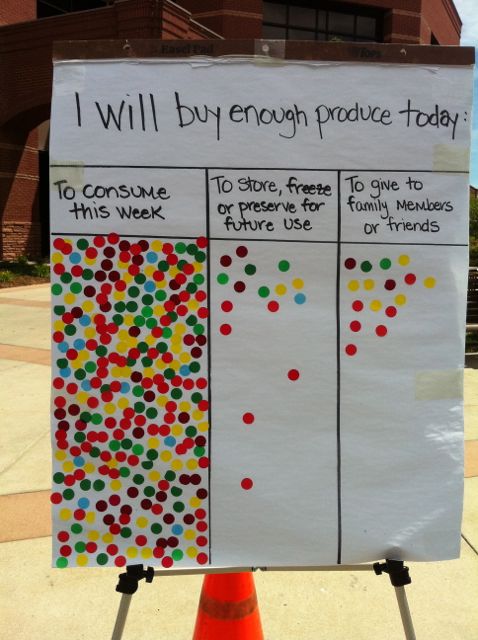
IMG_0702This very simple survey method at a special event caught my eye last year at the Larimer County Farmers’ Market in Fort Collins, Colorado, where we live. When I managed a nature center for thirteen years in Pueblo, special events were the lifeblood of our fundraising and they attracted thousands of people to our site. This kind of survey method would have been a great way to answer questions we had about visitor preferences.


The method is simple. They set up three or four flipcharts side by side at a prominent location at the farmers’ market. One question with three or four options is simply stated on each flipchart. Volunteers hand out large sticky dots, one per flipchart so that a guest has one vote per question. People stick a dot in the column below their preferred answer.


Is there peer pressure in the voting? Perhaps. But I was aware when making choices that I don’t know any of the folks around me and do not care what they think so its not the direct kind of peer pressure of making choices in the presence of classmates or friends. All surveys have some potential bias, but this method is not intended to be a scientific survey. It simply gives an indication of the preferences of IMG_0704the audience in attendance. The down side is that it does not solicit any input from those not in attendance, but that information, if desired, can be gathered in another way. On the up side, this method does not require face to face interactions with the surveyor, so the bias associated with using an interviewer can be avoided. Since interaction with the person handing out dots is somewhat limited, the design of the questions is critically important. They must be stated clearly with easily understood options. People seem to enjoy the activity but usually want to participate quickly and move on.


This kind of survey has value beyond the information obtained. It invites the customers to think about their motivations. It gives them instant feedback on the motivations of others. It tells them you value their input and will be trying to improve events based on that input.


On varied occasions in the management of sites and events I have seen planning processes that make important decisions with no feedback from users at all. Usually the reasons include “too much trouble, too costly, and not enough time.” Surveys like this flipchart approach offer a simple, direct method of getting useful input; however, like all surveys, they should be considered just that – an input tool, not necessarily a decision-making tool.


We manage better when we know what our customers or guests want or need. This simple tool can help those we serve express their desires easily, quickly, and inexpensively.


– Tim Merriman

Words of Wisdom That Endure On Earth Day

John Muir, who came to America from Scotland as a boy changed the world in his own special ways. He wrote,

Thousands of tired, nerve-shaken, over-civilized people are beginning to find out that going to the mountains is going home; that wildness is a necessity; and that mountain parks and reservations are useful not only as fountains of timber and irrigating rivers, but as fountains of life.


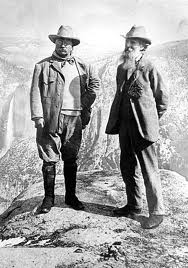
President Teddy Roosevelt and John Muir (right)

Muir was born on April 21, 1838, so his birthday is the day before Earth Day, April 22. As a young man, he attended University of Wisconsin and worked in a bicycle shop in Indianapolis. He was a skilled inventor and craftsman with wood and metal, but one day an awl pierced his eye and he was temporarily blinded. The experience led him to abandon technology for nature. After recovering from the accident, he took a 1000 mile trek to Cedar Key in Florida.


Later Muir moved to California and lived three years in Yosemite Valley, often traveling only with a tin cup, a loaf of bread and a book by his favorite author. Muir admired Ralph Waldo Emerson and carried his writings with him in Yosemite Valley for inspiration in one of the most beautiful places in the world. I can imagine him sitting on a rock or log, reading Emerson’s words, Adopt the pace of nature, her secret is patience.


Muir is best known for being the founder of the Sierra Club and most regard him as the Father of our American parks. He inspired Theodore Roosevelt to create the first national monuments by Presidential decree and to protect Yosemite National Park by Congressional action.


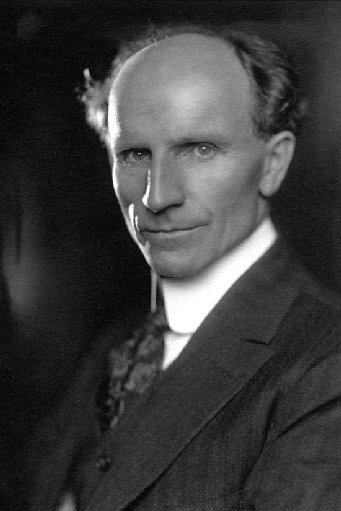
Just as Emerson inspired Muir, Muir inspired others in his time. Enos Mills was a young man of 21 when he met John Muir on a California beach in 1889. Muir took Mills to Yosemite and encouraged him to inspire others through books, lectures and journeys into the wilderness. Mills would become a key figure in founding Rocky Mountain National Park and his books are still valued by naturalists and interpreters. He led 300 groups up Long’s Peak and operated what may have been the first nature guide school.

enosmills_0
Enos Mills


Lisa Brochu and I were sitting with Enda Mills Kiley, daughter of Enos Mills, in Estes Park, Colorado, a few years ago and she mentioned that her father’s birthday is Earth Day, April 22nd. She also spoke of his life-long bond with Muir and his inspirational words of encouragement. Enda has since passed away, but her daughter and granddaughter continue to keep the cabin he built at age 15 operating as a museum and historic site. When he wrote Adventures of a Nature Guide, he identified many of the ideas that have endured as important approaches to heritage interpretation today.


Enos Mills was a lover of trees and his Story of a Thousand Year Pine remains one of my favorite books. He tells of a ponderosa pine cut by sawyers only to be abandoned for being shattered when it fell and therefore unsuitable for lumber. Saddened that the tree had been felled, he studied the pine and carefully told the story of this millennial giant giving evidence of the past measured by fires, hackings by a Spanish knife and arrowheads embedded in its annual rings. His reverence for trees and belief in their symbolic importance shines through the quote you will find in one of his finest essays;


Enos Mills
Enos Mills

The forests are the flags of nature. They appeal to all and awaken inspiring universal feelings. Enter the forest and the boundaries of nations are forgotten. It may be that some time an immortal pine will be the flag of a united peaceful world.


Earth Day is a great time to pause and remember great nature writers like Emerson, Muir and Mills – and every day is really Earth Day for many of us. We carry the inspirational words of these good people in our hearts and let them guide us in finding ways to live more peacefully on and with the planet.

– Tim Merriman


5 Thoughts About Graffiti – Messages on the Landscape

Graffiti or art on the streets of Athens.
Graffiti or art on the streets of Athens?

Graffiti – is it vandalism or a message on the landscape, something that transcends time to bring a view of the past into the present? At what point does graffiti stop being a problem and become a valued artifact, and who gets to make that judgment? Here are some random thoughts generated by graffiti around the world.


  1.  1. If graffiti is old enough, it is called pictographs or petroglyphs and we not only interpret it, we go to great lengths to protect it. Turkeys and waterfowl painted on the walls of shelter caves in Tsegi Canyon in Navajo National Monument tell a story of how the landscape changed due to drought. People who occupied the canyon before 1,000 A.D. enjoyed a more lush and verdant landscape with lots of wildlife. They kept what amounts to a library and art collection on the walls of the cave and I enjoyed the opportunity to learn about the culture of their times from what was left behind.
  2. Much modern graffiti on the streets of major cities like New York or Athens is either offensive or incredibly artistic and sometimes it’s both. It makes me wonder why art programs in schools have declined. I wonder if there would be as much tagging of trains, walls and city streets if young people had less anger and frustration and more opportunities to be successful artists in school and daily life. Some parks and museums in the U.S. have limited tagging by encouraging young people to create murals for public spaces or painting electrical boxes. How do we engage these highly motivated and talented individuals to keep graffiti in the realm of public art?
  3. Graffiti carved on living trees is the most objectionable for me. A tree is another living entity on our planet and should not have to endure the indignity of tattoos given by a human. It may not care, but I hate to see it. I don’t know how you stop it in remote settings but it is especially offensive in parks and natural areas. It’s usually a very temporary message about “John and Marsha,” not a broader cultural statement about profound events. Trees are thicker skinned than me, and eventually new growth may cover the offensive scars.
  4. I am both amused and mildly offended by the temporary graffiti made from chunks of bleached white coral arranged over black lava on the Big Island of Hawaii. As you drive north from Kona up the Kohala coast, you see silly messages, messages of love and other symbols meaningful only to the maker and few others. Tourists and locals often stop to dismantle another person’s art to create their own in this constantly changing mosaic of messages made from natural materials.
  5. There are other ways to use the landscape as a temporary canvas with sensibilities about not changing things forever. I rather enjoy cornfields turned into mazes or messages seen only by planes. Andrew Amador has made a career of decorating beaches with amazing patterns and pictures, knowing that wind, weather and water will erase his work on a regular basis.
Guides in the Serengeti of Tanzania show cave art where Maasai recorded their sighting of someone on a bicycle.


As a manager I was always aware that graffiti must be obliterated the same day or next day after occurrence. If it stands for even a short time it attracts more and more. When management doesn’t react quickly, we send the message, “We’re not paying very close attention so do what you will.” Graffiti is a magnet for additional self-expression. But at some point, it becomes a message from the past . . . we seem to be telling those in the future that nothing can stay unmarked by the hand of humankind.


-Tim Merriman


How Does Your Program Smell?


Does your natural or cultural site or facilities have a “signature” odor? That may be a strange question but it has more to do with interpretation than you may think.


Wikimedia photo.
Wikimedia photo.


I was reminded of the power of the Proust Effect when I visited the Science Teacher website that suggested going to a Dollar Store to buy library paste, the white glue used in grade school. Just reading those words immediately transported me to elementary school in Vandalia, Illinois, where the odor of library paste pervaded the hallways. I can even taste it (which tells you a little about what we did as kids back then). These “involuntary memories” characterize the Proust Effect and we can use what we know about it to plan effective interpretive experiences.


There’s a scientific basis for the Proust Effect that tracks back to our survival instinct. The olfactory nerves in our nose lead to the limbic system in our brain, the hippocampus and amygdala being two of several distinct parts of the system. This is the oldest part of the vertebrate brain, sometimes called the “animal brain.” Smells and tastes quickly inform animals of threats or food or opportunities for reproduction. Although we’re not entirely sure what animals hold in their memories, we do know that humans store memories all over the cerebral cortex and in the limbic system. A single smell or taste can quickly have our brain reassembling a memory from our past.


A coffee farm in Kona, Hawaii, gives out free samples and the smell of coffee brewing invites you in to try their samples.
A coffee farm in Kona, Hawaii, gives out free samples and the smell of coffee brewing invites you in.

This is the reason that movie theaters blow the smell of popcorn all over the waiting area, reminding us of how refreshments are part of the overall experience and enticing us to spend some extra money. Coffee shops such as Starbucks ask their staff to not wear colognes or deodorants with discernible odors to avoid interference with the tantalizing smell of coffee in the air. Because their brand is about the coffee and not their food items, they have food items brought in rather than baking or assembling on site for the same reason. Many businesses have figure out how to use the enrichment associated with sounds and smells to enhance their customers’ experience and encourage them to stay longer and spend more.


I once found a comment on Tripadvisor.com by a tourist describing an important heritage site as “smelling like toilets.” That sort of report immediately tells me that the site is poorly maintained and could change my mind about visiting. On the flip side, sometimes very clean sites smell more like artificial scent blocks and cleansers than anything to do with the experience.


Heritage site managers should think not only about the appearance of the grounds and facilities, but the aromas that might enhance or detract from the experience. Knowing that the Proust Effect is at play, stop and smell the opportunities for enriching the experience at your site.


–       Tim Merriman

Finding The Sweet Spot

At some heritage sites interpretation is entertainment, doing little more than passing time for visitors or delivering information that will not be remembered. Helping people connect emotionally and intellectually with complex stories is a challenge. Experiences must be planned with specific objectives in mind.


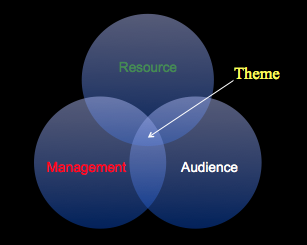
Much of what we do in planning natural and cultural heritage sites and programs is really about balance. When planning messages (theme and sub-themes) for a site, we think about hitting the “sweet spot” with our approaches to communication and experience design. We view that spot as the overlap of what interests our audience, what objectives must be met for our agency/employer, and what honors and protects the resource.


Screen Shot 2014-04-02 at 8.02.37 PM

There was a time when most interpretive planning and programming was solely resource-based. We told our visitors what we thought they should know using only the techniques we knew well with little regard for their backgrounds, interests or preferences in learning styles. The resulting signs, exhibits and programs delivered information accordingly. But just delivering information is not the same thing as interpretation, as Freeman Tilden pointed out in his principles. More information about the resource doesn’t always help people deepen their understanding and therefore, rarely achieves the objectives of management.


When only management objectives are considered, there may be a tendency toward what has been called “interpreganda,” presenting only the perspective of the agency responsible for the resource. While there is nothing wrong with putting the mission of the organization in front of visitors, doing so without considering how to meet the audience where they are in their belief systems may result in unfortunate conflicts rather than connections.


In the 1980s we began to be more market-oriented, using social science surveys to understand the needs and desires of our guests. Multiple perspectives, especially regarding sensitive stories, began to emerge in a greater variety of media choices designed to reach a greater variety of visitors. The danger, of course, in being solely focused on the visitor’s interests and desires is that sometimes interpretation becomes so entertaining that the resource suffers. The desire to get “just a little closer” to wildlife or interact with historic structures in a way that damages the integrity of the building can put the diagram out of balance yet again.


If the interpretive plan elements support management of the site, appeal to our visitors and serve the best interests of the resource, we have a great start at defining where the sweet spot lies, where balance creates a great experience that benefits all three bubbles of the diagram. A batter focuses attention to swing at a ball, hoping to hit the sweet spot that will mean a home run. A planner has to think in several directions at the same time to hit a home run, finding the sweet spot, the balance, among the many variables required for successful interpretation.


-Tim Merriman


Bridging the Digital Divide in Rwanda

Can you imagine losing family and friends in a brutal genocide, attending school without the financial and moral support of your family, continuing to support your younger brothers and sisters in school while you work as a park guide two or three hours distant from your home? Over the last two years, we’ve been working with Rwandan national park guides who really want to continue their education and to improve professionally in spite of the challenges they face in doing so. They are given few tools to do their jobs other than their uniforms. That makes it challenging to continue professional development and growth that helps them provide the kind of quality effort that they desire.

class2
Our Certified Interpretive Guide class in Nyungwe National Park trained 25 guides and reception hosts.

Their modest pay and family obligations often make computer technology inaccessible. An annual salary of about $3,000 leaves little or no disposable income, and yet, these guides have great hope for the future. I recently asked our park guides if and why a laptop would make a big difference in their lives.

They said,

“Since the world is becoming a small dot, it is of utmost importance to have a computer in order to access to Internet which helps us to improve our knowledge by doing research as well exchanging experience with other people.” Gilbert

“I want to start a masters’ program . . . if possible you can help me to achieve my dreams.” Cesar

“Seeking a personal computer to help . . . advertising of our National Park and connect people . . . by the inspiration and appreciation of all travelers.” Eric

“. . . I would say that as a guide who is always serving others in a very sensitive and fragile field; we should be supported and equipped with knowledge, skills, and equipments; if not we will keep on serving without those, but just with our heart.   Musafiri B. Christian

cigclassWe want to help 25 Rwandan guides and reception staff at Nyungwe National Park to realize their dreams by acquiring a laptop for each of them. We hope to help them bridge the digital divide. It will require $400 per machine to pay for the computer, add necessary software and pay for secure delivery to Rwanda. These young men and women help protect primates, endemic birds, and parklands in this most densely populated nation on Earth. At the same time, they are helping to rebuild their country’s economy and lessen dependence on foreign aid through providing quality tourism experiences. They work with local communities to minimize depreciative behavior and exploitation of forest resources by providing opportunities for more appropriate activities.

Tobias Merriman, our son and a computer network professional at Southern Illinois University, has volunteered to load each machine with licensed software that gives them full “office” and Internet browser capabilities. We will use DHL or UPS to deliver the machines securely to the guides and they will provide photos and thank you letters to us that we will share with donors.

This is the PC we plan to purchase.

This effort is not tax-deductible for we do not have a charity in the middle. We have spent our lives working for nonprofits, but now work as consultants with organizations that make a difference in conservation and helping communities around the world. We take no administrative funds from this and will not spend any of the money on anything other than the computers, software and shipping to the guides. Our website http://heartfeltassociates.com will report on progress and share photos of the guides. We will personally donate two or more computers as our income this spring allows. And we will carefully manage delivery of the machines so they end up in the hands of guides, not postal handlers or bureaucrats along the way. We want to help individuals. And we want to share their stories with you.

If you wish to make a contribution to this effort, go to indiegogo.com and give a contribution of any amount comfortable for you. The website takes 4% of the total campaign for their services. We have 45 days to raise $10,000 (25 times $400 = computer cost, software, and DHL or UPS) under the agreement with Indiegogo. If we do not realize our objective of $10,000, they still provide the amount raised and we will use that to assist the most deserving individuals based upon their applications for a laptop.

Many foundations and government programs provide assistance to African governments and agencies in protecting wildlife and supporting communities struggling with hunger, AIDS and malaria. We think that’s great, but we want to help some of the individuals we know personally who will put this technology to work improving their lives and their efforts to conserve and promote the national parks in Rwanda. Won’t you help us with a gift of some size reasonable for you?

Thanks for helping make a difference! We have been blessed with great support in our lives – paying it forward feels right. Visit our donor campaign page – Help Bridge the Digital Divide In Rwanda – HERE!

Tim Merriman and Lisa Brochu

Five Ways to Better Understand Your Audience

chat


I will never forget my days running a state park visitor center when we counted people going through the building. These daily numbers went into a report we submitted to the state office annually. We detected the presence and number of our visitors and that was about it.

Most of us do not have the luxury of hiring a skilled survey team to conduct research about audience interests, but there are ways we can learn more every single day. These are a few very direct ways to better understand your audiences’ motivations and interests as they interact with your resources.

1. Secret Shopper (also known as Interpretive Stalking, but don’t do anything creepy) – Walk among your guests without a uniform or any form of identity, dressing as they would. Look and act like your audience. Wander with them and stand near and listen. What are they saying to each other? What questions do they ask of each other? What do they photograph? How much time do they spend when they stop? What stopped them for longer discussions? Did they read the signs and exhibits or breeze past? This gives you a somewhat subjective, but very useful sense of how they feel about your visitor experience.

2. Observation without Engagement – Sit and watch your audiences in one-hour blocks of time, recording what they are doing. Create an observational form for your site with a category for every major user group. Leave a space for describing those doing things not usual to your site. You may discover a new market segment you had not previously considered. I trained trail rangers at the nature center I managed to do a one-hour survey for every four hours they patrolled a bike trail and the observations were made year-round so we had a much better understanding of seasonal change in uses of our grounds and trails.

3. Constant Conversation – Train your staff to use open questions skillfully to conduct an informal survey every time they meet a guest. Where are you from? Have you been here before? Is there something special you’re hoping to see or do? Is there anything special we can do to help you? But also train staff in how to disengage and respect the privacy of guests. Not everyone wants to chat every time they come to your site. Some guests are “spiritual rechargers” (Falk et al. “Why zoos matter”) and may prefer to relax in your beautiful environs without a chat. When you learn the specific desires of the guest, you have a chance to suggest how they can have a better experience that day, and you can shape future plans according to the desires expressed.

4. Interactive Survey – Devise a simple four or five question survey that your volunteers or staff can administer to guests after getting their permission to do so. Keep it short and meaningful. Have you been here before? How often do you come? What do you like most here? How might we improve? Use a form to collect the data that gives some demographic background such as gender, general age group, geographic area of origin, as well as some simple psychographic information such as why did they come and how satisfactory they found the experience. That allows for analysis later when you have time to do so.

Screen Shot 2014-03-06 at 9.42.44 AM5. Social Media – Tripadvisor.com, Yelp.com and Facebook.com are becoming easy places to look for honest feedback about your site or programming. With Facebook, you can create your own fan page to stimulate conversations, but since many folks are “lurkers” it is not a great place to learn much about your guests overall. People who love your site or are unhappy with the experience in some way may go to Tripadvisor or Yelp and give a review. Read these reviews daily or weekly, as often as they show up. Notice what they are saying and the star rating, but also check out the photos that they post to see what they find most fascinating about your site.

There are obviously many other ways to learn more about your guests but these are some that can be done daily or weekly with little or no investment. Analysis can be as informal as discussions at weekly staff meetings. Or you might have a student intern or local college class take data collected from some methods and do a deeper analysis with cross-tabulations. Understanding the motivations and interests of our audiences is essential. Learning to listen and observe in simple, direct ways can be very effective in helping you improve what you do for your unique audiences.

It’s still fine to count numbers and be aware of the volume of traffic through your building, site or programs, but presence alone is not enough. Try to learn more and apply it to improve all you offer.

– Tim Merriman