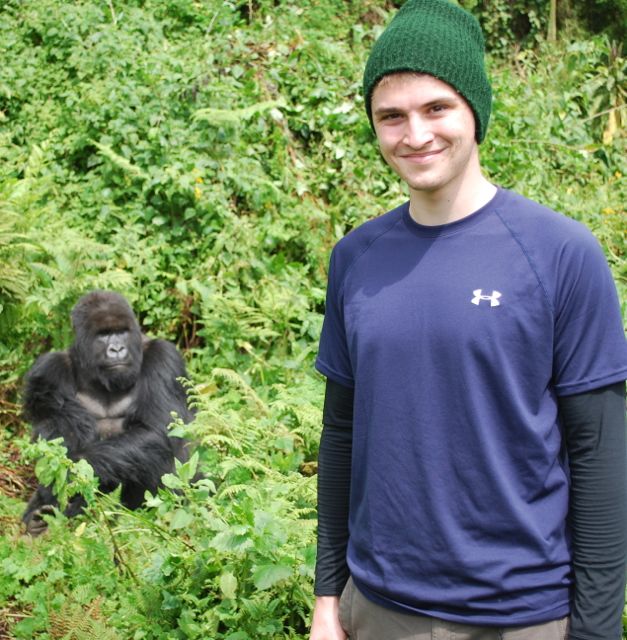
When I was a young boy I spent every free hour wading in the Town Branch, a local stream near my home in Vandalia, Illinois. I was looking for crawdads, my favorite critter in nature, but I studied everything else that turned up around them. Tadpoles, minnows, turtles and mud puppies were always fun encounters while crawdad hunting. My mother was accustomed to finding buckets with murky water at our home with an aquatic animal brought home for closer study. I sold the tiny “creek lobsters” to bait stores and invested the income in aquariums and seine nets. I knew I wanted to be a biologist when I grew up.
I’ve told that personal story many times as an introduction to a new group in training. It often causes others to talk about their first passions in the outdoors. I first heard of “personal stories” as a training technique from Disney trainers in their leadership seminars in Orlando, Florida. They emphasized how important those were in building a culture of personal communication. The stories tell much more than one incident. They begin a conversation with a guest or new acquaintance based on common interests and our sense of wonder in the world.
Personal stories have some very specific values in a natural or cultural heritage site.
1. Personal stories empower all employees to share why their work matters to them.
2. Sharing stories creates a culture of communication and caring.
3. Emotional connections are more accessible through personal stories.
4. Stories make each employee feel valued for their personal life experience.
5. The stories reveal ideas and insights from those who know the place best.
After sharing a personal story, a maintenance worker who attended the very first Certified Interpretive Host course we taught in east Texas commented, “This is the first time in 25 years in this park that I feel like a member of the professional staff.” He told stories about his interest in Caddo Indians and his flint knapping hobby to demonstrate how Native Americans made tools and weapons. His supervisor said he had known this worker 25 years but had been unaware of his employee’s passion for native lore. Most workers at parks, zoos, museums, aquariums and historic sites have deeply rooted interests in their jobs. Encouraging all to share a personal story briefly is another way to connect visitors to places, events and people. And we learn more about people with whom we work.
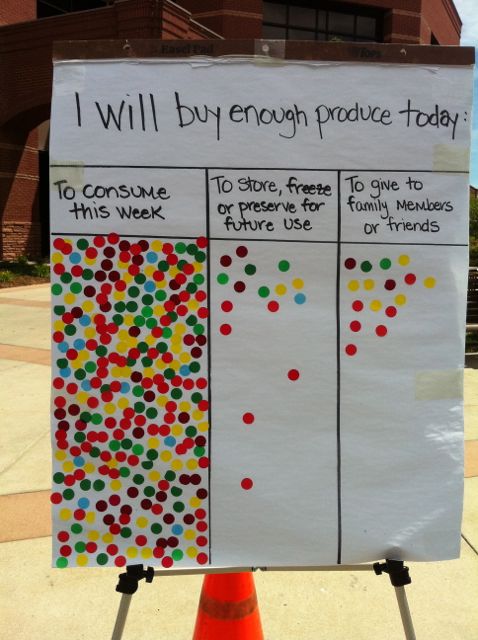
This very simple survey method at a special event caught my eye last year at the Larimer County Farmers’ Market in Fort Collins, Colorado, where we live. When I managed a nature center for thirteen years in Pueblo, special events were the lifeblood of our fundraising and they attracted thousands of people to our site. This kind of survey method would have been a great way to answer questions we had about visitor preferences.
The method is simple. They set up three or four flipcharts side by side at a prominent location at the farmers’ market. One question with three or four options is simply stated on each flipchart. Volunteers hand out large sticky dots, one per flipchart so that a guest has one vote per question. People stick a dot in the column below their preferred answer.
Is there peer pressure in the voting? Perhaps. But I was aware when making choices that I don’t know any of the folks around me and do not care what they think so its not the direct kind of peer pressure of making choices in the presence of classmates or friends. All surveys have some potential bias, but this method is not intended to be a scientific survey. It simply gives an indication of the preferences of the audience in attendance. The down side is that it does not solicit any input from those not in attendance, but that information, if desired, can be gathered in another way. On the up side, this method does not require face to face interactions with the surveyor, so the bias associated with using an interviewer can be avoided. Since interaction with the person handing out dots is somewhat limited, the design of the questions is critically important. They must be stated clearly with easily understood options. People seem to enjoy the activity but usually want to participate quickly and move on.
This kind of survey has value beyond the information obtained. It invites the customers to think about their motivations. It gives them instant feedback on the motivations of others. It tells them you value their input and will be trying to improve events based on that input.
On varied occasions in the management of sites and events I have seen planning processes that make important decisions with no feedback from users at all. Usually the reasons include “too much trouble, too costly, and not enough time.” Surveys like this flipchart approach offer a simple, direct method of getting useful input; however, like all surveys, they should be considered just that – an input tool, not necessarily a decision-making tool.
We manage better when we know what our customers or guests want or need. This simple tool can help those we serve express their desires easily, quickly, and inexpensively.
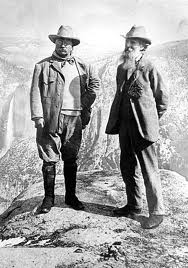
John Muir, who came to America from Scotland as a boy changed the world in his own special ways. He wrote,
Thousands of tired, nerve-shaken, over-civilized people are beginning to find out that going to the mountains is going home; that wildness is a necessity; and that mountain parks and reservations are useful not only as fountains of timber and irrigating rivers, but as fountains of life.
President Teddy Roosevelt and John Muir (right)
Muir was born on April 21, 1838, so his birthday is the day before Earth Day, April 22. As a young man, he attended University of Wisconsin and worked in a bicycle shop in Indianapolis. He was a skilled inventor and craftsman with wood and metal, but one day an awl pierced his eye and he was temporarily blinded. The experience led him to abandon technology for nature. After recovering from the accident, he took a 1000 mile trek to Cedar Key in Florida.
Later Muir moved to California and lived three years in Yosemite Valley, often traveling only with a tin cup, a loaf of bread and a book by his favorite author. Muir admired Ralph Waldo Emerson and carried his writings with him in Yosemite Valley for inspiration in one of the most beautiful places in the world. I can imagine him sitting on a rock or log, reading Emerson’s words, Adopt the pace of nature, her secret is patience.
Muir is best known for being the founder of the Sierra Club and most regard him as the Father of our American parks. He inspired Theodore Roosevelt to create the first national monuments by Presidential decree and to protect Yosemite National Park by Congressional action.
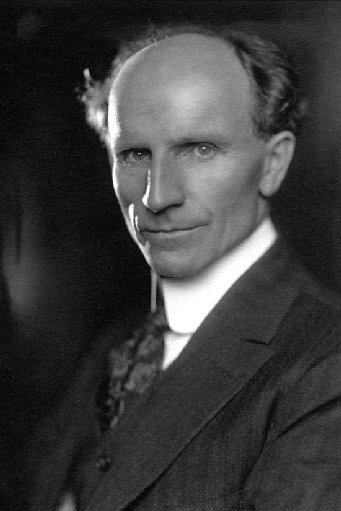
Just as Emerson inspired Muir, Muir inspired others in his time. Enos Mills was a young man of 19 when he met John Muir on a California beach in 1889. Muir encouraged Mills to visit Yosemite and encouraged him to inspire others through books, lectures and journeys into the wilderness. Mills would become a key figure in founding Rocky Mountain National Park and his books are still valued by naturalists and interpreters. He led 300 groups up Long’s Peak and operated what may have been the first nature guide school.
Enos Mills
Lisa Brochu and I were sitting with Enda Mills Kiley, daughter of Enos Mills, in Estes Park, Colorado, a few years ago and she mentioned that her father’s birthday is Earth Day, April 22nd. She also spoke of his life-long bond with Muir and his inspirational words of encouragement. Enda has since passed away, but her daughter and granddaughter continue to keep the cabin he built at age 15 operating as a museum and historic site. When he wrote Adventures of a Nature Guide, he identified many of the ideas that have endured as important approaches to heritage interpretation today.
Enos Mills was a lover of trees and his Story of a Thousand Year Pine remains one of my favorite books. He tells of a ponderosa pine cut by sawyers only to be abandoned for being shattered when it fell and therefore unsuitable for lumber. Saddened that the tree had been felled, he studied the pine and carefully told the story of this millennial giant giving evidence of the past measured by fires, hackings by a Spanish knife and arrowheads embedded in its annual rings. His reverence for trees and belief in their symbolic importance shines through the quote you will find in one of his finest essays;
Enos Mills
The forests are the flags of nature. They appeal to all and awaken inspiring universal feelings. Enter the forest and the boundaries of nations are forgotten. It may be that some time an immortal pine will be the flag of a united peaceful world.
Earth Day is a great time to pause and remember great nature writers like Emerson, Muir and Mills – and every day is really Earth Day for many of us. We carry the inspirational words of these good people in our hearts and let them guide us in finding ways to live more peacefully on and with the planet.
Graffiti – is it vandalism or a message on the landscape, something that transcends time to bring a view of the past into the present? At what point does graffiti stop being a problem and become a valued artifact, and who gets to make that judgment? Here are some random thoughts generated by graffiti around the world.
1. If graffiti is old enough, it is called pictographs or petroglyphs and we not only interpret it, we go to great lengths to protect it. Turkeys and waterfowl painted on the walls of shelter caves in Tsegi Canyon in Navajo National Monument tell a story of how the landscape changed due to drought. People who occupied the canyon before 1,000 A.D. enjoyed a more lush and verdant landscape with lots of wildlife. They kept what amounts to a library and art collection on the walls of the cave and I enjoyed the opportunity to learn about the culture of their times from what was left behind.
Much modern graffiti on the streets of major cities like New York or Athens is either offensive or incredibly artistic and sometimes it’s both. It makes me wonder why art programs in schools have declined. I wonder if there would be as much tagging of trains, walls and city streets if young people had less anger and frustration and more opportunities to be successful artists in school and daily life. Some parks and museums in the U.S. have limited tagging by encouraging young people to create murals for public spaces or painting electrical boxes. How do we engage these highly motivated and talented individuals to keep graffiti in the realm of public art?
Graffiti carved on living trees is the most objectionable for me. A tree is another living entity on our planet and should not have to endure the indignity of tattoos given by a human. It may not care, but I hate to see it. I don’t know how you stop it in remote settings but it is especially offensive in parks and natural areas. It’s usually a very temporary message about “John and Marsha,” not a broader cultural statement about profound events. Trees are thicker skinned than me, and eventually new growth may cover the offensive scars.
I am both amused and mildly offended by the temporary graffiti made from chunks of bleached white coral arranged over black lava on the Big Island of Hawaii. As you drive north from Kona up the Kohala coast, you see silly messages, messages of love and other symbols meaningful only to the maker and few others. Tourists and locals often stop to dismantle another person’s art to create their own in this constantly changing mosaic of messages made from natural materials.
There are other ways to use the landscape as a temporary canvas with sensibilities about not changing things forever. I rather enjoy cornfields turned into mazes or messages seen only by planes. Andrew Amador has made a career of decorating beaches with amazing patterns and pictures, knowing that wind, weather and water will erase his work on a regular basis.
Guides in the Serengeti of Tanzania show cave art where Maasai recorded their sighting of someone on a bicycle.
As a manager I was always aware that graffiti must be obliterated the same day or next day after occurrence. If it stands for even a short time it attracts more and more. When management doesn’t react quickly, we send the message, “We’re not paying very close attention so do what you will.” Graffiti is a magnet for additional self-expression. But at some point, it becomes a message from the past . . . we seem to be telling those in the future that nothing can stay unmarked by the hand of humankind.
Does your natural or cultural site or facilities have a “signature” odor? That may be a strange question but it has more to do with interpretation than you may think.
Wikimedia photo.
I was reminded of the power of the Proust Effect when I visited the Science Teacher website that suggested going to a Dollar Store to buy library paste, the white glue used in grade school. Just reading those words immediately transported me to elementary school in Vandalia, Illinois, where the odor of library paste pervaded the hallways. I can even taste it (which tells you a little about what we did as kids back then). These “involuntary memories” characterize the Proust Effect and we can use what we know about it to plan effective interpretive experiences.
There’s a scientific basis for the Proust Effect that tracks back to our survival instinct. The olfactory nerves in our nose lead to the limbic system in our brain, the hippocampus and amygdala being two of several distinct parts of the system. This is the oldest part of the vertebrate brain, sometimes called the “animal brain.” Smells and tastes quickly inform animals of threats or food or opportunities for reproduction. Although we’re not entirely sure what animals hold in their memories, we do know that humans store memories all over the cerebral cortex and in the limbic system. A single smell or taste can quickly have our brain reassembling a memory from our past.
A coffee farm in Kona, Hawaii, gives out free samples and the smell of coffee brewing invites you in.
This is the reason that movie theaters blow the smell of popcorn all over the waiting area, reminding us of how refreshments are part of the overall experience and enticing us to spend some extra money. Coffee shops such as Starbucks ask their staff to not wear colognes or deodorants with discernible odors to avoid interference with the tantalizing smell of coffee in the air. Because their brand is about the coffee and not their food items, they have food items brought in rather than baking or assembling on site for the same reason. Many businesses have figure out how to use the enrichment associated with sounds and smells to enhance their customers’ experience and encourage them to stay longer and spend more.
I once found a comment on Tripadvisor.com by a tourist describing an important heritage site as “smelling like toilets.” That sort of report immediately tells me that the site is poorly maintained and could change my mind about visiting. On the flip side, sometimes very clean sites smell more like artificial scent blocks and cleansers than anything to do with the experience.
Heritage site managers should think not only about the appearance of the grounds and facilities, but the aromas that might enhance or detract from the experience. Knowing that the Proust Effect is at play, stop and smell the opportunities for enriching the experience at your site.
At some heritage sites interpretation is entertainment, doing little more than passing time for visitors or delivering information that will not be remembered. Helping people connect emotionally and intellectually with complex stories is a challenge. Experiences must be planned with specific objectives in mind.
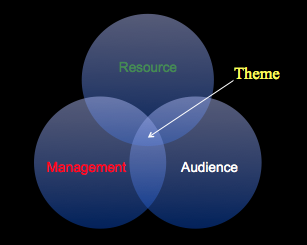
Much of what we do in planning natural and cultural heritage sites and programs is really about balance. When planning messages (theme and sub-themes) for a site, we think about hitting the “sweet spot” with our approaches to communication and experience design. We view that spot as the overlap of what interests our audience, what objectives must be met for our agency/employer, and what honors and protects the resource.
There was a time when most interpretive planning and programming was solely resource-based. We told our visitors what we thought they should know using only the techniques we knew well with little regard for their backgrounds, interests or preferences in learning styles. The resulting signs, exhibits and programs delivered information accordingly. But just delivering information is not the same thing as interpretation, as Freeman Tilden pointed out in his principles. More information about the resource doesn’t always help people deepen their understanding and therefore, rarely achieves the objectives of management.
When only management objectives are considered, there may be a tendency toward what has been called “interpreganda,” presenting only the perspective of the agency responsible for the resource. While there is nothing wrong with putting the mission of the organization in front of visitors, doing so without considering how to meet the audience where they are in their belief systems may result in unfortunate conflicts rather than connections.
In the 1980s we began to be more market-oriented, using social science surveys to understand the needs and desires of our guests. Multiple perspectives, especially regarding sensitive stories, began to emerge in a greater variety of media choices designed to reach a greater variety of visitors. The danger, of course, in being solely focused on the visitor’s interests and desires is that sometimes interpretation becomes so entertaining that the resource suffers. The desire to get “just a little closer” to wildlife or interact with historic structures in a way that damages the integrity of the building can put the diagram out of balance yet again.
If the interpretive plan elements support management of the site, appeal to our visitors and serve the best interests of the resource, we have a great start at defining where the sweet spot lies, where balance creates a great experience that benefits all three bubbles of the diagram. A batter focuses attention to swing at a ball, hoping to hit the sweet spot that will mean a home run. A planner has to think in several directions at the same time to hit a home run, finding the sweet spot, the balance, among the many variables required for successful interpretation.
Can you imagine losing family and friends in a brutal genocide, attending school without the financial and moral support of your family, continuing to support your younger brothers and sisters in school while you work as a park guide two or three hours distant from your home? Over the last two years, we’ve been working with Rwandan national park guides who really want to continue their education and to improve professionally in spite of the challenges they face in doing so. They are given few tools to do their jobs other than their uniforms. That makes it challenging to continue professional development and growth that helps them provide the kind of quality effort that they desire.
Our Certified Interpretive Guide class in Nyungwe National Park trained 25 guides and reception hosts.
Their modest pay and family obligations often make computer technology inaccessible. An annual salary of about $3,000 leaves little or no disposable income, and yet, these guides have great hope for the future. I recently asked our park guides if and why a laptop would make a big difference in their lives.
They said,
“Since the world is becoming a small dot, it is of utmost importance to have a computer in order to access to Internet which helps us to improve our knowledge by doing research as well exchanging experience with other people.” Gilbert
“I want to start a masters’ program . . . if possible you can help me to achieve my dreams.” Cesar
“Seeking a personal computer to help . . . advertising of our National Park and connect people . . . by the inspiration and appreciation of all travelers.” Eric
“. . . I would say that as a guide who is always serving others in a very sensitive and fragile field; we should be supported and equipped with knowledge, skills, and equipments; if not we will keep on serving without those, but just with our heart. Musafiri B. Christian
We want to help 25 Rwandan guides and reception staff at Nyungwe National Park to realize their dreams by acquiring a laptop for each of them. We hope to help them bridge the digital divide. It will require $400 per machine to pay for the computer, add necessary software and pay for secure delivery to Rwanda. These young men and women help protect primates, endemic birds, and parklands in this most densely populated nation on Earth. At the same time, they are helping to rebuild their country’s economy and lessen dependence on foreign aid through providing quality tourism experiences. They work with local communities to minimize depreciative behavior and exploitation of forest resources by providing opportunities for more appropriate activities.
Tobias Merriman, our son and a computer network professional at Southern Illinois University, has volunteered to load each machine with licensed software that gives them full “office” and Internet browser capabilities. We will use DHL or UPS to deliver the machines securely to the guides and they will provide photos and thank you letters to us that we will share with donors.
This is the PC we plan to purchase.
This effort is not tax-deductible for we do not have a charity in the middle. We have spent our lives working for nonprofits, but now work as consultants with organizations that make a difference in conservation and helping communities around the world. We take no administrative funds from this and will not spend any of the money on anything other than the computers, software and shipping to the guides. Our website http://heartfeltassociates.com will report on progress and share photos of the guides. We will personally donate two or more computers as our income this spring allows. And we will carefully manage delivery of the machines so they end up in the hands of guides, not postal handlers or bureaucrats along the way. We want to help individuals. And we want to share their stories with you.
If you wish to make a contribution to this effort, go to indiegogo.com and give a contribution of any amount comfortable for you. The website takes 4% of the total campaign for their services. We have 45 days to raise $10,000 (25 times $400 = computer cost, software, and DHL or UPS) under the agreement with Indiegogo. If we do not realize our objective of $10,000, they still provide the amount raised and we will use that to assist the most deserving individuals based upon their applications for a laptop.
Many foundations and government programs provide assistance to African governments and agencies in protecting wildlife and supporting communities struggling with hunger, AIDS and malaria. We think that’s great, but we want to help some of the individuals we know personally who will put this technology to work improving their lives and their efforts to conserve and promote the national parks in Rwanda. Won’t you help us with a gift of some size reasonable for you?
Thanks for helping make a difference! We have been blessed with great support in our lives – paying it forward feels right. Visit our donor campaign page – Help Bridge the Digital Divide In Rwanda – HERE!
I will never forget my days running a state park visitor center when we counted people going through the building. These daily numbers went into a report we submitted to the state office annually. We detected the presence and number of our visitors and that was about it.
Most of us do not have the luxury of hiring a skilled survey team to conduct research about audience interests, but there are ways we can learn more every single day. These are a few very direct ways to better understand your audiences’ motivations and interests as they interact with your resources.
1. Secret Shopper (also known as Interpretive Stalking, but don’t do anything creepy) – Walk among your guests without a uniform or any form of identity, dressing as they would. Look and act like your audience. Wander with them and stand near and listen. What are they saying to each other? What questions do they ask of each other? What do they photograph? How much time do they spend when they stop? What stopped them for longer discussions? Did they read the signs and exhibits or breeze past? This gives you a somewhat subjective, but very useful sense of how they feel about your visitor experience.
2. Observation without Engagement – Sit and watch your audiences in one-hour blocks of time, recording what they are doing. Create an observational form for your site with a category for every major user group. Leave a space for describing those doing things not usual to your site. You may discover a new market segment you had not previously considered. I trained trail rangers at the nature center I managed to do a one-hour survey for every four hours they patrolled a bike trail and the observations were made year-round so we had a much better understanding of seasonal change in uses of our grounds and trails.
3. Constant Conversation – Train your staff to use open questions skillfully to conduct an informal survey every time they meet a guest. Where are you from? Have you been here before? Is there something special you’re hoping to see or do? Is there anything special we can do to help you? But also train staff in how to disengage and respect the privacy of guests. Not everyone wants to chat every time they come to your site. Some guests are “spiritual rechargers” (Falk et al. “Why zoos matter”) and may prefer to relax in your beautiful environs without a chat. When you learn the specific desires of the guest, you have a chance to suggest how they can have a better experience that day, and you can shape future plans according to the desires expressed.
4. Interactive Survey – Devise a simple four or five question survey that your volunteers or staff can administer to guests after getting their permission to do so. Keep it short and meaningful. Have you been here before? How often do you come? What do you like most here? How might we improve? Use a form to collect the data that gives some demographic background such as gender, general age group, geographic area of origin, as well as some simple psychographic information such as why did they come and how satisfactory they found the experience. That allows for analysis later when you have time to do so.
5. Social Media – Tripadvisor.com, Yelp.com and Facebook.com are becoming easy places to look for honest feedback about your site or programming. With Facebook, you can create your own fan page to stimulate conversations, but since many folks are “lurkers” it is not a great place to learn much about your guests overall. People who love your site or are unhappy with the experience in some way may go to Tripadvisor or Yelp and give a review. Read these reviews daily or weekly, as often as they show up. Notice what they are saying and the star rating, but also check out the photos that they post to see what they find most fascinating about your site.
There are obviously many other ways to learn more about your guests but these are some that can be done daily or weekly with little or no investment. Analysis can be as informal as discussions at weekly staff meetings. Or you might have a student intern or local college class take data collected from some methods and do a deeper analysis with cross-tabulations. Understanding the motivations and interests of our audiences is essential. Learning to listen and observe in simple, direct ways can be very effective in helping you improve what you do for your unique audiences.
It’s still fine to count numbers and be aware of the volume of traffic through your building, site or programs, but presence alone is not enough. Try to learn more and apply it to improve all you offer.
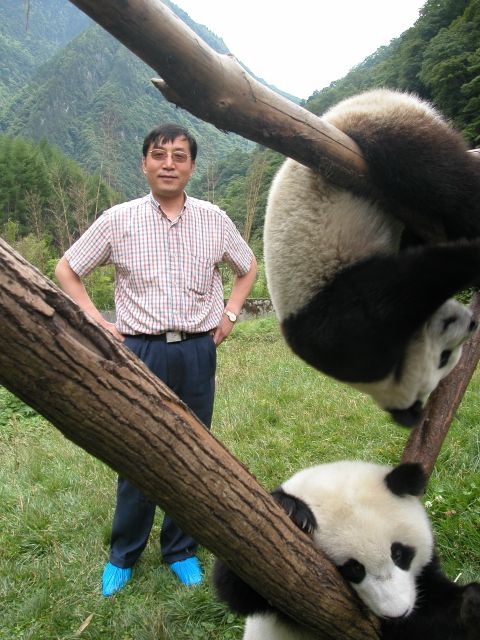
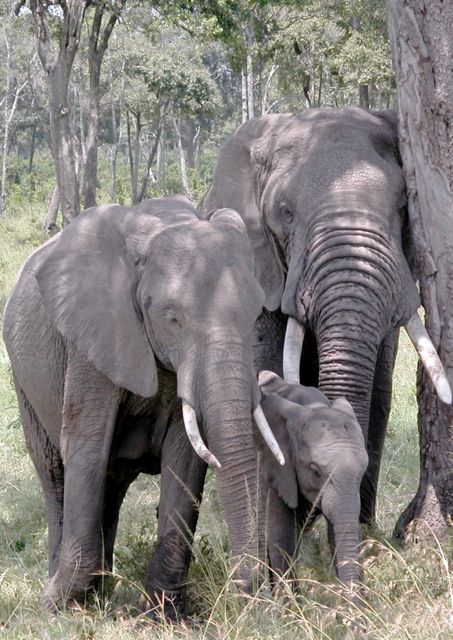
Have you ever spent an hour with mountain gorillas in the Virunga Volcanoes following trails once traveled by Dian Fossey? Have you had your photo taken with baby pandas in a Sichuan panda reserve where George Schaller once studied these amazing animals? Did you climb out of your panga in the Galapagos to walk in the footsteps of Charles Darwin among blue-footed boobies? Have you watched elephants for hours from a few feet away, as they graze blissfully unaware of the impending threat to their survival on the planet from poaching and loss of habitat.
There are world-class tourism experiences that have amazing WOW power. The memories may last forever like photos in your personal collection. But they may also rest there virtually untouched, devoid of a lasting message that invites you to become more involved. I have had the pleasure of participating in each of the experiences described. However, an enduring message about conservation and my ability to get involved was lacking in all four situations.
Tourism experiences built on a world-class WOW experience often lack a thoughtful message, usually because guides in those settings tend to lack interpretive training. Without the encouragement of their employers, they may not mention the rich history behind the tour based on devoted researchers, missing the opportunity to invite you to be a donor, sponsor or volunteer. The tourists and their money will continue to roll in with no prompting due to the power of the experience. But the enduring value of bringing a thoughtful message to the experience is simply missed.
Organizations and tour companies that plan such events often have no knowledge of the power of social marketing or interpretive planning. They hope the WOW of what they are doing has enough value to override the need to create more lasting relationships. Is there anything wrong with that? Perhaps, if there is a real desire to sustain the resources that create the opportunities for profits. We left our tour of the Galapagos Islands with an empty feeling that we had shared the “sizzle” of seeing marine iguanas, boobies and sea lions and missed the stories of importance of the legendary islands and endemic wildlife. Our guides had no message. They were bored with us, and bored with the resource. They identified birds when asked, but left us with no lasting connection with the past or future of this unique place. What could have been done differently?
In 1997 Dr. Sam Ham worked with Lindblad Expeditions in the Galapagos Islands to help their tours use improved thematic messages in support of the Charles Darwin Research Centre. The impact of his work was dramatic. Improved guide training and messages led to a 270% increase in donations to the research program, helping to ensure the future of the Galapagos Islands and the creatures found only there.
In Rwanda the sale of gorilla permits in 2013 declined from 2012 due to an increase in cost from $500 to $750. The gorilla guides are skilled in taking care of people and delivering an informational briefing about the gorilla family to be visited, but they have not been trained in interpretive skills. Without the additional understanding that the increased fees are necessary to support mountain gorillas 365 days a year, 24-7, that $750 just seems like a lot of money for a one-hour experience.
What we’ve learned over the years is that most guides want to do a better job of connecting visitors to charismatic wildlife. Many of them receive content training, but their key role in helping people understand bigger issues that surround the resource is often missed. Interpretive training requires financial support from conservation organizations, individual donors, and sponsors, but it’s money worth spending if Dr. Ham’s research is an indicator of its value.
The future of many of these species and their habitats may depend on the tourists that come to enjoy an experience with them. But that message must be shared for any action to result. Information about the animals is not enough. Those of us who enjoy the privilege of getting close to these animals should be asked to help. There’s more to say than, WOW!
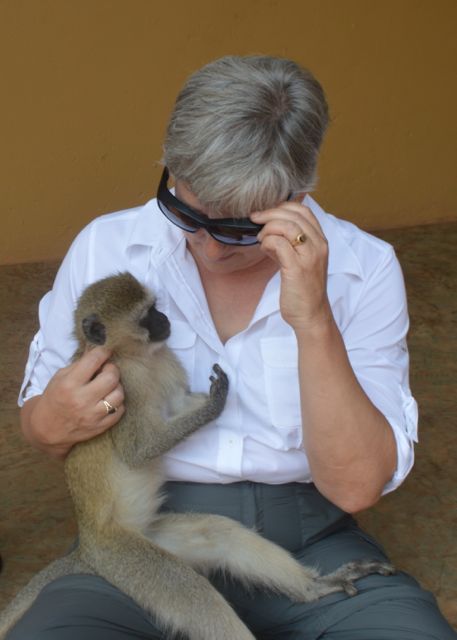
Our little friend Jes, the vervet monkey, visits our classroom in Rwanda each day. She doesn’t say much, but she definitely has a story. Akagera park officials learned that a young monkey had been taken as a pet, a violation of the law, so it was taken from the people and brought to the park. Over time it was reintroduced to wild vervets and it lived with them for many months. One day it returned to park headquarters on its own with a badly damaged hand, which led to amputation of the limb almost to the elbow. So Jes has become the unofficial headquarters mascot. She’s free to return to the wild anytime, but because of her injury and the stunted growth that is probably the result of malnutrition when young, it is unlikely that she will thrive or be accepted in a completely wild monkey troop. When she gets comfortable with you, she will sit in your lap and let you pet and preen her. She will return the favor and check you carefully for fleas and dirt. She’s a real charmer, but sadly, she is no longer equipped to be a wild monkey.
Most of us know that making pets of wild animals is not a good idea and it is illegal in most places. Finding a solution for an injured animal like Jes may be easy in a city with a zoo or nature center, but it’s a real challenge at a park. We enjoy Jes, until she steals our markers and chews on them or digs through our lunch looking for bananas. She’s like a two-year old child, demanding continual attention.
In Akagera National Park, they ask people on safari to never feed baboons, vervets, birds or other wildlife. It leads to begging, unhealthy animals and normal behavior disappears. Clearly, we should not be habituating wild animals to beg at picnic areas or come close to tourists.
On the other hand, habituation of some gorillas and chimpanzees in Rwanda’s other national parks has a value in protecting them. Chimps are difficult to habituate because they move through the treetops and they seem naturally wary of humans. Jane Goodall perfected this kind of habituation several decades ago during her research studies. The Jane Goodall Insititute has helped train trackers at Nyungwe National Park, where chimps may be visited in Rwanda. Local people haven’t always been fans of the chimps, as the clever apes sometimes raid village gardens on the outskirts of the park, but tourism dollars provide community benefits through revenue sharing, tracking jobs and ranger jobs, encouraging local people to protect them and their habitat.
Meanwhile, in Volcanoes National Park, mountain gorilla populations have recovered from a low of approximately 220 animals in the late 1980s to the current estimate of around 900. Poaching and theft of baby gorillas for sale to zoos created a crisis for the mountain gorillas that has been turned around by tourism. Amy Vedder and Bill Weber tell the story of how mountain gorillas were habituated to tourists in their book, In the Kingdom of Gorillas. The daily visit of gorilla families in Rwanda’s Volcanoes National Park brings 80 tourists daily into the presence of gorillas. Each person pays $750 for the one-hour visit, supporting year-round protection of the gorillas by rangers, guides, veterinarians and porters. Tourists are observers only, allowed to take nothing into the forest with which to feed the gorillas, no direct contact due to the potential to spread disease, and instructed to keep voices low and cameras without flash to avoid annoying these magnificent animals. Unfortunately, most guides do not mention how vital the permit fees are to protecting gorillas. I haven’t heard any of them deliver the message that tourists are investing in the future of mountain gorillas and the communities around them.
To habituate or not is a difficult and complex issue. In Rwanda, under careful supervision, I think it has its place in protecting man’s closest relatives, the great apes. If experiencing elephants, tracking chimpanzees and coming face to face with mountain gorillas is not on your bucket list already, you might want to consider a trip to all three Rwanda’s national parks. The land of a thousand hills may hold the opportunity for some of the best experiences with wildlife you’ll ever have.

 When I was a young boy I spent every free hour wading in the Town Branch, a local stream near my home in Vandalia, Illinois. I was looking for crawdads, my favorite critter in nature, but I studied everything else that turned up around them. Tadpoles, minnows, turtles and mud puppies were always fun encounters while crawdad hunting. My mother was accustomed to finding buckets with murky water at our home with an aquatic animal brought home for closer study. I sold the tiny “creek lobsters” to bait stores and invested the income in aquariums and seine nets. I knew I wanted to be a biologist when I grew up.