 We hope you are enjoying holidays of your choice this week with family and friends.
Mele Kalikimaka
Tim and Lisa

We hope you are enjoying holidays of your choice this week with family and friends.
Mele Kalikimaka
Tim and Lisa
 Fareed Zakaria had an interesting discussion this past Sunday on his CNN GPS show about the educational gap in America. His guests, Teach for America Founder Wendy Kopp, Sal Khan of Khan Academy, New York Times columnist Tom Friedman and former New York City school administrator Joel Klein made up the panel. Their discussion was an amazing analysis of American education and how it stacks up, but there was a missing link that I will address in this article.
The US ranks 17th in reading, 26th in math and 21st in science in the world according to recent PISA exams that compare achievement among students in diverse nations. Kopp and Friedman commented on a school in Shanghai that ranks at the top in achievement. Kids there go to school 50 days a year more than children in the U.S., a startling difference in the amount of education. Is that the difference? Perhaps it is part of it, but it’s not the whole story.
Klein emphasized that technology is an aid but not the solution for more effective teaching and learning. We need better teachers, with better training and better pay. Wendy Kopp suggested that school system leadership is important. Shanghai uses top school administrators to train and serve as mentors for other administrators.
Friedman made the point that professional development for teachers in Shanghai involves some 30% of their time. Teachers communicate with their students’ parents two or three times a week by phone or email. The level of engagement with parents is much higher than in traditional US schools.
Another difference is that athletics are not a major function of school life in the top achieving nations as it is in the U.S. Those other nations rely on private athletic leagues to support the market demand for athletics for young people.
Klein emphasized the need for dramatic change in how the education system works. But he still didn’t land on what I considered the missing component of the discussion. What do American children do with the rest of their free time? Do they play video games, participate in sports, hike trails, spend time in museums or volunteer at a nature center?
Zakaria wrote in his book, The Post American World, that school administrators from those top-achieving nations admire how children in the U.S. exhibit critical thinking and problem solving skills. Some of those skills are learned in the classroom but many are learned during free play or in non-formal settings, such as zoos, museums, aquariums, nature centers, science centers, boy scouts, girl scouts, etc.
.
At these free-choice learning sites we hope to inspire children, not teach and test them. We want to turn on that bright light inside a child’s brain that drives them deeper and deeper into understanding the world, history, art and real life. It is contextual learning in most cases with lessons that include real places, live animals, growing plants and hands-on experiences.
I think the missing link in the study of education systems is the lack of conversations at all levels about the importance of intermingling free-choice learning with formal education. I spent 17 years in administration of a professional development organization for interpreters and guides, but had very little engagement with formal education and public schools. This was no one’s fault and everyone’s. It just wasn’t an area of emphasis and so the finger gets pointed at all of us for choosing to stay in our comfortable silos and allowing field trips to be the only overlap between formal and informal education.
I hope American administrators of education and free-choice learning find real chances to talk about the overall impact of what we do and how we work together better. Education of children is the net effect of what happens to a child growing up, not just the daily experience in the classroom.
-Tim Merriman
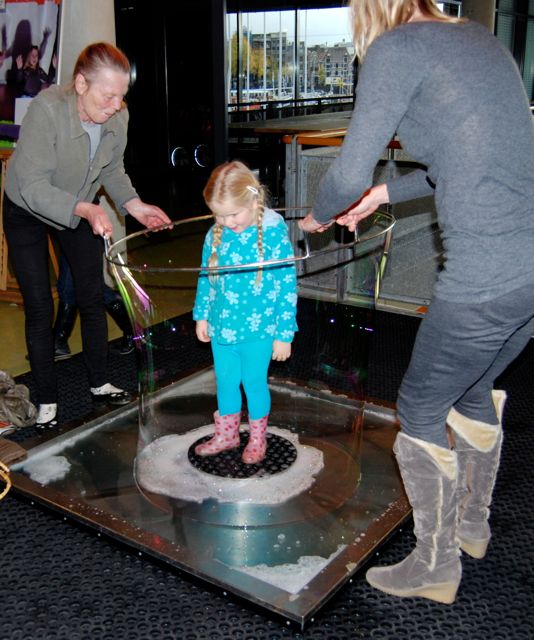
I started my career as a biology teacher and honestly enjoyed being in a high school classroom as a teacher. But I found jobs at an outdoor learning center and a state park early in my career and never found my way back to the classroom. Over time, I slowly discovered the difference between science education and interpretation.
Schools, science centers and science agencies quite reasonably hope to teach people about some of the most important concepts in science. Standardized exams in school ask questions that revolve around those important basic concepts. But parks, zoos, museums, nature centers, aquariums and science centers introduce science to people in leisure settings where there will be no test. Are we attempting to “educate” people in these non-formal settings? Research on retention of information suggests that people, even if engaged in free-choice learning, do not always carry away much information from these settings.
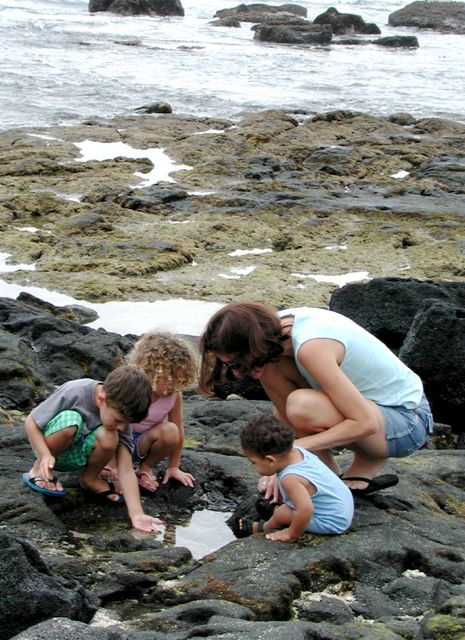
Interpretation is unique among education-related fields in being focused on creating connections to content rather than specific information retention, in most cases. We want to inspire our guests to learn more on their own and deepen their understanding of ideas, ecosystems and processes. We want to influence their attitudes in hopes they will want to know more about science or take some action related to revealing the mysteries of nature and the universe. And research suggests that if we are truly successful in getting people to think more deeply about our subject, they may remember very little specific information. Their minds are more engaged in thinking about where they are and what it means to them.
If we truly engage people and get them to think, they might buy books at our store, sign up for a behind the scenes tour, visit another museum or science center or become a volunteer. They may be inspired to choose a career or change their behavior to demonstrate their deeper understanding of environmental or social issues. In my view, those are better reflections of engagement than remembering facts. A person who is turned on by good interpretation learns much faster on their own, digging into the subjects that delight them in ways they enjoy on their own time, long after their encounter with the original speaker, program, or exhibits is over. He or she might watch TV shows on science, read books, take trips to unique ecosystems, explore with field guides or technological aids, or become advocates for science-related topics.
We need to encourage more young people to become scientists or to become supporters of science. Scientists can help by becoming better communicators, focusing more on engaging their audiences rather than lecturing, getting them to think more than remember, and lighting a spark of interest that may flare into a new passion for the world around them. Parents can encourage their children by simply taking them out into nature very young and spend time in nature centers, museums and science centers. We live on a beautiful planet and a career in science is a journey of joy and wonder.
-Tim Merriman
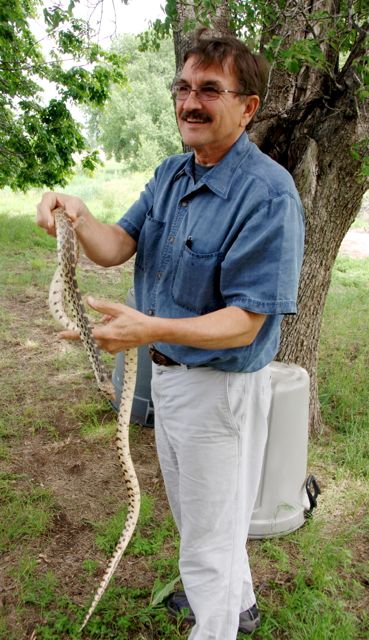
If you’re an interpreter or guide working on the front-line of an agency, organization or tour company, how do you evaluate your success on a daily basis? Is it the number of smiles you receive, the volume of the applause, the “good job” comments made by your peers or supervisors?
More than a dozen years ago we were training guides in La Paz, Mexico, and we asked them to identify measurable objectives for their programs. Maria Elena Muriel identified exactly what she desired after doing a turtle program on a beach. “More than half of my guests will stay and help clean the beach of plastic bags and trash.” She was asking cruise boat tourists to help clean up a Mexican beach when likely none of them took the tour intending to volunteer for maintenance work. What she found was that the quality of her program and the simple request at the end of it encouraged people who now felt connected to the sea turtles to help clean up the beach. Her ability to get people to think and care had a very direct and measurable impact.
If your purpose is solely to entertain, then many interpretive programs would fill that bill. But if your purpose is to support the mission of your organization then you may want to go beyond entertainment. To measure your success, you may want to include a request for people to do something that demonstrates an attitude shift that takes place as a result of the program. How can you measure success in a single program, guided hike or tour? First you have to identify what behavior is desirable. What will guests do differently if you are effective with your message? Here are a few suggestions for objectives you might have for a specific program, bearing in mind that any one program might reasonably have only one or two objectives.
XX % of my audience will sign up for an additional tour or program
X people will become volunteers in our program
X people will sign a pledge to recycle at home or take part in a conservation effort
XX % of my audience will make a donation of $5 or more
XX % of my audience will take information on future programs or donor opportunities
XX people will stay after the program and ask questions
XX people will sign up for a voluntourism project
XX % of my audience will sign a petition before leaving
XX people will buy a membership before leaving
My guide tips will average XX$ per person on the tour
XX people will buy a book or books I recommended in the program
When I served as director of a non-profit nature center, I always took a stack of membership forms to a public presentation and used magic markers to stripe the edges of the stack with a distinctive series of marks. Then I could ask our bookkeeper to count the number of returned envelopes with two blue stripes on the lower right edge of the envelope. I could compare the results with the total number in the audience. I could test the effectiveness of my appeal for members at every single talk I gave. Our nature center relied on memberships and donations as a major income source and we became skilled at getting them as a result of presentations to civic organizations.
Some people object to having such measurable objectives. They may feel that trying to measure their “art” takes something away from it or that it is enough to be satisfied by the warm fuzzy feeling that they performed well and the audience seemed pleased. But I hope that most interpreters will want to know that they are advancing the cause of their organization. I did not go into this work to be entertaining alone. I want to encourage people to make better choices in how they treat each other and the environment. Those results can be measured, but it means I have to think about how I might measure my success every time I speak or lead a tour. I hope you’ll do the same.
– Tim Merriman

I used to like the story about 10-year old twin boys at Christmas-time. Their parents explained to a psychologist that one was always optimistic, expecting good things to happen and the other expected the worst, a pessimist. “What can we do to balance their attitudes about life,” they asked. The specialist suggested they disappoint the optimist on Christmas morning and surprise the pessimist with everything he wants. They tried that and the boys bounced downstairs Christmas morning. The pessimist had a dozen wonderful gifts he unwrapped quickly and then pushed aside just as quickly. “It’s not the color I wanted. It’s boring.” He wasn’t happy. The little optimist searched for a gift and finally found a bucket of horse manure with his name on it. He jumped up and down with delight. “This is great. There has got to be a pony around here somewhere.”
Some people believe that it is pre-determined we will be one or the other, destined to always look at the downside or upside of all that happens. I think we have some genetic and environmental influences about our attitude but we also make choices. We can choose to be optimists and work toward a greater good. There are some great examples around us of people who optimistically took on big challenges and succeeded.
Chad Pregracke of Living Lands and Waters just received the CNN Hero Award for his amazing work in organizing 70,000 volunteers to pull 7 million pounds of debris from American rivers. His optimism about our abilities to clean up our messes is powerful. He continually interprets for people what can be done through collaborative effort. As a young man he collected mussels from the muddy pools of the Mississippi River and was stunned to find car bodies, barrels and myriad waste materials in the river. Fifteen years ago he began personally cleaning up the river and then enlisted others through his very persuasive storytelling about why it matters. When he learned of his $250,000 “Hero” award, he immediately gave $10,000 each to the other nine candidates. He saw the award as a broad endorsement of effort that should be shared.
Americans enjoy clean water, clean air, diverse wildlife, wonderful parks, forests and beaches due to thoughtful policies and careful legal protection. Behind each of those laws and policies you will find stories of personal effort and sacrifice by individuals like Chad, and small groups of people who were optimistic about improving something that mattered to them. We should not only be thankful for the clean environment we enjoy, we must continue to inspire people to get involved in ways that make a difference.
I can be pessimistic about global climate change, HIV and many of the world’s challenges, but it simply does little good. Optimism is the fuel of change. “Yes we can,” always feels better to me than “Why bother?” Interpretation as a profession is a communication process that can inspire change and influence people’s attitudes, if planned and executed well.
Tomorrow we will enjoy a great meal at home with family and I am thankful for the wonderful wife and family with whom I share life’s challenges and rewards. And we will be mindful as a family of the many people and places that have less than they deserve. We will continue to work optimistically for a better world and life for all people. HAPPY THANKSGIVING!
– Tim Merriman
Today is the 150th anniversary of Lincoln’s Gettysburg Address. Documentarian Ken Burns is urging everyone to memorize the address to internalize it. You can go to his special website at www.learntheaddress.org and hear the speech given by Americans of all political stripes, including all five living Presidents of the U.S. The video above records Ethan Pond delivering the address at the annual Greenwood School contest in Vermont. The school employs the memorization of the speech as an important part of their educational program each year with learning challenged young people.
Great inspirational speeches endure over time. Fact-laden meandering talks are forgotten soon after they are given. Former Harvard President Edward Everett gave another Gettysburg Address that lasted more than two hours on November 19, 1863 just before Lincoln’s more succinct and direct speech that lasted just a little more than two minutes. Everett is described on Wikipedia as an “American politician, pastor, educator, diplomat, and orator from Massachusetts.” His speech was well received at the time but soon forgotten.
President Abraham Lincoln was asked to make his remarks at the Consecration of the National Cemetery at Gettysburg. The 271-word speech framed the theme of the talk that is still remembered these many years later.
Four score and seven years ago our fathers brought forth on this continent a new nation, conceived in liberty, and dedicated to the proposition that all men are created equal.
President Lincoln was reportedly ill that day, most probably with smallpox, which may have been the reason he kept his message short and direct. Getting right to the point had dramatic impact. Lincoln’s words are chiseled into the walls of the Lincoln Memorial on the Mall in Washington, D.C. for all to see. People gathered there on this 150th anniversary to take part in the Burns challenge, not just to recite the passage, but also to think more deeply about what it meant.
Lincoln engaged us in a conversation that has never quit. How do we keep the United States a place where all are created equal? His theme continues to provoke us daily as we watch those still lacking some freedoms argue for equal treatment, in America and around the world.
Sometimes a great idea gets lost in the forest of words used to describe it. Everett wrote the President the next day and said “I should be glad if I could flatter myself that I came as near to the central idea of the occasion, in two hours, as you did in two minutes.”
I’m going to memorize the address to remind me of the work that we must still do as a nation to be sure that all people are treated equally, the need for which is constantly underscored by daily news reports and observations we can all make.
As an inspirational speech, the Gettysburg Address is simply one of the best ever given. I join Ken Burns in challenging you to read, recite, and remember its important message.
-Tim Merriman
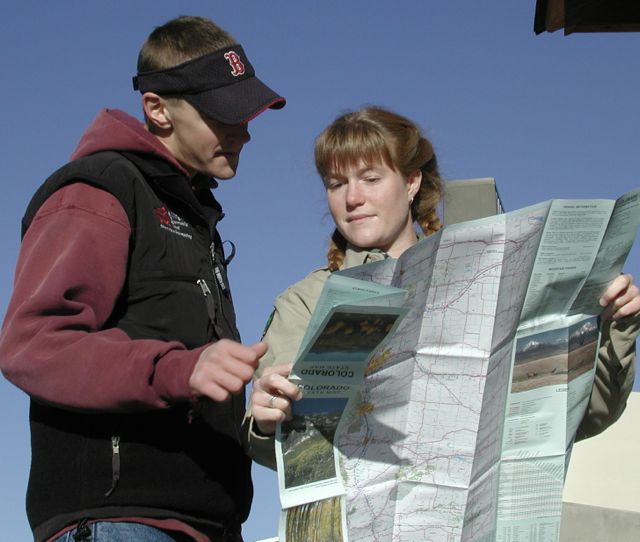 I recently stood for several minutes at an information desk at a park waiting for one of several workers on duty to notice me and ask to help. They were deeply engaged in personal conversations. Their uniforms indicated that some were employees and others were volunteers. At any park, zoo, museum, historic site, forest, aquarium or community there are people working for different organizations but doing the same work. Many organizations have volunteers, friends group employees and staff working together on information duty or making reservations for tours or programs.
Our uniforms, logos, and other insignias are not clear communication for tourists and guests at most recreational settings. They see an official outfit or insignia and attach it to the organization that seems most obvious. If you have partners, volunteers, concessionaires, and front-line employees in places where they meet your customers, your guests, they must deliver consistent messages and services. The customer will not understand who served them poorly.
Here are six things to think about when planning to train your front-line:
Front-line workers chatting with each other instead of turning to help a guest is a very normal thing to do, but with training they will know why their attention needs to be with the guest first and our colleagues in free time. We can improve uniforms, insignias and logos, but people will still confuse them if they work at the same site. Help them all deliver a quality experience and represent their organizations in the best possible way. It’s worth the investment.
We train with the Certified Interpretive Host (CIH) course from National Association for Interpretation, but can also customize host training to a specific site if requested. Let us know if we can help you craft and deliver the right host training for your staff.
– Tim Merriman
In the 1980s I was managing a nature center in Pueblo, Colorado. A local Italian family asked if they could plant a cottonwood tree along our waterfront in memory of their grandfather. Beaver had cut down many of the cottonwoods over the years, so we allowed the planting and I was amazed when more than 40 people, family and friends, showed up for a picnic and tree planting. They came back year after year to see how his tree had grown.
The poignancy of this thoughtful gesture made it clear that there is great power in life’s passages. At the nature center, we immediately turned all of our landscaping projects into memorial gardens. We used native plants but allowed families to pay for the landscaping and perpetual maintenance in return for remembrance of their loved ones. They would return again and again to view the gardens and feel close to their departed friends and relatives. We planted native plants in naturalistic patterns so the nature center’s high use areas became showcases for xeriscape and native plants options to serve the needs of the nature center and the people of the community who wanted only the gardening advice. But for the families who invested to honor a memory, the memorial gardens became that special place where they could feel a connection to more than the plantings.
Through the years we had weddings, funerals, and birthday parties at the center and each of those brought people out to enjoy each other’s company while out in nature. We also put stained glass windows in the Raptor Center’s foyer as memorials, which beautified that area with birds of prey in glass. Again families returned to show visiting family the windows and the birds of prey that had a special connection to their loved ones.
Gordon Maupin at the Wilderness Center in Ohio took this notion a step further in building Foxfield Preserve. He developed a natural burial cemetery that gave people a place to bury loved ones in nature without caskets, big monuments and mown grass. This strategy not only preserves large tracts of open space but embraces one of life’s certain passages for each of us, death, and affirms that many of us prefer to be a part of nature after life, recycled, not a preserved specimen.
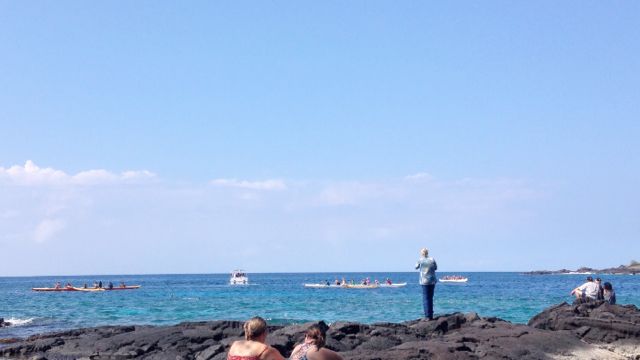
As I write this, we are on the Big Island of Hawaii. We went to Honaunau Bay yesterday to snorkel and enjoy the scenery. Large numbers of people were gathering at the canoe club behind the beach park to say goodbye to their friend, Nancy. They carried long traditional canoes down to the water and mounted them to paddle out and spread her ashes. Then they returned to the bay and paddled in a circle as a lone Pu horn made of a conch shell was playing beautiful, haunting tones. Those paddling the canoes spread white and pink plumeria blossoms from their leis on the water. We could not hear what was being said about Nancy but everyone on the beach area became quiet, watching intently. It was beautiful and brought tears to the eyes of many. Respect is contagious. Though we didn’t know her, we thought she might be pleased to see how many people turned out to send her out to sea in this special farewell.
Life has many passages. Sharing those special times with special people in special places connects us forever to our community of family and friends, framed by the natural and cultural heritage we all share.
Tim Merriman
CNN recently aired the Blackfish film by Gabriela Cowperthwaite and it has sparked deep conversations among parents, animal lovers and zoo aficionados. Much of the film is about SeaWorld and the 2010 death of Dawn Brancheau, by Tillikum, the 12,000 pound orca she trained.
I think this is an important conversation but the reaction to the movie has become very hostile to Sea World specifically and perhaps zoos in general that keep larger animals. I can land a lot of different places on this subject. I think Sea World brings stories to people they likely will not get other places and generally takes great care of their animals. Their trainers are obviously dedicated to their work so it was chilling to hear former trainers talk about their concerns about keeping whales in captivity to do entertaining shows. I hope Sea World does not go away or stay away from challenging stories about sea life. I do hope their educational and interpretive mission grows stronger. It seemed much more important in their programming when Harcourt Brace Jovanivich (textbook company) owned the properties than it has since then in the ownership of Busch Entertainment and then Blackstone Entertainment, the current major stockholder.
The conversation surrounding this and related issues matters a lot. Is it appropriate to keep all kinds of animals in captivity for educational purposes? Should they be in shows that are primarily entertainment and interpretation/education secondarily? Should they be kept in wildlife parks, zoos or aquariums with no conservation messages that explain their presence?
When I was very young (1950s) I saw a chimpanzee that would box any man who wished to enter the ring and attempt to win $50. I first worried about the welfare of the chimpanzee and then watched him knock down every amateur boxer in less than 15 seconds. They were no match for his pugilistic skills wearing human boxing gloves. But it seemed a terrible, exploitive use of a chimpanzee.
Elephants, orcas, belugas, dolphins, chimpanzees, wolves, gorillas, orangutans and many other animals are so social, smart and active, that even the best captive habitats may or may not be enough to keep them physically and psychologically healthy. But people seeing them in captive programs often donate money for research, protection and interpretation that is vital to conservation of these animals. But when the animal becomes just a SHOW with fireworks, loud music and behaviors that do not resemble their natural behaviors at all, is it appropriate? Do we or should we have some ethical sense of social justice for animals?
People have definitely made progress the past 50 years in caring for captive animals. I doubt anyone in the United States (and some other countries) wants to see the boxing chimpanzee at their local zoo or circus. But many animal shows still seem more exploitive than educational. Should we exploit the animals for profit? That is one of the tough questions tackled in the movie Blackfish.
More than 35,000 elephants are being killed annually in Africa for their ivory. We could see their complete disappearance from nature without extraordinary conservation efforts and education must be part of that. African Wildlife Trust, Sheldrick Wildlife Trust and others are trying to do more educationally. Does a circus elephant show aid that effort or simply add to the exploitation of elephants?
Some consider mountain gorilla tourism in Rwanda, Uganda and Congo to be exploitive, but gorilla numbers have grown from 230 a decade ago to 880 this past year due to tourism that takes people close to habituated gorilla families. Is it too much? Does a gorilla exhibit in a zoo make a valuable contribution to gorilla conservation? I think so. I hope so.
I’m not opposed to animal programs, aquariums interpreting marine mammals or zoos, but I think our ethics about care of captive animals have evolved slowly. It’s essential to keep the conversations going. Let’s be kind to each other in the process. We may not all agree on every decision made about captive animals, but let’s keep talking. Let’s keep adding animals to our sense of humanity and humane care.
Blackfish has a “point of view” you may share or the movie may offend you. I might have suggested that the movie’s script be more clear about the important questions that are being asked so that it would be easier for viewers to sort out the various issues that are threaded throughout the film. The story is much bigger than one corporation’s culpability (or lack of culpability) in one trainer’s death or the welfare of one orca taken from the wild. Unfortunately, many viewers focus on those aspects of the film instead of thinking through all the implications and variations of the notion of keeping animals in captivity. In fact, the movie shares a number of important stories about captive orcas and the concerns of all involved. Thoughtful viewers can expand that discussion to take a hard look at how we interact with other animal species as well.
I urge you to watch the film and take part in thoughtful discussions about these important ideas. Ultimately I hope we see some changes at Sea World but I also recognize these issues are complex and not easily answered. Condemnation of Sea World probably helps no one but encouraging more ethical treatment of animals in captivity while these conversations continue helps everyone, especially the animals who may have landed in our care.
Tim Merriman
 Sperry’s famous research at Caltech on the “split-brain” was shared with the scientific community in the 1960s, and since then, numerous other studies have been done that provide more insight into the varied specialized functions of different parts of the human brain. These studies suggest that there is no simplistic explanation of “right-brained” and “left-brained” people. Although certain functions have been proven to reside in specific hemispheres, humans have an entire brain and nervous system that must work in a holistic fashion to remember what is important and make decisions quickly when necessary.
Those of us who interpret nature and culture read these studies with interest but must look beyond any specific study to think more deeply about how brain research might influence how we communicate with our audiences. Rob Bixler recently observed in a Facebook post that, “If we were to delve into communication theory or linguistics, or persuasion literature, we would soon be buried in 1000s of overlapping theories that could inform our work. Think of these research-based ideas as metaphorical rather than marching orders. Most of the stuff we do, we do out of professional judgment, and rationalize after the fact with research.”
Looking at the broad range of neurology and cognitive psychology research, a few ideas shine through for me as points to consider:
We cannot change people but we can influence their attitudes, beliefs and behaviors by encouraging them to “think.” Sam Ham emphasizes this in his new book, Intepretation – Making a Difference on Purpose. We get people to think by introducing strong themes, asking questions, and starting conversations with our visitors and within them. Ideally they leave our experiences with more questions in their mind than upon arrival. They are thinking about the engaging idea or ideas we introduced. They change themselves if our interpretation gets them to think more deeply and see the opportunity to change their own behavior.
Getting people to pay attention is essential. We cannot get them to think if they are not engaged. Sam Ham teaches TORE as a way to remember key steps in planning interpretive experiences. T is for Thematic, which gets people to think, but the other three components are to gain the attention of the guest, to engage them. O is for organized, R is for relevant and E is Enjoyable. People stay tuned if our experiences are organized and relevant to their lives while being enjoyable or engaging. If we get them to pay attention, we may get them to think about our theme.
“The more elaborately we encode information at the moment of learning, the stronger the memory” – John Medina, Brain Rules
When we design experiences that employ all five senses, we create memories. The human brain actually encodes information in diverse parts of the brain and a smell, a visual or the right words will take us back to a cherished memory. Reversing the process, we can create memorable experiences. When we discuss learning styles, it’s important to remember that most of us actually use all learning styles with some preferences for one or two of them. Richly designed experiences employ all of them.
Neurological and communications research will continue to influence how we work in the future. Ideally we are not locked into any piece of research so completely that we cannot learn from and use the new ideas that arise. As Rob points out, we use our professional judgment and hands-on experiences to learn what works for us and what does not. Research is great for affirming why a certain approach works and getting us to think about how to make experiences we design even more engaging.
-Tim Merriman

 heartfeltassociates.com