Making a Difference on Purpose

Dr. Sam Ham is a well-known name in the interpretation profession. He has just completed a new book entitled Interpretation – Making a Difference on Purpose. His classic first text, Environmental Interpretation – A Practical Guide for People with Big Ideas and Small Budgets was published in 1992 in English and Spanish. It has served as a cornerstone of 51LhzS-y6PL._AA160_teaching thematic interpretation in universities all over the world and was one of the original six texts used in National Association for Interpretation’s certification library. This new book will no doubt provide another lasting contribution to our understanding of the profession.

Sam was kind during his writing process the past two years in showing Lisa Brochu and me the draft chapters and inviting our comments. We shared our thoughts and I hope provided useful ideas as he wrote. He points out in the Author’s Preface that he had prolonged personal discussions with David Larsen of National Park Service about the book over the past five years. He dedicates this book to his three grandchildren and David, recognizing and honoring David for his considerable assistance just before his untimely death.

As a cognitive psychologist and Director of the Center for International Training and Outreach (CITO) at University of Idaho, Sam has conducted research about the effectiveness of interpretation as an approach to influencing the attitudes, beliefs and behaviors of people in varied interpretive settings. His 2001 study of work done with Lindblad Expeditions on their Galapagos Islands tours is an important example of how good interpretation can make a difference. He helped Lindblad craft thematic approaches to guided activities that led to a 270% increase in contributions to the Darwin Research Center.

The new book has a deep focus on the research behind Sam’s ideas on the value of thematic interpretation without being mired in academic jargon, so it is useful to everyone in the field. He helps you understand the reasons why thoughtfully planned interpretation can make a difference, so that your work is not just based on a vague hope that what you’re saying is useful or influential. He explains how best to use this interpretive approach to communication in a social marketing effort to motivate people toward more desirable stewardship behaviors and that a “zone of tolerance” is acceptable when developing and delivering thematic messages.

The book is an enjoyable read interlaced with many personal stories. He was kind in asking me to write the Foreword, so I refer you to that for more in-depth thoughts about the book and its value to the profession.

Last week Sam let me know he was about to send a print copy in appreciation of our comments along the way. So it is finally in print after many years of anticipation by those in the field. The book just arrived at my mailbox and I am excited to see the finished copy.  I encourage all of you working in this field to acquire one for your library by visiting Amazon now. It is a great investment.

– Tim Merriman
Get To the Point

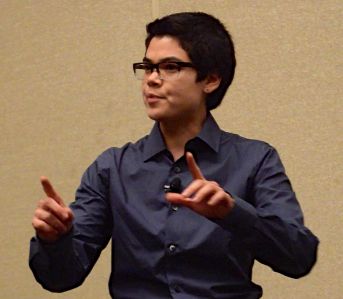
We were in San Francisco last December to work with NASA and National Geographic’s Famelab competition. Shayle, one of the young scientists who presented, said, “Nudibranchs steal poison from their prey. They carry it around like a poisonous backpack, using it for their own defense.” I remember the point of the talk because the main idea was right up front, well-explained in the body and re-emphasized at the end. Shayle Matsuda won that particular competition and will compete in the national level Famelab event later this year.

Shayle Matsuda gets to the point about nudibranchs in the San Francisco Famelab competition by NASA And National Geographic.

Have you ever found yourself wishing that someone who wanders through a speech or a conversation would just get to the point? When you speak, your audience is trying to make meaning from what you say. If you don’t get to the point pretty quickly and your listeners don’t know you well enough to be patient with your meanderings, they are inclined to embark on their own wanderings as they tune you out.

The point is that any listener needs to make meaning from what you are saying right from the start. Most listeners ask silently “what has this got to do with me?” before deciding whether they want to invest their interest. John Medina, a neurologist and molecular biologist, writes in Brain Rules that Rule #4 is “We don’t pay attention to boring things.”  He suggests that “the more attention the brain pays to a given stimulus, the more elaborately the information will be encoded–and retained.”


Research on advance organizers suggests that sharing your point or main idea at the beginning of a presentation lets the listener know what you will be talking about. This main idea, or theme, of your talk helps the listener determine whether he or she wants to pay attention. If you lose focus and begin to wander away from your theme, the audience can become confused and disinterested. You might think of digressions as “interference,” noise that actually disrupts or obscures the main point of your talk.

Recapturing the audience is tough to do once you lose them. They may have their eyes open and be facing you, while they are thinking about where they are going to eat or how they are going to redecorate their home. Merely being present does not constitute paying attention or real engagement.

During the presentation, it also helps the audience to focus on what you’re saying if you use language that is understandable or relevant to his or her life. A sea slug eating and storing poisons in a “backpack” suggests an interesting image that is easy for most people to understand. Cerata storage of toxic nematocysts in eolid nudibranchs is way too unfamiliar for most of us. Using jargon and complicated explanations may only work if your audience is that specialized group of specialists who work in the same field.

Restating your point in your conclusion helps the audience pull together all the bits and pieces you’ve shared through anecdotes, facts, and examples related to your main idea. The restatement of your theme doesn’t have to be in the exact same words you used at the beginning. It should simply reinforce the point to give the listener something to think about later.

Speech teachers have often said, “Tell them what you’re going to tell them, tell them and then tell them what you told them.” Communication and psychological research support that idea, so get to the point quickly and stay with it until you recap at the end. They may not remember all the details, but months or years later your main idea will likely still be at work in the minds of those who listened to you.

– Tim Merriman

Greening Rwanda – One Bird at a Time

Picture a group of young people led by a highly trained and Certified Interpretive Guide. They’re looking for birds, monitoring endemic species in one of the most significant rainforests in East Africa. Imagine this is your group – twenty-five enthusiastic young people who want to learn more about their environment and hundreds more waiting behind them in area schools. Now imagine the tools you have at hand – just two binoculars and one well-worn field guide. For the entire group.


ange
Lisa Brochu and Ange Imanishimwe on a trail in Nyungwe National Park, Rwanda.

Recently, I had the pleasure of working with a group of thoughtful, committed citizens of Rwanda. These young men work as guides in Nyungwe National Park, an incredibly diverse and beautiful forest that provides 70 percent of Rwanda’s water supply. They are also working tirelessly to develop a conservation ethic among the people of Rwanda to ensure that the country has a healthy environment in the future.

The Biodiversity Conservation, Hygiene, Sanitation and Environmental Management Cooperative (BIOCOOP) is committed to building an economically stable nation through projects related to natural resources management, biodiversity conservation, and environmental protection. To accomplish this mission, the group has initiated a number of projects that are showing results in greening primary and secondary schools, creating jobs for youth, training youth in entrepreneurship, business development and projects management, ecosystem regeneration, establishing environmental clubs, and creating a tree nursery.

The president of BIOCOOP is Ange Imanishimwe, a passionate young man with a B.S. in Biology and a Certified Interpretive Guide, who believes that working with youth is the key to a sound economic and environmental future for Rwanda. The BIOCOOP has identified projects that will train and employ young people, helping them contribute to sustainable development of the country. Additional projects target community members around the park and throughout the country to raise awareness and promote positive actions related to conservation and environmental issues.

I continue to be inspired by the people of Rwanda and throughout East Africa. They exemplify Margaret Mead’s quote: “Never doubt that a small group of thoughtful, committed citizens can change the world; indeed, it’s the only thing that ever has.” In some of the poorest countries on the planet, they have not lost hope of building a better future by sharing their vision and attempting to create new social norms. But they need your help to make their efforts sustainable. Each project identified by BIOCOOP has a specific budget to support stated goals and objectives. I encourage you to visit their website and learn more about the specific ways in which you can become a part of their projects.

In the meantime, if you have an extra set of binoculars you’d like to donate or any textbooks related to conservation, environmental management, hygiene, sanitation, or other environmental issues that could find a new home in the BIOCOOP’s community library project, you can send them to us and we’ll see that they get to these thoughtful, committed citizens of Rwanda. You can make a difference by helping them to do so.

Lisa Brochu

Send binoculars and books to Heartfelt Associates – Rwanda BIOCOOP, 1105 Harris Drive, Fort Collins CO 80524.

Product or Experience?

Are you planning tourist or visitor products or experiences? It matters how you think about it.

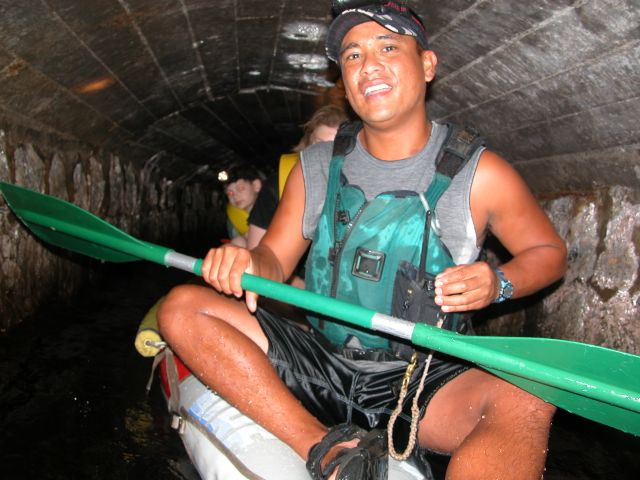
Flumin' da ditch in Hawaii, a boat trip through aqueducts.
Flumin’ da ditch in Hawaii, a boat trip through aqueducts.

Tourist products, like tours, boat rides, or programs, are often viewed by visitors as commodities. They compare your two-hour tour to other diversions of two hours, like a movie. Price becomes an important factor in the decision to buy or not to buy the product. We tend to shop around for commodities and often the lowest price is the deciding factor.

Harvard professors, Pine and Gilmore, describe experience-oriented businesses in their book, The Experience Economy as having five traits:

Thematic design

Harmonize with positive cues

Eliminate negative cues

Mix in memorabilia

Engage all five senses

They point out that people will pay more for experiences than they do for a commodity. Many of our favorite businesses have developed experiences. We pay a lot more for coffee at a Starbucks than their fast food rivals, expecting comfortable chairs, friendly staff, warm ambiance, soft music, newspapers, free Internet and encouragement to stay as long as we want. Many other fast food shops want you to leave quickly and make room for another customer. Their low profit margins require the rapid turnover of customers.

In tourism communities, parks, museums, nature centers, aquariums and historic sites we can plan products or experiences, but experiences pay better and build more lasting relationships with our guests. To plan experiences we have to put some effort into Visitor Experience Design.  Lisa Brochu describes this process in her book, Interpretive Planning: the 5-M Model for Successful Planning Projects as follows:

Screen Shot 2013-04-24 at 12.58.08 PM

Experiences begin with the DECISION POINT, the “advance organizers” such as your website, TripAdvisor.com, and brochure displays at airports. They set up what will happen and it’s important to underpromise and overdeliver. The voice of previous customers shows up in reviews on social media sites so when we disappoint someone it hangs around to haunt us.

The ENTRY phase may include the journey to the experience, but it helps prepare us along the way. It tells us that we are welcome and sets the stage for the thematic experience to come. Signage, landscaping, architecture, traffic flow and much more create a rich introduction for the experience that lies ahead.

Hawaii Forest & Trail plans experiences that include great local food snacks along the way.

The CONNECTIONS phase is the heart of the experience. Is it thematic, multi-sensory, and highly engaging to create long-lasting impressions? Too often, poorly planned experiences reek of “been there, done that.” If they are shared with friends later, it’s usually to tell people to skip it, or to complain on Yelp or Trip Advisor. In contrast, people can’t wait to share details about rich experiences and they often plan return visits to bring their friends or family.

The EXIT part of the experience is the place to invite people to return, get their contact information, sell appropriate thematic memorabilia, invite deeper engagement as a volunteer or donor, and thank them for visiting. It can be where you suggest how they might plan a return visit and even get a discount for making it soon.

The COMMITMENT is the follow up. Did you get the engagement you wanted from the guest? Did they buy memorabilia, leave thoughtful comments, pick up the notice of future events or programs, make a donation, become a volunteer, take a behind the scenes tour? We should be tracking the changes we want in measurable terms to know that the experience meets our objectives.

It takes careful planning to create visitor experiences that work well and achieve your objectives. How do you pay for that planning? Usually careful planning keeps you from building infrastructure that is unneeded and helps you place staff where they enhance the experience. The savings realized along with the increased business income can pay for the planning. If you need help with community or visitor experience design, let us know. We would enjoy working with you.

– Tim Merriman

Don’t Dumb it Down

I’ve lost count of the times I’ve heard someone say, “Oh, interpretation, that’s just dumbing down science so everyone can understand it.” If you’re an interpreter and you’ve ever said something similar, stop it. If you’re a scientist and you’ve said something like that, stop it. If you’re anybody else, not in one or both of those categories, and you find yourself using that phrase, stop it.

Putting something in terms that relate to that person’s experience or understanding is not “dumbing down.” It’s practicing good communication. And we certainly need more of that these days in all areas of work, home, school, and everywhere else we come into contact with other people.

I recently attended a panel discussion at the University of Colorado’s Conference on World Affairs. The panel of four people offered different perspectives on the topic of the energy industry and its effect on the support (or lack thereof) of Congress and the American public on environmental issues. It was a fascinating discussion, filled with facts, analysis, opinions, and predictions. But what struck me as I listened was the need for more clear communication between the science community and everyone else, related not just to climate change but also every other topic that science touches on.

If scientists or interpreters claim that science needs to be “dumbed down” so that “regular” people can understand it, they’re being incredibly disrespectful to those very people whose support they seek. People are not “dumb” just because they are familiar with things other than that particular subject. Not all of us are nuclear physicists, just as not all of us are doctors, or biologists, or butchers. Everyone, no matter who or how old they are, or what they do, has a language of specialty related to their own experiences.

And this is where good interpretation comes in. Bridging between languages of specialty is as important as bridging between languages of country. You wouldn’t call someone who is fluent in other languages besides your own “dumb.” Instead, I would hope that you would work to find respectful ways to make yourself understood and to understand him or her. Using universal hand signals or pictures rather than words are certainly useful in those circumstances. Hmmm. Universals . . . there are concepts that are universal also, things that relate to almost everyone’s experience as a human being. Good interpretation draws on those universal concepts to help people understand and relate to the topic at hand. Not dumb. Different.

One of the panelists from the other day, Allen Hershkowitz (senior scientist of Natural Resources Defense Council), pointed out the need to get science messages out to the masses. He mentioned the frightening statistic that only thirteen percent of Americans follow science, while sixty-one percent follow sports. It’s no wonder we have people who still believe global climate change is a hoax in spite of the overwhelming evidence otherwise. Hershkowitz’s strategy of asking Hollywood stars and athletes to speak for science is brilliant. He refuses to preach to the choir, which is the fallback position of so many interpreters. We take the easy road, talking only to those people who come to our sites instead of reaching out to nontraditional audiences with important messages about our global natural and cultural heritage resources.

If we want to get those messages across, we need to challenge ourselves to translate more thoughtfully and respectfully, no matter who initiates or participates in the conversation. Stop “dumbing it down.”

Lisa Brochu

Storytellers or Interpreters – Is There a Difference?

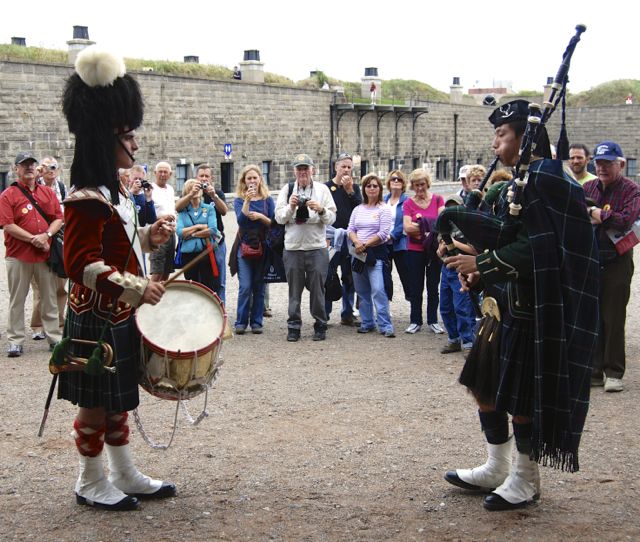
Every now and then, I hear or see discussions of storytelling as being roughly equivalent to natural and cultural heritage interpretation. Certainly some interpreters use stories to help others understand places, people and

Costumed interpreters in Halifax, Nova Scotia, use music to share history and demonstrate cannon firing.
Costumed interpreters in Halifax, Nova Scotia, use music to share history and culture.

events. Conversely, some storytellers use an interpretive approach to enrich their work. But I don’t think that storytelling and interpretation are exactly the same thing.

Interpretation is defined by National Association for Interpretation (NAI) in the United States as:

A mission-based communication process that forges emotional and intellectual connections between the interests of the audience and meanings inherent in the resource.


Association for Heritage Interpretation (AHI) in the United Kingdom has the following to say about the work of interpreters:

We bring places, objects and ideas to life. We create thought-provoking and memorable experiences for visitors, and connect people with our natural and cultural heritage. We reveal hidden stories and meanings, so deepening people’s understanding and expanding horizons.

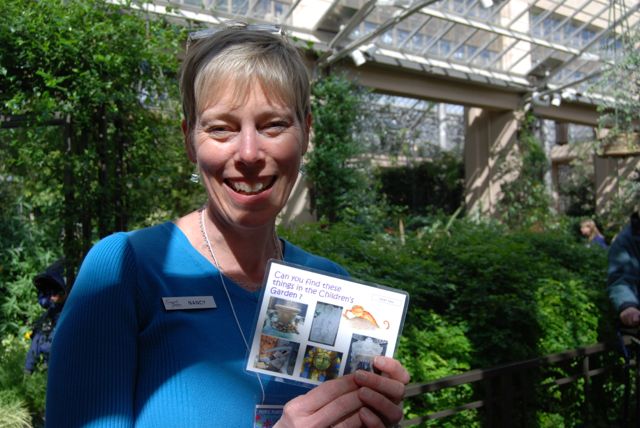
An interpreter at Longwood Gardens might tell a story as part of the experience but uses other media and approaches as well.
An interpreter, like Nancy, at Longwood Gardens might tell a story as part of the experience but uses other media and approaches as well such as this “Can you find” activity.

Both statements emphasize making connections and revealing meanings by the use of varied media. The AHI description mentions stories not to define interpretation, but as part of a process to design memorable experiences.

Merriam-Webster Dictionary gives these definitions for storyteller:

a : a relater of anecdotes

b : a reciter of tales (as in a children’s library)

c : liar, fibber

d : a writer of stories

Telling stories has a rich history of double meanings. Some people tell stories for a purpose, some to entertain and some to mislead. Interpretation has broad meanings outside of the heritage interpretation field and some of those seem to be less than honest, such as dream interpretation or reading palms.

Wikipedia suggests that:

Ghost walks like this one in New Orleans could be storytelling on a walk or interpretation, depending on the guide's motives to entertain or engage the guest.
Ghost walks like this one in New Orleans could be storytelling on a walk or interpretation, depending on the guide’s motives to entertain or engage the guest.

Storytelling is the conveying of events in words, images, and sounds, often by improvisation or embellishment. Stories or narratives have been shared in every culture as a means of entertainment, education, cultural preservation, and to instill moral values.

I don’t want to take anything away from storytelling. As a novelist, I enjoy spinning a story out of thin air, and as an interpreter, I enjoy helping people understand the depth behind a person, place, or thing by sharing relevant stories through a variety of media. Perhaps it’s the use of the word “story” that confuses the issue. In interpretation, we certainly talk about using “stories,” but perhaps we should be using the word “meanings” instead to avoid confusion with the process of storytelling.

In heritage interpretation we reveal meanings with a purpose, to help people understand people, places and events. We encourage an attitude shift. We want them to connect with and care more about the resource, place or event. Ideally they then become advocates, donate money or behave in more thoughtful ways. Motivation matters very much in storytelling also. Storytelling encompasses a broad variety of motivations, including deception, entertainment and self-improvement. Interpretive storytellers likely have similar motivations to other heritage interpreters, but use storytelling as their preferred medium.

We will keep using storytelling as a useful approach to interpreting people, places and events, but recognize it is only one of a variety of communication options that help people understand the world around them. We always hope that a deeper understanding leads to a desire to better care for natural and cultural heritage or provide more support for scientific research and exploration.

-Tim Merriman

FameLab – The American Idol of Science Communication

famelabhouston13
Famelab was hosted in March in Houston at the Lunar Planetary Institute and eight scientists participated.

You’re getting into an elevator and find yourself surrounded by astrophysicists . . . can you just imagine the conversations? I haven’t been in this situation recently, but  I have had the opportunity to increase my exposure to science among the stars. Over the last year, I’ve been asked to be a judge at regional FameLab competitions and I have to say, it’s more fun than I could have possibly imagined.

The FameLab concept originated in the United Kingdom, but was imported to the U.S. by clever folks at NASA. The idea is to provide scientists with an opportunity to demonstrate and improve their skill in describing what they do to an “average person” audience. In other words, taking science to the masses, a much-needed skill set in these days of compromised funding and support for science in general and our space program in particular.

This year, NASA has teamed up with National Geographic to open the competition to other science disciplines, including microbiology, archaeology, geophysics, bioengineering, and more. The competition usually begins with a morning round of three-minute presentations by each of the competitors. The scientists are judged on clarity, content, and charisma – essentially, the judges are asked to answer two questions: did I understand what he or she was saying and did I enjoy hearing about it? Depending on the number of contestants, the judges may then select those who will go on to an evening round, when the public is invited to attend. The winner of the regional competition will go

Famelab judges score the performance of each contestant and give good advice about improving.

on to compete other regional winners in a national competition and the winner of that will go on to an international competition at the Cheltenham Science Festival in Cheltenham, England. Coaching is provided to all of the contestants and training has been provided by Tim Merriman, co-author of Personal Interpretation: Connecting Your Audience to Heritage Resources, giving each participant the chance to learn more about the art and science of communicating to specific audiences.

See examples from the 2012 competition HERE.

The Big Island Chocolate Festival

Knowing we would be on the Big Island of Hawaii by March 21, we looked at the calendar and saw the BIG ISLAND CHOCOLATE FESTIVAL put together by the Kona Cacao Association scheduled for March 22-23. Oh my. How do you resist something that has three of your favorite things in its title?

What a concept for a community-based special event. Some of the farmers on the island grow cacao and produce chocolate. Some of the microbreweries add chocolate to their stouts or porters. Several of the wineries use chocolate as an ingredient in special wines. Some of the chefs at the four and five star restaurants serve chocolate-based sauces in their savory creations.

A Waikoloa Hilton chef shows off the great chocolate torte.

And clearly, people love chocolate. The potential for thematic convergence around this delicious ingredient seems obvious. But the best

festivals are designed to support a good cause and in this case, the festival funds generated by a series of events including demonstrations, competitions, auctions, and a capstone gala will benefit the $1 million “Equip the Kitchen” campaign for the future Hawai‘i Community College-Palamanui and efforts to build a community amphitheater at the Waldorf-inspired Kona Pacific Public Charter School in Kealakekua.

We arrived at the sold out gala at the Fairmont Orchid Hotel just after the doors opened at 5:30 PM anxious to find out what happens at a chocolate festival. Fortunately, a friend, whose company, Dolphin Journeys, happened to be a generous sponsor of the event had offered us VIP tickets. We were in. The outer wall of the ballroom had tables with chefs putting their best chocolate forward. Our job was to eat as many of these delightful items as we could stand and vote for our personal favorite. There were eight kinds of chocolate wine from local wineries at a tasting table and craft beers with chocolate added to porters or stouts were free with the ticket.

We wandered and ate and enjoyed the wonderful flavors. Our personal favorite by the Waikoloa Hilton chefs was a small bun with a tasty chocolate sauce drizzled over a delightful mix of pork, veggies and jalapeños. The chocolate torte at their dessert table was delicious. Most of what we tried was beyond wonderful. Portions were small, allowing us to try a wide variety of treats (gelato, chocolate fountains with fruit and tiny crème puffs, veggie/meat mixtures with delicate sauces, cheesecakes, truffles, and more) without

Tasty temporary chocolate tattoos were available just by sitting down with the artist.

feeling overstuffed. Chef Donald Wressell of the Guittard created a beautiful chocolate sculpture with flowers and leaves as the crowd watched in awe. A live band played jazz in background. We took part in the evaluation of the varied sweet and savory creations with enthusiasm, bid on auction items, chatted with people, and danced a bit. It was a perfect evening.

The 400 plus people at the gala ultimately voted to give the People’s Choice Award to the Fairmont chefs for their spicy ahi cone. This Second Annual Big Island Chocolate Festival obviously took a lot of work by volunteers and sponsorships by restaurants, chocolatiers and local tourism businesses, like our friends at Dolphin Journey. As far as we were concerned, the Kona Cacao Association has a hit on their hands. We left with a very warm feeling for the event, the food and the good people who put it all together. As much as we enjoy the whales, this gave us another reason to keep coming back to the Big Island.

– Tim Merriman

Saving Lives with Songs, Dances and Storytelling in Malawi

Aaron Maluwa of Museums of Malawi relates stories of the danger of HIV to people in the community.

Last week we wrote about a flood in Chikwawa, Malawi that left over 5,400 people homeless and hungry. Our friends with the Museums of Malawi told us of the situation and several of our readers have asked us how a museum has become involved with natural disasters and disease.

We first met Aaron Maluwa and Michael Gondwe at an international conference in Vancouver, Canada. They presented their work as museum educators at the Museums of Malawi, describing the challenge of being keepers of Malawi’s cultures in the face of growing numbers of deaths from AIDS and malaria.

The Museums of Malawi are in Blantyre and Lilongwe and several other cities, and like most museums have exhibits and collections. But Malawi is one of the poorest nations on Earth and 90% of the population live in rural areas, lacking the opportunity for education much beyond primary grades. Aaron and Mike realized their museums would mean little to those people, because people in rural communities rarely come to the cities and are generally more concerned about fighting disease and hunger than viewing the museum’s collections. Aaron and Mike realized they would need to work on these basic issues if they truly wanted to preserve the culture of the country in their roles as museum educators.

Davis Mckandawire relates a personal story to Chikwawa students of how HIV changed his life.

They decided to take their programming to the people instead of expecting the people to come to them. They use familiar cultural dances, songs and storytelling of Malawi as their vehicle for interpretation. As they visit remote villages, they ask local women to embed HIV and malaria prevention messages into traditional songs and stories. Then a month or so later they return to the village to do half-day or longer programs on HIV or malaria for everyone in the community. The program includes video about the disease, interpretive programming and conversations with villagers and practical assistance such as mosquito nets to prevent malaria and HIV testing to identify those already infected so that they can receive medications.

It is estimated that one in nine in this nation of 13 million are HIV infected, but many are unaware of their condition. The Museum program helps villagers understand the need to be tested and many line up for an exam after the program. The Museum brings along testing equipment and clinicians to do the testing on-site. The cultural songs, dances and stories tell how important  it is to protect your family by changing social practices (e.g. use condoms, stay only with your partner, etc.).

We visited Chikwawa community in 2009 and watched a full day of programming that culminated with about 1,000 people watching dances and songs. Local women have taken on the challenge of getting young people to understand the danger they face. Men hang back, reluctant to be tested and find out their status. But women and children line up and get tested and begin the Anti-retroviral drug regimen (ARVs) if they are HIV positive.

Malaria is still the largest killer of children in Malawi, despite the great danger of HIV, so programming shifts to that disease during the season when most exposure occurs. The museum staff take along mosquito nets bought with donations to give to pregnant women and children to place over their beds. The malarial mosquitoes are night active so the nets are valued protection from bites.

Mike has recently retired from the museum to work on starting a non-profit organization to do this work in continuing cooperation with the museums. Aaron continues to work from his role as a museum educator. The impact they are having on tens of thousands of people in Malawi is inestimable. The joy of the programs is both the celebration of cultural traditions in the programs and the deeper realization that they are having a real impact on peoples’ lives.

International Humanity of Czech Republic recently learned of their work and is sending money and other medical resources to Malawi to help. But the need is much greater than their resources to support these vital programs.

Flood victims in Chikwawa receive one cup of grain per day for their family's sustenance from the aid program that is available.
Flood victims in Chikwawa receive one cup of grain per day for their family’s sustenance from the aid program that is available.

Museum education in Malawi is saving lives and preserving valued cultural traditions. The program money is inadequate and the need is great. We can all help by donating funds to them. Right now your donation through us will not be tax-deductible, but we are working on creating a non-profit to assist this program through a 501c3 nonprofit. We hope at some point in time you will join us in helping them buy more mosquito nets, HIV test kits and the supplies to keep working. We have been assisting this program with our donations for five years as we are able and hope to continue doing that. If you would like to help, we can promise that 100% of your donation will be forwarded directly to this program (we cover the administrative costs of wiring money, etc.). The need is great and with the recent flooding, has never been more immediate. Thanks for spreading the word and helping financially if you are able.

– Tim Merriman

The News You Never Hear

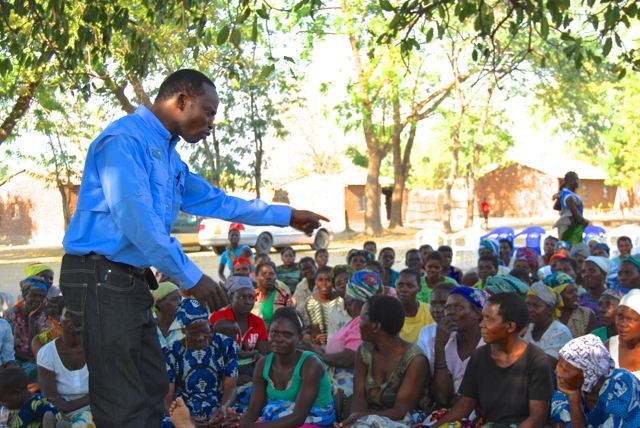
Children and adults in Chikwawa community in Malawi gather under a tree for an HIV program.
Children and adults in Chikwawa community in Malawi gather under a tree for an HIV program (photos from our trip to this community in 2009).

People sometimes ask us why we bother with trying to help people and animals in African nations, particularly the ones that no one else knows much about, like Malawi. The answer is simple. No one knows much about these places. What we’ve learned in our travels is that many people, places, plants, and animals are in dire need of assistance. Their prospects for solving their own problems can be slim to none.

It seems to come down to this – if a country has something that someone else wants (ivory, minerals, gas and oil, for example), that country will have a spotlight focused on it. But there are countries, and some remote parts of better-known countries, that have no resources to be exploited. And that means they get ignored. Rwanda received attention only after experiencing horrors beyond words and is still struggling to establish a viable national economy that is not dependent on foreign aid.

Malawi is one of those countries . . . often called the warm heart of Africa, Malawi’s people are friendly and welcoming. But this tiny country that has lost a great deal of its natural areas to farmland and much of its native wildlife is not known as a tourism destination. It has no significant resources that any other country wants. And so its people suffer silently because they do not have a global voice.

Aaron Maluwa of Museums of Malawi relates stories of the danger of HIV to people in the community.

One of our friends and colleagues in Malawi contacted us this week with a plea for assistance that I would like to bring to light because this is not a story that will be covered in the news. I’ve been watching for it and there’s been no mention, though this event happened over a week ago now. CNN, AlJazeera and the many other international news networks miss this kind of story because it is in one of the planet’s poorest nations, preferring to report on politics and celebrities.

Aaron Maluwa, who works for Museums of Malawi, regularly visits rural communities with programs that focus on HIV/AIDS awareness and testing, antimalarial messages, and other important health and cultural issues. On his most recent visit to a rural village in the Chikwawa District, he found 1993 families living in seven tents where people were “sleeping like potatoes in a basket” because the space was too small. The 5409 individuals Aaron found there had no food. A local sugar company is providing one cup of maize (corn) for each family per day and that is all the food currently available. The clinic has at least 15 patients in each room and people are already dying for lack of food. Aaron witnessed one death while he was standing stunned by what these people are going through. The flood came at night, surprising the village. The survivors stayed in trees for two days before the government rescuers could retrieve them.

Davis Mckandawire relates a personal story to Chikwawa students of how HIV changed his life.

Aaron did what he could on the ground immediately with appeals to local authorities but he has very limited funds and resources with which to work. He made this appeal in his email: I am therefore requesting for your support mainly with funds so that we can buy them food i.e maize, mosquito nets, blankets, kitchen untensils just to keep them alive as they wait for water levels to go down so that they can go back a start afresh but with no starting point at all. Let me emphasize that this is an emergency what I saw last week is that many lives are at stake especially of children and the aged in absence of food and other basic necessities such as blankets and mosquito nets 

Aaron has never asked for anything though his innovative and important program needs regular support. We have done what we could over the years to help and proceeds from the sale of our book “The Leopard Tree” are earmarked for assistance to Malawi. In this case, the need clearly outstrips our ability to help financially so we are trying to raise awareness and ask others for whatever assistance they can offer. We have contacted Rotary International to see if something can be done to help this situation and are waiting to hear the result. If you are interested in doing whatever you can, please get in touch with us and I will see that your efforts are directed to do the most good. Thanks for staying aware.

Lisa Brochu