Happy Holidays!

On our 2014 trip to Rwanda while visiting mountain gorillas, the Agashya Group.

Every year throughout the holiday season, we reflect on all the blessings in our life. We count you, our readers, among them. Whether we get to see our many friends and family members around the world in person, on Facebook, or only in our thoughts, know that we keep all of you close to our hearts always. We’ll be moving to Hawaii in January where we will continue working towards our mission of inspiring people to care for each other and the world around them. Here’s hoping that your holidays are merry and bright, and that 2015 brings you health and happiness no matter where you are or what you do.

Lisa and Tim


Lisa Brochu and Tim Merriman

Principals, Heartfelt Associates

Science Interpretation on a GRAND SCALE

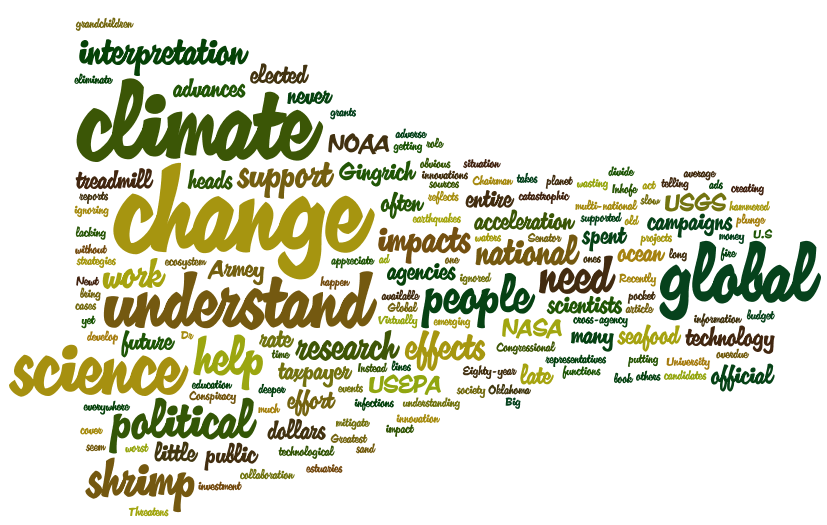
Created at Wordle.net.

Virtually all people everywhere enjoy the innovations of science but often without any appreciation of what it took to develop that innovation. We rely on and love our technology, but many people don’t seem to understand that the same scientists who bring us technology are the same ones who are telling us about the effects of humankind on global climate change. In some cases, our technological advances are creating adverse effects, while in others, the advances help mitigate those effects.


Science agencies like U.S. Geological Survey, NASA, USEPA and NOAA and the work that they support are often misunderstood at best or ignored at worst. In 1994, the Newt Gingrich and Richard Armey Contract with America planned to eliminate the entire budget for USGS. Gingrich and Armey did not appreciate that our understanding of weather, rainfall, earthquakes and other catastrophic events is dependent upon researchers in USGS, NOAA, NASA, USEPA and other science agencies.


Recently I read an article about Dr. David Scholnick of Pacific University. He takes the credit for putting shrimp on a treadmill, one of the many research projects that has come under fire by legislators and the public for wasting taxpayer dollars. He reports that it cost only $47 for the shrimp treadmill (out of his own pocket), not the 3 million dollars in taxpayer funds claimed in 2011 political campaigns. His research grants were not about getting shrimp to work out. Instead, they supported work to understand how shrimp react to infections in estuaries. This is critical to survival of important seafood sources and reflects ecosystem health in general. If you’ve ever eaten seafood of any kind, or spent time in the ocean, or understand that ocean waters cover three-quarters of the planet and have an impact on how the entire world functions, this research matters to you.


Eighty-year old Senator James Inhofe of Oklahoma is soon to become Chairman of the Senate Environment and Public Works Committee. He is also author of the 2012 book, The Greatest Hoax: How the Global Warming Conspiracy Threatens Your Future. This top Congressional science official will encourage us to plunge our heads deeper into the sand, ignoring the obvious threats of climate change and our impacts on it. The divide between scientists and climate change deniers has never been greater.


The effort to help people understand global climate change is too little and too late so far. Sometimes the available information is simply too scientific and over the heads of the average citizen or elected official. We have a global crisis in UNDERSTANDING but no real emerging global effort to improve the situation. If the political will to act on multi-national climate change strategies across all political lines is lacking, how do we as a society change that?


We need a broad national strategy to help the public understand the growing impacts of global climate change. We are hammered by national ads for political candidates, the need to drill for more oil and support for a pipeline. Big money is behind the acceleration of global climate change, yet very little is spent to help people understand their role in the acceleration rate and future impacts of climate change. An investment in science interpretation is long overdue. We need more science interpretation, national ad campaigns, and cross-agency collaboration to make it happen. It’s never too late to slow the rate, but much of the damage is already done. We each need to keep encouraging our elected representatives to do more in support of science education and interpretation. The future of our grandchildren depends on it.


– Tim Merriman


Missed Opportunities – Video and Photographic Histories

Daisy Carson, my grandmother, is the teacher near the center with her hands on her head. I wish I knew more but there's no one left to ask. Look through your oldest photos with people who know the stories.
Daisy Ellison Carson, my grandmother, is the teacher near the center with her hands on her head. I wish I knew more but there’s no one left to ask. Look through your oldest photos with people who know the stories. Record the stories as you hear them.

I recently spent several days going through boxes of family photos left to me in my mother’s estate and given to me by my sister just months before her passing. I scanned each photo and attempted to add a meaningful tag on the title of the jpeg file. Many of the photos have a question mark where a name should be, but everyone who would know these relatives from the early 1900s has died.


When I managed a state park visitor center for eight years in Illinois, one of the more common conversations I had was with elderly men who recalled experiences from the 1930s when they worked in the park for Civilian Conservation Corps as young men. Those were missed opportunities. We had no easy way to collect and store personal stories and just did not see the importance at the time. Many of them could have provided photos and anecdotes about the unique times working with the New Deal program that built the lodge, shelters and many of the bridges in that park.


Digital images have made it easy to shoot videos of conversations with guests and scan old photos and documents. That’s the good news. The bad news is that we often do not slow down and collect the story or archival photos that someone might provide. Here are a few thoughts on how to facilitate these archival collections at an interpretive site:


  • Post an invitation on the wall at your facilities and online that lets people know you have an interest in historical stories about the locale or people living in the community. Provide a place they can upload still photos or videos if you have more advanced website capabilities.
  • Keep an appropriate camera and digital storage equipment in a place where staff talk to guests and train them in how to use it to collect a personal story and appropriate support information.
  • Pre-script some questions to start the conversation.
  • Have the guest sign a photo/video release when collected, so that you can make use of the items shared. Keep contact information on each storyteller so you can ask followup questions later.


Story Corps is an organization doing this on a very broad scale and they store their archives at the American Folklife Center. They also share their stories on National Public Radio on a regular basis. There are many other organizations who keep personal story archives on varied themes.


Keeping your own organizational archive of stories as videos, still photos and written narratives will always have a value to your staff. When doing research for a new program or exhibit, these resources are invaluable. They also serve as an institutional memory. Staff members move on and their knowledge of what happened over the years is lost unless it is recorded somewhere carefully in your own archives.


Digital resources are easy to share with others. I sent my collection of family photos by flash drive to nephews and nieces all over the U.S. in hopes that our collective memory of our own family will not die in a cardboard box in the garage or be dumped into a yard sale. Archives of photos and stories are valuable resources and can now easily be shared for families, communities and organizations.


– Tim Merriman

Biocoop Rwanda: Entrepreneur at Work

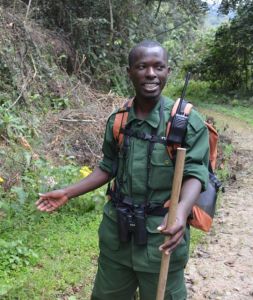
AngeLisa and I took our first hike at Nyungwe National Park in 2012 with Ange Imanishiwmwe. He proved to be a talented park guide and naturalist, engaging us in a discussion of the importance of forest elephants and helping us identify the birds calling in the distance.


What we also learned about Ange right away was his commitment to helping his community and his nation improve. In his words, At age 7, I made a commitment to devote my life and work to integrating poverty reduction, food security, and environmental protection in my home district, the poorest in Rwanda.

It seems a large commitment for a young man in a nation recovering from a tragic genocide in 1994, but for the last few years we’ve been watching Ange made dreams come true. In 2012, Ange was named “Top Young Innovator” by the Ministry of Youth & ICT. One year later, he had an individual meeting with Rwanda’s President, Paul Kagamé. He is proving to everyone that a boy of 7 can make a promise that will be kept by the man he becomes.


Screen Shot 2014-12-03 at 9.02.05 PMAnge started Biocoop Rwanda, a youth cooperative, and it is making a dramatic difference in the area near Nyungwe National Park. It has already created 650 jobs for local people with an objective to create 5,000 jobs in the next five years. They have raised more than $100,000 USD in grant funds, using Kiva.com and other microfinance programs to gain needed equipment. Recently they acquired a 3-wheeled motorcycle to transport milk to market for local farmers participating in a milk co-op. They have workers clearing invasive species plants out of Nyungwe National Park and they work to reduce poaching. A garbage initiative turns trash into fuel, reducing dependence on charcoal.
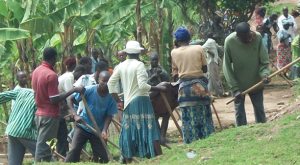
 

Screen Shot 2014-12-03 at 9.04.45 PMMore than 90% of Rwandans live as subsistence farmers though soil is very poor and acidic in the Nyungwe area. Biocoop is working to improve soils through composting and teaching better farming practices. Reducing poverty and improving food security is also good for the park, as people with few options often turn to illegal activities like poaching and cutting trees. Biocoop tries to improve their ability to make a living on their farms near the park without having to go into the forest for subsistence.


Ange earned a Bachelor’s degree in Zoology and Conservation and is finishing a Master’s degree in Biodiversity Conservation. He has earned the Certified Interpretive Guide credential through training we provided in Nyungwe. Through his salary he supports his wife, son, mother, two sisters and two brothers. Several other guides from Nyungwe also work with the Biocoop.

 

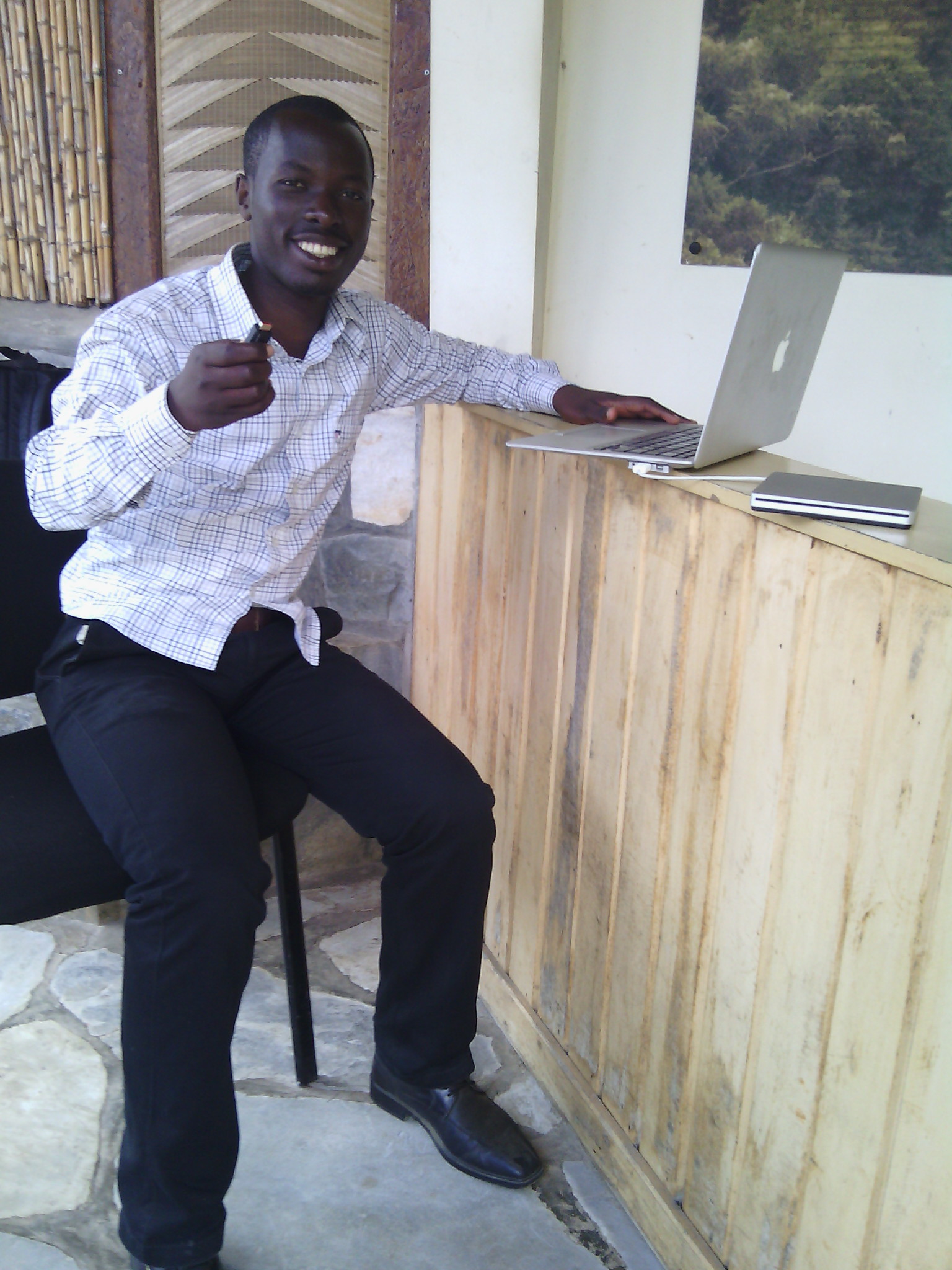
Ange w compEarlier this year Ange was the first Nyungwe guide to receive a donated laptop in support of his work. We continue to raise funds and take donated laptops in support of the many guides in Rwanda trying to improve themselves and their communities.


Ange is seeking sponsors to bring his message of how entrepreneurship can help improve local communities to the U.S. and Europe. If you know of a potential sponsored speaking opportunity, let us know and we will put you in touch with him. Biocoop Rwanda is becoming a force for conservation, training and defeating poverty. It is a challenge that will last for decades but very important to the future of the parks and people of a recovering nation. There is a world of good to do in Rwanda and beyond. If you’d like to help, contact us and we will share ideas.


– Tim Merriman


Viral Video Ethics – Eagle Snatches Kid


I just watched a cable TV show, Caught on Camera, Viral Videos – Is That Possible, about the making of videos that have gone viral with some fake and some real situations. One was a “phony” video of a man flying like Icarus with wings flapping through the man’s arm movements. The show debunks the stories that are phony and shows some that are real in contrast.


I was both fascinated and disturbed by the story of four digital design students at the National Animation and Design Centre in Montreal. The young men devoted 400 hours to creation of a 59-second 3-D animation clip of a golden eagle snatching a child from the ground and flying off for a short distance before dropping it unharmed. Seems like a harmless stunt to them. They needed 100,000 people to watch their very realistic video to get an A+ for their CGI (computer-generated images). They have had more than 40 million views to date. Some viewers believed it to be real and were interviewed by the show debunking contrived videos.


ABC News blogs posted an article about the faked “eagle snatches kid.” No mention was made of the ethical questions involved. It was all straightforward reporting on the ingenuity of these digital entrepreneurs. They got the A+. Buzzfeed.com contributor, Chris Stokel-Walker wrote a very detailed posting about Robin Tremblay, the lecturer who gave the class assignment. Stokel-Walker wrote, And unlike 2009’s Balloon Boy debacle, which smacked of opportunism and exploitation, this was the rare public hoax that remains victimless and good-natured and unmotivated by malice or greed — one that could actually be a teachable moment, not just for the perpetrators, but for all of us who participated by clicking, or by telling others to.


For those of us who have spent decades teaching people about eagles and their benefits to ecosystems and the planet in general, these sorts of hoaxes do not seem “victimless.” Eagles will not sue for slander and likely no malicious intent was involved, but what does it take to undo the harm done by such a video? Few people will see the stories or videos that debunked the phony animation of the eagle and child compared to 40 million who saw it and now use it as proof that their child may be in danger from eagles flying overhead.


Never mind that a 10-pound eagle cannot pick up more than a pound or two, certainly not a 20 pound child. Eagles simply will not attack humans of any size. We do not look or act like prey. But the common sense knowledge that most folks lack about eagles, wolves and other wildlife is overshadowed by the “truth” of a video, a seemingly real experience.


Hollywood has been producing ridiculous movies for decades that encourage fear of valuable animals, especially predators. Jaws, Snakes on a Plane, and other movies feed the fears of viewers. As computer-generated images and animations become more and more convincing with little or no ethical scrutiny, the public will likely be influenced to be even less comfortable with nature and natural dangers. I have no simple answer for what we do to counteract these sorts of misimpressions, but recognize that it is another challenge to our ability to interpret the planet and increase understanding of the species with whom we share our world.


– Tim Merriman


Branding a Region – Kona Coffee Cultural Festival

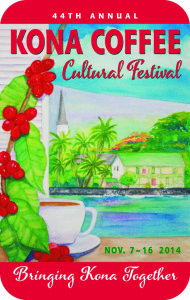
KCCF_2014ButtonThe coffee tree (Coffea arabica) was brought to Kona in 1828, now flourishing on more than 800 farms on the rich volcanic soils of Mauna Loa and Hualalai on the Big Island of Hawaii. It is one of the most expensive coffees in the world due to its rich flavor, very limited growing area and demand for the brand. The people who grow it are from diverse cultures and the coffee is celebrated in varied foods from coffee butter to spicy tapas.


This past weekend, we enjoyed several events as part of the Kona Coffee Cultural Festival. This 44th annual event takes place throughout North and South Kona with more than 45 separate events that celebrate Kona Coffee, Hawaiian culture, local food, and the diverse people of North and South Kona communities. A $3 commemorative pin is sold at every event and provides entrance to all events spanning 11 days from Nov. 7 to 17, 2014.


We started on Saturday morning at Holualoa, a beautiful community of more than 6,000 people nestled among the coffee farms that blanket the western slope of Hualalai volcano. Hundreds of people streamed up and down the main street stopping at dozens of coffee stands to try samples of hot Kona coffee, iced coffee or coffee husk tea. Tasters can vote on their favorite coffee by booth number. It was all tasty and the food varied from BBQ to delicious confections like the haupia purple sweet potato pie with a macadamia crust. It was obvious that there were as many or more local folks as tourists at the event.


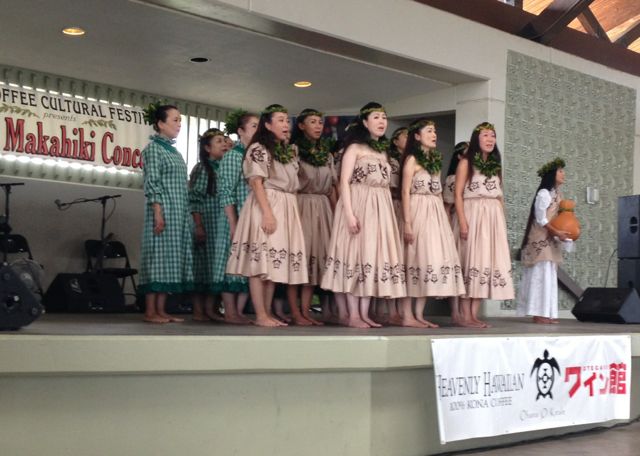
kumuLast year we enjoyed the festival by attending the Kona Coffee Recipe Contest and this year we ended our stay in Kona at the Aloha Makahiki Concert with wonderful music by renowned Hawaiian musicians Bobby Moderow, Jr., Aaron Mahi, George Kuo and Stephen Akana. Kumu Mika Keale-Goto performed a makahiki oli (harvest blessing), joined by dancers from both local and Tokyo halau (hula schools).


Most community festivals happen in one community and over a short period of time. This festival takes you from coffee estate tours to music venues, food competitions, art shows, street markets, living history farms and much more. It helps shape the Kona Coffee brand against the backdrop of the entire region and the diverse cultures of people who live there and enjoy Kona lifestyles from mauka (up the mountain) to makai (down the mountain to the seashore).


halauCommunities too often compete for attractions when they might do more with collaboration. This festival demonstrates the power of working together regionally to bring tourists in to learn and local people to celebrate their communities and cultures. It is this rich mix of culture and community, nature and history, tradition and trade, ancient and recent, that has drawn us to purchase a small coffee farm on Kona where we will soon make our year-round home. It may take a few years to visit all 45 plus venues of the festival, but we will enjoy working on it. If you get to the Big Island the second week of November, try to find time to attend whatever events are happening near you.


– Tim Merriman


Build It and They May Not Come

Created at Wordle.net.

Who doesn’t enjoy the passionate pursuit of a romantic dream? Kevin Costner’s successful movie, Field of Dreams, fed a new generation of dreamers in 1989 when it came out.


Many organizations plan their future facilities with the “Build it and they will come” idea in mind, but just because a facility works well in one city or town doesn’t mean it will be as successful in another. Some communities build a visitor center believing that is all that’s needed to draw visitors and their tourism dollars. Other communities go to great lengths, maybe even using taxpayer dollars, to build attractions only to find that those facilities fail to attract the numbers promised by the feasibility study provided by an out of town firm.


Ocean Journey opened in 1999 in Denver but sold to Landry Seafood Restaurants just a few years later at a huge loss. The attraction, built with bonds, never lived up to its promised attendance. Perhaps the thematic nature of a marine aquarium in Denver was a bit confusing with the Indonesian River/Sumatran tigers exhibit and Colorado River exhibits intermingled. There may be many reasons why an attraction fails in a given location, but usually the failure can be tracked back to poor planning and decision-making, which in some cases, would have suggested that the facility or program not be developed at all.


Here are five ideas to consider when dreaming up a new project that will be sustainable and of high quality.


  • Plan the thematic visitor/guest experience first, before the grounds, facilities and programs. Form should follow function and great architecture and landscape plans should be part of the story, not a separate story showing off the skill of the architects. It is challenging to overcome poor choices in design of buildings and grounds when operations start. Architects and landscape architects can help you make it all work together if they know what the overall experience should be.
  • Develop a Business Plan that realistically projects income and expense for several years, five or more usually. Be sure your financial resources properly support the business through lean times. It is easy and dangerous to assume a continual growth curve when cyclical attendance is more common. The overall economy has downturns your organization must live through.
  • Arrange all financing well in advance of construction. You sometimes see unfinished projects with a great concept drawing on the sign out front and progress toward completion has stopped. Nonprofits usually have a quiet phase of fundraising with major donors well before a public phase to insure enough funding is secured to be successful overall.
  • Hire expertise with real experience with similar projects. The architect who has designed 25 drive-thru banks may be locally available and have a friend on your board, but may not design a visitor center or nature center that makes sense for your planned uses. Bring in the appropriate planners, designers and builders for the kind of work you will do. There are interpretive planners, architects and landscape architects who have done many zoos, nature centers, museums and visitor centers and they bring great value to your project. Keep your operations and maintenance staff involved in the planning at every step of the way to ensure that design supports their ability to do the necessary work. If you’re a new facility and don’t have operations and maintenance staff yet, be sure that your planning consultants have experience with actually running a similar facility.
  • Be sure your analysis of competition and collaborators is honest and thorough. Ideally your new project has a niche in your community that no one else is filling. Try to identify opportunities to collaborate, not compete, with other organizations.


It’s great to have dreams and some amazing businesses arise from new ideas. But if you will plan, design and build thoughtfully, your organization may have a much better chance of long-term success.


– Tim Merriman


Birding with the Blind

Screen Shot 2014-10-31 at 6.26.42 AM I just spent several days digging through three boxes of personal family photos. Among the photos were news articles my mother had saved for me, including one entitled “Birdwatching for the Blind.” It took me back to 1974 when I was a naturalist-interpreter managing a Visitor Center at Giant City State Park in Makanda, Illinois. A former student, Kay Roney, had been in a biology class when I was a Teaching Assistant. She came through the center and we had a great conversation.


She reminded me that I had mentioned in class years earlier that blind people could birdwatch by listening to their songs. She explained that she worked for Illinois Children and Family Services as a counselor for the blind. She had glaucoma and cataracts and had serious visual impairment herself. She wanted to organize her clients into a class that would include trail hiking and an explanation of how they might “birdlisten.” It was a great program idea for both of us so we agreed to a plan.


Over the next year we organized a variety of outings that included the opportunity to touch birds and listen to their heartbeats while we banded them. Some who were born blind commented that they had not had any concept of how fragile a bird’s wing was. They were amazed by the rapid heartbeat of chickadees and titmice.


I also used commercial recordings of the 20 most common birdsongs of the area and developed a cassette tape that included the birdsong and a description of what you could learn about the habitat from hearing the bird. A wood thrush tells you a mature forest with leaf litter is nearby. A prairie warbler song tells you you’re in an old field or prairie area with grasses and scattered trees. I attempted to convey a sense of place for our blind students based on cross-referencing the songs being heard. They enjoyed the outings and I learned a great deal about their challenges in going to the outdoors. One outing to the nearby wildlife refuge allowed them to touch Canada geese, a great contrast to the tiny songbirds.


We built a blind-accessible trail with an Institute of Museum and Library Services grant near the visitor center. From planning to implementation, the blind students advised us and completely changed our ideas of what a trail for the blind should be. They wanted a cassette player for interpretation, not the braille guide we had planned. They preferred ground texture cues to follow the trail with gravel strips indicating steps instead of a kick rail along the path for using a cane. Our assumptions about their needs were wrong and their solutions were actually easy to implement and much appreciated.


The program attracted national attention in the visually impaired community. Two blind people from Chicago, journalists for a specialized audio magazine for the blind interviewed us out on the trail. The program ran its course over a year or so and eventually ended but it was a stimulating experience for all involved.


Finding the article from 1974 led me to use a search engine to see if birding with blind people was being done other places and more recently. Texas Parks & Wildlife lists six tips on birding with the blind that are useful. Several stories were posted in 2013 by CBS and Cornell Laboratory of Ornithology on a program entitled Michigan Bird Brains by Donna Posont, Donna, the teacher, is blind and so are her students. They explore nature by touch, scent and sound together.


I learned it’s always best to test your accessibility ideas with people who will actually use them. Birdwatching or birdlistening can be a very engaging program for blind people in your community and an opportunity to put sighted and blind people together in nature to learn from each other.


– Tim Merriman


Six Approaches to Being Present

Created at Wordle.net.

Those of us who work or have worked in service roles know the erosive effects of seeing lots of people in a day, often asking or being asked the same questions over and over. Soon our eyes glaze over and we listen minimally just for the most basic cues needed to do business, but we must remember that every conversation is an opportunity to turn a customer into a friend, a supporter, and an advocate for our natural or cultural heritage site. It won’t happen if we are not truly present. Here are a few thoughts on training staff to be present, not just physically but with sincere focus on each and every guest. Encourage your staff to:


  1. Look at each guest as you talk and do not move your focus to other people or transactions as you chat. People in service roles often move their eyes to focus on other people or activities, which tells a guest that he or she is the lower priority. Being present requires holding focus with a guest throughout a conversation, not just intermittently. If you must change focus for a brief moment, excuse yourself before doing so and apologize when you return your focus to the guest in front of you.
  2. Have real conversations with the customers, clients or guests. “Do you have big plans for the weekend?” is intrusive and sounds artificial. Asking questions is a good start but they should be more respectful. Requesting personal information not needed in the transaction is too pushy. Asking “Have you been here before?” is usually a better starting place.
  3. Use the name of the guest or client if you have it, but be respectful. We all perk up when our name is used and pay more attention to the conversation. Ask how people would prefer to be addressed. A good rule of thumb is to start more formally when addressing people by name and switch to first names or nicknames if they invite familiarity. Although an informal approach may work in the U.S., many people from other nations expect to be addressed more formally by people they don’t know well.
  4. Listen carefully to the person’s answers. When you hear a person answer your question, build the conversation from there and repeat back what they say in a different way to confirm you heard correctly. “So you’ve been here before, but you’re looking for new things to do? Is that correct?”
  5. Be thinking how you might assist them beyond their expectations. Do they need additional information? Have you shared options they might enjoy based on what you heard? Are there things to see or do or pricing options that they might overlook if someone doesn’t point them out?
  6. Don’t close with clichés like “Have a nice day” over and over. People hear what you say to others and know when they are being “handled” but not heard. Be sincere and say what seems appropriate. It never hurts to say, “It was very nice to chat with you. Let us know if we can be of further help.”


Some of these work better if the work environment and responsibilities are supportive. A person greeting guests should not be taking phone calls during a conversation that make the guest wait. We once stood in line to rent a car and heard the guy behind us calling the clerk in front of us because he could tell phone calls took precedence over people at the desk.


Training all staff to be good hosts is a critical need when you hire people. Being present is a matter of sincere focus on the guest, not just minimally available to do business.


Call us at 970-231-0537 or visit our website at http://heartfeltassociates.com to learn more about how we can be of assistance in designing or delivering customized host training for your staff.


– Tim Merriman

Capacity Building with Computers

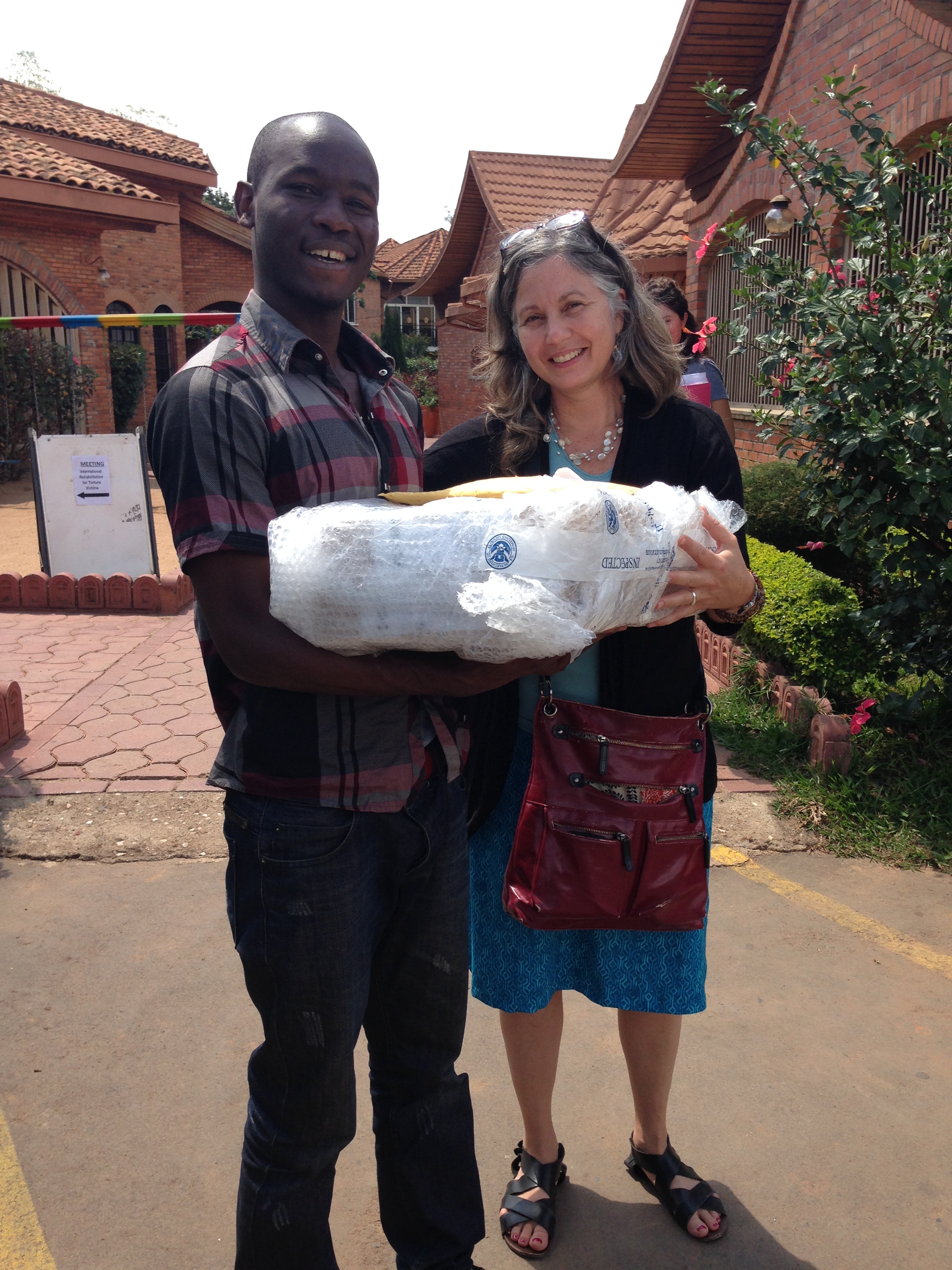
Dr. Beth Kaplin delivered the two laptops recently to Gilbert in Rwanda.
Dr. Beth Kaplin recently delivered two laptops to Gilbert in Rwanda. He expressed his thanks to donors.


We have made several trips to Rwanda to provide training and interpretive planning in two national parks. The dedication of the guides we have met in Rwanda is inspirational. They are deeply committed to the conservation and care of the spectacular park resources of their nation.


Last January we asked the guides we trained in Nyungwe National Park about their access to the Internet as a resource for continuing education and communication with professional colleagues. Most had some use of a computer through a park office, library or classroom but no personal access at home. The few who did have their own computer had old models without much power or software. Many of the guides are working full-time while also going to school to complete a Bachelor’s or Master’s degree and supporting additional family members. Though computers can be purchased in Rwanda, they are more expensive than most park guides can afford on an annual salary of roughly $3000. Unlike the situation in the US, Internet service is very inexpensive once you have the hardware for access.


We offered to help guides obtain laptops or iPads and have spent the past nine months inviting friends and colleagues to help out, either through purchase of new models or through donation of gently used models. Within a few months, we sent three laptops and an iPad to Jules Cesar Dushimimana, Ange Imanishiwmwe, Niyigaba Protais and Kambogo Ildephonse. Donations of funds and computers were made by Nicole Deufel, Mike and MaryJane Swope, Pam and Mike Neely, CarolAnn Moorhead and Luke George, Marji Trinen, Tobias Merriman, Lisa Brochu and Tim Merriman.


Prudence received his laptop and shared a photo and his thanks to donors.

This past June Lisa and I went to Australia to do several training events with the assistance of colleagues Claire Savage and Rusty Creighton. They personally donated funds to purchase a new laptop for a guide. Claire also asked the Forum Advocating Cultural and EcoTourism (FACET) to help and they funded another laptop. Emily Jacobs was kind to donate funds to support software installation, shipping and backup flash drive costs for the new laptops.


The second round of equipment was recently delivered by Dr. Beth Kaplin of Antioch University New England to Gilbert Muhawenimana and Harudy Prudence Uwitonze, who are working on Master’s degrees. Dr. Kaplin has been doing tropical forest ecology and restoration research for many years in East Africa and travels back and forth several times a year. We are grateful for her kind assistance in transporting equipment to the guides.


Capacity building is often identified as training and advanced skills development, but we think it must also include improving access to appropriate technology. If you would like to help us purchase the next two or three laptops to donate or have a second generation or newer iPad to donate, please call me at 970-231-0537. A new laptop is $250, but a contribution of any amount helps. You can make a real difference in the professional life of a colleague in Rwanda.


– Tim Merriman