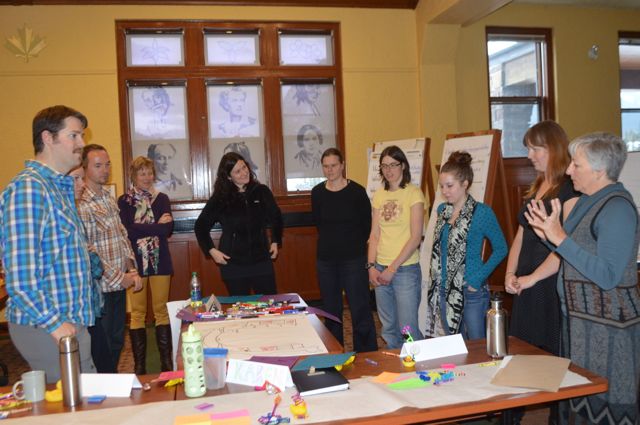
When the Wow Trumps the Message

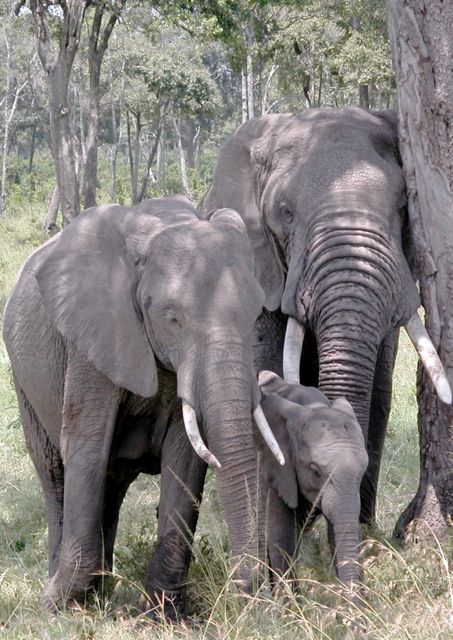
Have you ever spent an hour with mountain gorillas in the Virunga Volcanoes following trails once traveled by Dian Fossey? Have you had your photo taken with baby pandas in a Sichuan panda reserve where George Schaller once studied these amazing animals? Did you climb out of your panga in the Galapagos to walk in the footsteps of Charles Darwin among blue-footed boobies? Have you watched elephants for hours from a few feet away, as they graze blissfully unaware of the impending threat to their survival on the planet from poaching and loss of habitat.
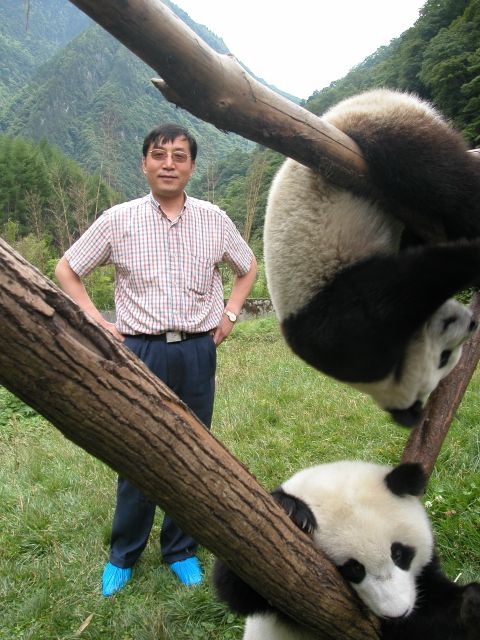
pandasThere are world-class tourism experiences that have amazing WOW power. The memories may last forever like photos in your personal collection. But they may also rest there virtually untouched, devoid of a lasting message that invites you to become more involved. I have had the pleasure of participating in each of the experiences described. However, an enduring message about conservation and my ability to get involved was lacking in all four situations.

Tourism experiences built on a world-class WOW experience often lack a thoughtful message, usually because guides in those settings tend to lack interpretive training. Without the encouragement of their employers, they may not mention the rich history behind the tour based on devoted researchers, missing the opportunity to invite you to be a donor, sponsor or volunteer. The tourists and their money will continue to roll in with no prompting due to the power of the experience. But the enduring value of bringing a thoughtful message to the experience is simply missed.

Organizations and tour companies that plan such events often have no knowledge of the power of social marketing or interpretive planning. They hope the WOW of what they are doing has enough value to override the need to create more lasting relationships. Is there anything wrong with that? Perhaps, if there is a real desire to sustain the resources that create the opportunities for profits. We left our tour of the Galapagos Islands with an empty feeling that we had shared the “sizzle” of seeing marine iguanas, boobies and sea lions and missed the stories of importance of the legendary islands and endemic wildlife. Our guides had no message. They were bored with us, and bored with the resource. They identified birds when asked, but left us with no lasting connection with the past or future of this unique place. What could have been done differently?
elephantsIn 1997 Dr. Sam Ham worked with Lindblad Expeditions in the Galapagos Islands to help their tours use improved thematic messages in support of the Charles Darwin Research Centre. The impact of his work was dramatic. Improved guide training and messages led to a 270% increase in donations to the research program, helping to ensure the future of the Galapagos Islands and the creatures found only there.

In Rwanda the sale of gorilla permits in 2013 declined from 2012 due to an increase in cost from $500 to $750. The gorilla guides are skilled in taking care of people and delivering an informational briefing about the gorilla family to be visited, but they have not been trained in interpretive skills. Without the additional understanding that the increased fees are necessary to support mountain gorillas 365 days a year, 24-7, that $750 just seems like a lot of money for a one-hour experience.

What we’ve learned over the years is that most guides want to do a better job of connecting visitors to charismatic wildlife. Many of them receive content training, but their key role in helping people understand bigger issues that surround the resource is often missed. Interpretive training requires financial support from conservation organizations, individual donors, and sponsors, but it’s money worth spending if Dr. Ham’s research is an indicator of its value.

The future of many of these species and their habitats may depend on the tourists that come to enjoy an experience with them. But that message must be shared for any action to result. Information about the animals is not enough. Those of us who enjoy the privilege of getting close to these animals should be asked to help. There’s more to say than, WOW!

– Tim Merriman
Is Habituating Wildlife the Right Thing to Do?

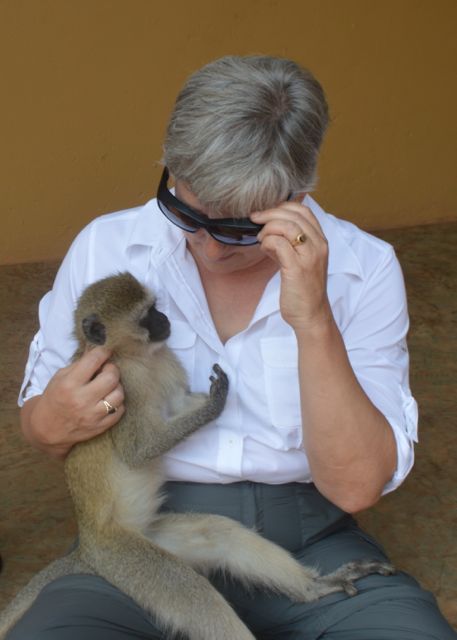
Lisa N JesOur little friend Jes, the vervet monkey, visits our classroom in Rwanda each day. She doesn’t say much, but she definitely has a story. Akagera park officials learned that a young monkey had been taken as a pet, a violation of the law, so it was taken from the people and brought to the park. Over time it was reintroduced to wild vervets and it lived with them for many months. One day it returned to park headquarters on its own with a badly damaged hand, which led to amputation of the limb almost to the elbow. So Jes has become the unofficial headquarters mascot. She’s free to return to the wild anytime, but because of her injury and the stunted growth that is probably the result of malnutrition when young, it is unlikely that she will thrive or be accepted in a completely wild monkey troop. When she gets comfortable with you, she will sit in your lap and let you pet and preen her. She will return the favor and check you carefully for fleas and dirt. She’s a real charmer, but sadly, she is no longer equipped to be a wild monkey.

Most of us know that making pets of wild animals is not a good idea and it is illegal in most places. Finding a solution for an injured animal like Jes may be easy in a city with a zoo or nature center, but it’s a real challenge at a park. We enjoy Jes, until she steals our markers and chews on them or digs through our lunch looking for bananas. She’s like a two-year old child, demanding continual attention.

In Akagera National Park, they ask people on safari to never feed baboons, vervets, birds or other wildlife. It leads to begging, unhealthy animals and normal behavior disappears. Clearly, we should not be habituating wild animals to beg at picnic areas or come close to tourists.

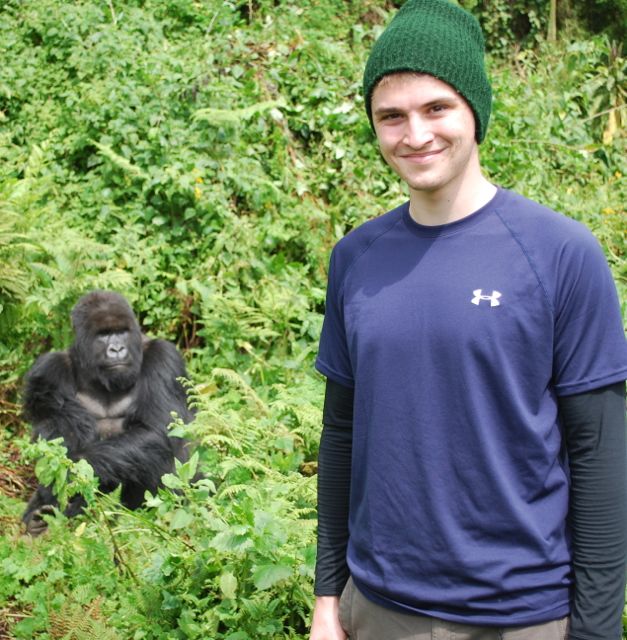
tim n gorillaOn the other hand, habituation of some gorillas and chimpanzees in Rwanda’s other national parks has a value in protecting them. Chimps are difficult to habituate because they move through the treetops and they seem naturally wary of humans. Jane Goodall perfected this kind of habituation several decades ago during her research studies. The Jane Goodall Insititute has helped train trackers at Nyungwe National Park, where chimps may be visited in Rwanda. Local people haven’t always been fans of the chimps, as the clever apes sometimes raid village gardens on the outskirts of the park, but tourism dollars provide community benefits through revenue sharing, tracking jobs and ranger jobs, encouraging local people to protect them and their habitat.

Meanwhile, in Volcanoes National Park, mountain gorilla populations have recovered from a low of approximately 220 animals in the late 1980s to the current estimate of around 900. Poaching and theft of baby gorillas for sale to zoos created a crisis for the mountain gorillas that has been turned around by tourism. Amy Vedder and Bill Weber tell the story of how mountain gorillas were habituated to tourists in their book, In the Kingdom of Gorillas. The daily visit of gorilla families in Rwanda’s Volcanoes National Park brings 80 tourists daily into the presence of gorillas. Each person pays $750 for the one-hour visit, supporting year-round protection of the gorillas by rangers, guides, veterinarians and porters. Tourists are observers only, allowed to take nothing into the forest with which to feed the gorillas, no direct contact due to the potential to spread disease, and instructed to keep voices low and cameras without flash to avoid annoying these magnificent animals. Unfortunately, most guides do not mention how vital the permit fees are to protecting gorillas. I haven’t heard any of them deliver the message that tourists are investing in the future of mountain gorillas and the communities around them.

To habituate or not is a difficult and complex issue. In Rwanda, under careful supervision, I think it has its place in protecting man’s closest relatives, the great apes. If experiencing elephants, tracking chimpanzees and coming face to face with mountain gorillas is not on your bucket list already, you might want to consider a trip to all three Rwanda’s national parks. The land of a thousand hills may hold the opportunity for some of the best experiences with wildlife you’ll ever have.

– Tim Merriman

Maslow on safari!

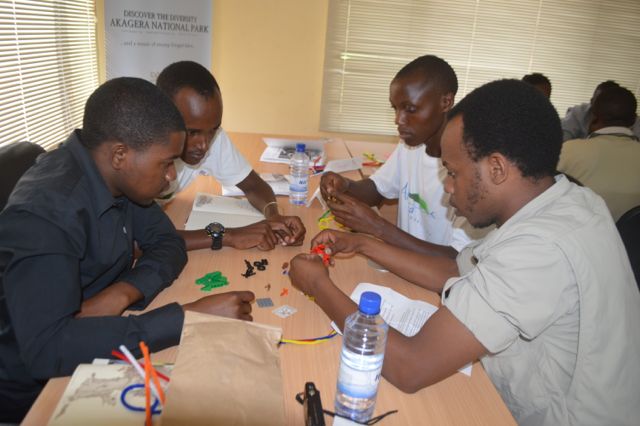
Guides work through a learning style exercise with a Lego puzzle.

We are in a classroom at Akagera National Park at this moment and Lisa is facilitating a discussion about Maslow’s Hierarchy of Needs with safari guides and game lodge workers. It’s a very rewarding conversation because most of these folks exemplify an understanding of this concept in their daily work, even if they have not heard of Abraham Maslow or his articles on motivation in 1954.

When you arrive at Ruzizi Tented Lodge and many other similar safari camps, they greet you with the knowledge that you have driven a long way over bumpy, dusty roads. You are greeted in a friendly manner with a warm wet towel to wipe your face and wash your hands. A cool glass of juice is offered to quench your thirst and give a little pick up from traveling. They point out the restrooms for our comfort while they register us after collecting passports. Our basic needs are met pretty quickly, using Maslow’s Hierarchy. Great lodges do this so well that you miss it when you stay at one that simply registers you for your room and sends you on your way or worse yet, makes the registration process a difficult ordeal.

At one lodge we were greeted very nicely, given a beverage and warm towel. We had arrived just at dinnertime, but after they registered us, the reception staff had us set off to our rooms in a pouring, windy rain with umbrellas. They had our luggage with them. By the time we found our room, our clothes were soaked and our luggage was wet. In the damp rooms of a mountain forest, there was no chance our clothing would dry overnight. It would have been better to take us to dinner and help us find our rooms after the rain passed half an hour later. The choice to insist that we go to rooms first made us miserable at the end of what had already been a very long day of travel.

Nowhere do basic needs become so obvious than on safari. People who fear snakes or worry about being robbed will have trouble relaxing unless a good guide or host assures them of the safety of the facilities, rooms, and the nation itself. Rwanda is now a very safe nation in which to travel, but knowledge of the genocide in 1994 may be on the mind of first time visitors. We took our guests to the Kigali Genocide Memorial Centre on the first day out, both to interpret the tragic story and to assure people that today’s Rwanda is a safe nation rebuilding from a turbulent past.

But once basic needs are met, advancing up the hierarchy of needs requires some nuance and careful attention to detail. For the most part, we have found guides in Rwanda and Tanzania to be thoughtful and concerned hosts who go out of their way to ensure a great experience for their guests. Less experienced guides focus on sharing their knowledge only, while more experienced ones understand how to help their guests understand and appreciate the landscape, people, and animals. Good training helps reinforce the many ways in which guides can influence the attitudes, beliefs, and behaviors of their guests by providing interpretive opportunities along the way. Helping a guest have a great experience in the short term can lead to long- term commitments to conservation when a safari guest, enabled by a great guide, reaches the pinnacle of self-actualization.

Since Maslow published his motivation article, many have added the term, transcendence above the pyramid, to describe the rewards of being a facilitator who helps others self-actualize. We are both honored and humbled by the guides we meet here. It is a transcendent experience for us to be here training with dedicated guides and hosts in Rwanda.

– Tim Merriman

Guide Training in Rwanda – a Rewarding Venture

DCIM100GOPROIn October 2012 we made our first trip to Rwanda to work with Nyungwe Nziza, a USAID funded project with Development Alternatives International (DAI) to help the fairly new Nyungwe National Park (2005) reach its potential as a tourist attraction and valued nature preserve. It has been a national forest since 1933, but the change to a national park designation added a much deeper level of protection.

Visitors to the park are required to take a guide on all hiking trails and pay from $30 to $90 per person (resident Rwandese pay much less). The fee for foreigners sounds a little extreme to many hikers, but getting lost or meeting a poacher in remote African rainforest is no joke. With only about 10,000 visitors a year, the fees help to make an important investment in the future of this wonderful place.  The thousands of hills in Rwanda are at their best in Nyungwe, allowing visitors to explore stands of huge tropical trees, waterfalls, 148 species of orchids and 13 primates including three chimpanzee communities. Guides provide safety and great advice along with continually improving interpretation of the unique park flora, fauna and history. Chimp tracking now has an amazing 97% success rate as the chimpanzees become more accustomed to daily visitation in their territory.

Our role at Nyungwe has taken place over the last eighteen months in three separate trips. In October of 2012, we first assessed the guides’ performance and the overall visitor experience in the park and then suggested next steps for training the 22 guides and improving the guest experience. In February of 2013 we returned to train all of the guides as National Association for Interpretation (NAI) Certified Interpretive Guides (CIG). Each of them passed the course, demonstrating a great deal of enthusiasm for their continuing professional development. We also trained a number of students attending the local tourism college, hotel staff, and community cooperative members who offer tours in beekeeping operations and cultural villages, certifying a total of 27 guides and 18 hosts.

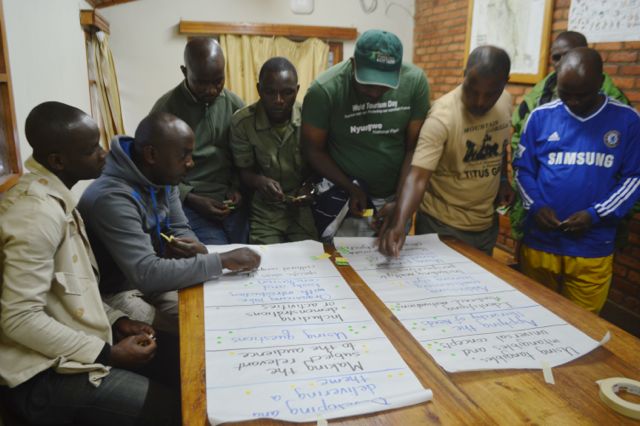
guides assessNyungwe guides are natural storytellers, which makes time in the field with them a special pleasure. Interpretive training suggests some priorities in how they approach leading people through this challenging landscape of hills and streams and delivering important conservation messages as well as information about the plants and animals of the forest. This year, we are involved in developing an interpretive master plan for Nyungwe National Park and assessing the guides’ progress over the last year in implementing what they learned from our previous training. We’re also providing some advanced coaching and training based on our observations of their performance. The guides are very serious about how to get even better. Education and training is greatly valued in Rwanda and opportunities to grow and learn are met with enthusiasm and dedication.

Guiding is a valued job in each of Rwanda’s three national parks: Nyungwe (noted for its outstanding variety of primates and birds), Volcanoes (known for the population of mountain gorillas), and Akagera (a savannah landscape with elephants, giraffes, and other large grazing animals). The guides’ important role in sharing this amazing landscape and nation with visitors should not be underestimated. Their conservation messages can help to remind visitors that protection of Africa’s parks has far-reaching consequences for the entire planet.

National Geographic recently suggested Nyungwe as one of the top 20 parks to visit in 2014 around the world. Ratings of the park experience by reviewers at TripAdvisor.com were very good in 2012 and even better in 2013. Park staff and guides are dedicated to making this a very special experience for guests.

On a birdwatching hike today, we saw about two dozen new species for us, including one of the 26 endemics, found only in the Albertine Rift area of Africa. I am personally delighted to have seen nine of the 13 species of primates in a matter of a few days. Nyungwe Nziza means “beautiful Nyungwe” in the kinyarwandan language. These talented guides will help you appreciate its beauty in the best possible light.

–       Tim Merriman

We are collecting used laptops (Mac or PC) to bring to guides in Rwanda over the next year. Most do not have one and it is a key link to information, scholarship opportunities and colleagues working in conservation. Your old laptop might bring a little money on Ebay but it will yield great opportunities for a park guide and conservationist in Rwanda. Contact me at tim@heartfeltassociates.com if you have one to contribute.

The Mountain Gorilla Experience in Rwanda

Agashya watches his family and us, relaxed but attentive.

Just one hour in the presence of mountain gorillas in the Virunga Volcanoes of E. Africa can make you rethink who and what you are. We just led an ecotour through the three national parks of Rwanda: Nyungwe in the southwest, Akagera in the northeast and Volcanoes in the northwest. At dinner on the last evening of the eight-day tour we asked what people enjoyed most and memories of the gorillas were high on everyone’s list.

The gorilla experience begins with an overnight stay in a Musanze hotel or a lodge near the park entrance. The next morning starts early with a quick breakfast before heading up to the park. There your guide or driver meets with the park rangers to decide which of ten families of gorillas will be your host. They limit each group to eight tourists and try to match the hiking skills and abilities of guests to the distance and challenge of the terrain, but the gorillas ultimately determine how challenging the day will be as they wander through their territories. Our tour group of ten people was split into two smaller groups of five based on physical abilities. Our “fast” group was fit and everyone able to hike quickly. The slower group was older and had some heart, lung, or knee issues that affected their hiking ability at the altitude of 8500 to 9000 feet.

While we waited for our guides, we drank coffee and tea and conversed with people from all over the world, all of which had come to see the mountain gorillas. Our slower group met with Oliver and Ferdinand, the guides who would take us to see the Agashya family. From the headquarters office, we drove several miles and parked in a small village to begin our slow, steady trek upward through potato and pyrethrum fields. Porters offered to carry our gear and assist us with climbing through the harder spots. Two kilometers later we crossed through the stone-wall boundary into the park where trekking through bamboo thickets and fern openings becomes slicker and more challenging. Two and one half hours after starting, we were near the gorillas. The guides collected our walking sticks, water bottles and extra gear and left them behind with the porters while we continued up another three minutes into the presence of a large silverback, Agashya, and his family.

Four Czech friends in the Hausenblas family and our grandson Tim (standing center) were the hardy hikers who hiked higher and further to see gorillas.

It was a long and somewhat challenging trek but the hour watching young gorillas wrestle and tumble, mother gorillas nursing or tending their babies and Agashya watching over it all is humbling and inspiring.

Mountain gorilla populations in Rwanda, Uganda and Democratic Republic of Congo have grown in the past two decades from a low of 230 to more than 880 in the recent census of 2013. Tourism fees provide tens of millions of dollars to support guards, guides, and researchers that protect these vulnerable primates from poachers. Hundreds of millions of dollars in lodging, food and transportation income support local communities and the economies of the three nations. Five percent of revenues from the $750 gorilla permits goes directly back to the villages surrounding the park. The investment in the future protection and understanding of these magnificent primates and human relatives depends on this tourism transaction.

When a 450-pound mountain gorilla studies you, looking deep into your eyes, there is a moment of connection that transcends the need for language. The gorillas tolerate our presence. Agashya’s expression speaks volumes. He is patient with this daily intrusion and you have to wonder if he knows how tenuous the survival of his family is, how dependent they are on humans fighting to conserve these special places where they can live in their own habitat, wild and free. This daily détente with our cousins is worth every dollar, every step up the mountain.

-Tim Merriman

What’s On Your Dashboard?

Screen Shot 2014-01-22 at 1.14.02 PMI remember hearing Hazel Henderson, author of Paradigms of Progress, speak many years ago at a sustainability conference. She suggested that operating the American economy with GDP (Gross Domestic Product) was like flying a Boeing 747 with just one instrument, a speedometer. It doesn’t tell you much about how you are doing in a triple bottom-line, sustainable way. I liked the metaphor but also like the application to managing a non-profit or government agency or business.

Too often we manage a parks, zoo, museum or nature center by monitoring only the total attendance. Attendance is important but it is not the only thing and may not be the most important indicator of success.

I am always an advocate for knowing what indicators matter in our work. Do we want more attendance, increased donations, improved feedback on experiences, more volunteers, less vandalism, longer stays in a facility, more members, more advocacy or what? I still don’t think the vague hope that we are making a difference with our work endears us to budget managers. Too many organizations count people who go through their facilities with no sense of what that means. Perhaps our bathrooms were the real appeal or the only appeal in some cases.

A logic model with carefully identified indicators of change that you update each year provides an annual checkup, but we can’t manage businesses by monitoring only once a year. You need some sort of real or virtual dashboard with multiple measures of success. The good news is there are tools to do this if you want to do it virtually with software. Just use a search engine with keywords “dashboard software.” If you are skilled with business software, you might like working with one of these and they do allow you to share a visual dashboard over an Internet site easily. They are somewhat expensive and require some technology skill.

I am more of an advocate for low-tech solutions like putting charts and graphs up on a bulletin board, but I have always managed an office or site where that was easy to do. I think having a dashboard of sorts, with the varied measures of success posted monthly is a good idea. I also like talking about the most important indicators at each weekly staff meeting to keep everyone focused on what allows us to succeed as an organization.

The great thing about a good dashboard is that it’s encouraging. You can manage your work and adjust variables until you see improvement. Flying blind seems easy until you crash. We have seen too many interpretive organizations become last year’s story during budget cuts. Good intentions often do not survive the hard decisions of what to keep, what to let go. Creating the dashboard with input from staff and your supervisors is a great way to find consensus about what success will look like in measurable terms. It’s not as easy as just counting bodies through the door but it’s more sustainable.

-Tim Merriman

Five Ways to Keep Your Special Event Special

Think about Mardi Gras, and New Orleans comes to mind. Pamplona evokes images of the running of the bulls. Times Square in NYC seems to own New Year’s Eve. I noted several other cities with events but the big televised ones with strong brand identity were at Times Square.

Christmas in Kailua-Kona includes hula performances at the Hulihee Palace and a street fair with local products and music.

Special events help create a community or heritage site brand. But there are some ways you can make it more likely that you will own a lasting special event that makes money and builds brand.

  1. 1.    It should arise from your sense of place, your history. When you copy an event from somewhere else, you are not likely to become the place identified with the event. And they have more history with running the event profitably.

2.    It should show off what you normally do as a community or organization.  Great events bring people from other places to your site or community. If the event shows off local vendors, craft products, unique dining and lodging and regional music and art, they may be back. If you are bringing vendors in from everywhere (state fair kinds that sell at everything), souvenirs from other countries, generic food and music from a distant culture, you are diluting your brand (unless your event is intended to have an international flavor). People associate music and art with their favorite experiences and they buy souvenirs to recall the event and great times.

The Sticky Rice Festival in Shibakawa, Japan, celebrates a local food and the people in the community.

3.    Repeat and improve it each year. You learn from a specific event if you do it each year and profits grow with better concessions, promotion and experience enhancements. Doing a different kind of event on the same dates each year will leave you working too hard and making less money. Repetition lets you build the tradition and the inventory that supports it – decorations, props, storylines, etc. Avoid Haley’s Comet, Leap Year and centennial events unless you have lots of money to spend. New events require investment and don’t necessarily build a lasting relationship in the community or at the site.

 4.    Place it with a holiday or dates that people want to be out and about with their families and friends. In the U.S., spring break, Easter, Memorial Day, July 4th, Labor Day and Halloween create opportunities for longer events that can be strong in branding and allow larger numbers of people to attend.

Children learn the Swedish tradition of dancing around the Christmas tree at Skansen, a unique outdoor attraction in Stockholm.
Children learn the Swedish tradition of dancing around the Christmas tree at Skansen, a unique outdoor heritage attraction in Stockholm.

5.    Build a strong partnership with the most appropriate local or regional media – radio and TV especially. They will usually trade ads and promotion for being linked to a winning event, especially if it supports their community or favorite nature center or museum. Businesses will co-sponsor with money or in-kind gifts of transportation, food or lodging if they are carried on all the ads in the right way. Try to hold the event with base costs covered at the start so all profits support the hosting organization or community.

Brand and sense of place are reflections of people feeling an emotional connection, an intimacy with a place, the people and the unique experiences there. You can plan events to strengthen your brand or just let them happen and hope they work. We recommend that you plan your events with natural and cultural heritage as key settings. And if you need help, let us know.

– Tim Merriman

Messages Matter

I just posted the video seen above on my Facebook page after Carolyn Widner Ward (thanks, Carolyn) posted it on hers. I had seen the original award-winning video, La Historia de un Letrero by Alonso Alvarez Barreda, several years ago (thanks to Eliezer Nieves-Rodriguez for the reminder and Dr. Sam Ham for the deep background on his use of it in teaching about zone of tolerance) on YouTube and did not remember where it came from. The original was in Spanish. This recent one is a remake in English and it makes the point – Messages Matter, though the original filmmaker’s intentions were more directed toward creating empathy. When we craft a strong message it causes people to think.

That’s an important point of Sam Ham’s recent book, Interpretation, Making a Difference on Purpose. Sam’s research on messaging for Lindblad Expeditions a decade or more ago led to his improvement of their messaging to encourage donations to the Charles Darwin Research Centre. Donations increased on Lindblad boats by 270% when the new messaging approach was used in their tours. Strong themes that encouraged people to think about the future of the Galapagos made the difference.

Lisa Brochu and I have been using this model below in training to encourage interpreters to craft stronger themes that are more likely to connect with their audiences. It is a target that uses concentric rings to suggest how you can refine a theme to make it more powerful and therefore more likely to influence attitudes of audience members.

The theme is stronger as you move to the center.

The outermost ring is the simplest one and if someone were to stop there, would also be the weakest theme. The next ring inward strengthens the theme by taking a simple statement to the next level of engagement. The next ring inward suggests that using tangibles, intangibles and universals make the theme even more powerful. The center or bullseye of the target suggests that the theme should convey a message by answering the “so what,” as Sam calls it. Why does this idea matter to me? That would be the strongest approach to a theme.

Research suggests that lasting engagement requires us to get people to think more deeply about our theme. Testing your theme at each of these levels helps you determine the theme’s strength or ability to influence your audience.

In terms of the video, the first message is fairly simple and straightforward, “I am blind. Please help.” It is a complete thought and it’s pretty specific. It even includes the intangible of blindness, but it doesn’t help me think about what it’s like to be blind. “It’s a beautiful day, but I can’t see it.” This is a message that puts me in the place of the blind man. How would it be to experience that beautiful day without vision? As a sighted person, it makes me think about my own experience with the day, the weather, the beauty of the scenery.

A strong theme encourages deeper thought and provokes action. If the idea introduced is interesting but does not make me think more deeply about the idea, I may not remember or care much about it. Empathy for a blind man may be automatic but the desire to help is not. Messages matter – when you write themes, make sure they help achieve your objectives.

-Tim Merriman

Why resolutions are so hard to keep

ResolvedEvery year on New Year’s Day, we pledge to be better – maybe we hope to lose weight or gain financial stability or make a job change or just be more loving, kind, and thoughtful as we go about our daily lives. Studies show that most New Year’s Resolutions fail miserably, often before the first month of the year has passed. Why is it so hard to do what we say we will?

My theory on this matter is simple. I believe that most of us set unrealistic expectations. We feel we’ve failed if we don’t achieve complete, one hundred percent success. And at the first sign that we cannot achieve that one hundred percent, we simply stop trying. So one doughnut undoes our resolution to lose weight, and we feel justified in giving up.

I often see this same phenomenon at interpretive sites. Setting goals and objectives amount to the same activity as New Year’s Resolutions. The problem is that goals are often too vague to allow us to measure success (“I want to be a better person” sounds an awful lot like “we want to be the best museum/park/nature center in the world.” Objectives may be more specific, but often to the point of being so restrictive in terms of measuring success that “success” is unattainable.

I’d like to see us all take a kinder, gentler approach towards our selves and our facilities. Recognize that sometimes the attempt at achieving objectives (or resolutions) is a win in and of itself. If you’re not used to working by objectives, you may or may not be able to set reasonable measures. It doesn’t mean you’ve failed if you get eighty percent of the way toward your desired result. It just means you need to rethink your strategies . . . maybe there’s a simple tweak that will get you where you need to be. Or maybe you were reaching for the stars when the mountaintops would have been high enough.

Having personal resolutions and setting measurable objectives in the workplace are both useful tools to motivate us to attempt constant improvement. Use the tool as a prod and a measuring stick, but not as a bludgeon, and you may just find that this is the year you achieve whatever success you crave.

Happy 2014!

Lisa Brochu

Five Strategies for Proactive Project Management

strategyHave you ever dreaded the sound of your cell phone ringing, knowing that it brings yet another crisis or question that pushes your organization into confusion? Reactive organizations seem to be very common, especially among underfunded, overworked nonprofits and government agencies. It’s hard to get out front and steer the wagon, when the wagon’s always on fire. Here are five ways to become more proactive in your management style:


  1. Lighten Your Load – Evaluate your existing programs and services and quit doing something that takes great effort but does not provide much profit or support your mission well.
  2. Look Back – Review your original master plan or any existing plan documents. Do they contain ideas that were good but not pursued at the time? Add them back in the mix.
  3. Get Help – Bring in a facilitator to help formulate a strategic plan that includes specific action items. What will you do next, who will oversee the task and when will each task be done? Strategic plans without “next steps” that are easy to pursue often end up as an exercise in frustration instead of the guiding document they were intended to be.
  4. Measure Progress – Develop a logic model (see the Kellogg Foundation PDF document on this), or a clear set of measurable objectives that inform your action plan. Defining desired results moves vague goals and strategies from theory to practice and provides a way to prove what you’re doing has value.
  5. Meet Regularly – Report progress toward objectives on a monthly or weekly basis to keep everyone abreast of what’s been accomplished or any changes that might affect results.

We were in Japan visiting colleagues and doing a little training at the Whole Earth Nature School, and found that the entire staff would meet each morning in a standing circle and talk just a few moments about what they were doing that day. Identifying each person’s daily tasks made a clear statement that what everyone does is important to the function of the whole.

Weekly meetings may be enough for most organizations. Keep looking back at the annual operations plan and measurable objectives and report on progress at each meeting. It’s good to have a wall or bulletin board where action plan progress and logic model performance is visibly reported in easy to read ways. It can be put up on a visual dashboard or as a virtual dashboard on an intranet site where staff can check it even if working from home or a distant office.

Finding the money to bring in a facilitator or planner can be a challenge, but it’s usually money well spent. Government agencies sometimes have year-end money and spending it on a plan may be more useful than buying more things to put on the ground. Nonprofits often find that local foundations will help them with financing a plan if the effort will make the organization more sustainable and less likely to need emergency help in reaction to crisis management. Even if you employ a planner on staff, an outside facilitator can help focus the group’s efforts and keep discussions moving forward. But whether you choose to develop your plan in-house or by hiring outside help, make sure your planner or facilitator knows how to help you develop measurable objectives and a clear action plan.

Being proactive instead of reactive keeps you on a more efficient path towards achieving your organization’s goals. With the start of the New Year, it’s a good time to think about how you can adopt and implement more proactive strategies. If you need help, let us know.

Best wishes for a very HAPPY and PRODUCTIVE NEW YEAR!

– Tim Merriman