Collaborate, Leverage, Partner and Package

41eulYJlfoL._AA160_When I lived and worked in Pueblo, Colorado, as a nature center director I had the opportunity to participate in a community collaborative planning group that really produced for all of us. I have written about it before in blogs and in our book, Put the HEART Back In Your Community.

Too often collaboration is driven by one government agency or organization. Sometimes it is a mandated process to involve others. Often that does not really feel like collaboration. It feels more like, “They wanted to say they had listened to stakeholders, but they don’t really care.” True collaboration among stakeholders has a very democratic feeling about it. In Pueblo, representatives of diverse interests met monthly to share ideas, leverage grants, plan joint projects and provide support for any applications made. It resulted over many years in creation of the Historic Arkansas Riverwalk of Pueblo (HARP).

In 1993, I worked for Tennessee Valley Authority at Land Between the Lakes (LBL) National Recreation Area as Manager of Research and Innovations. Managing the Biosphere Reserve (BR) Program was part of my duties and that included the creation of a BR Cooperative with social, environmental and economic stakeholders. We convened meetings regularly and I quickly heard the suspicion of other stakeholders that TVA would dominate the agenda. They were very used to government control and collaboration sounded like a ruse. It was not, but the dynamics of change soon led to LBL being transferred to the U.S. Forest Service and the cooperative collapsed before accomplishing anything.

Historic Arkansas Riverwalk in Pueblo, CO.

I think collaborative planning works best when you see it as an opportunity to build a stronger organization or community with no agenda of control. You can be a catalyst for getting the key stakeholders together just by hosting a breakfast or lunch once a month. As soon as you exert CONTROL in some way, you are likely to lose the people who might otherwise participate.

Any time you submit a grant or proposal for funding with half a dozen or more organizations working together, you are more likely to be funded. When a grant requires matching funds, one partner may have access to money while another provides technical skills, such as GIS maps or landscape architectural drawings. As a nonprofit nature center director, I ended up being the grant writer for our group.

In Pueblo we did not include the for-profit participants that would have brought even greater strength to the table. We had city, county, and state governments and multiple nonprofits involved but could and probably should have invited the Chamber of Commerce and economic development interests that had their own collaborative groups.
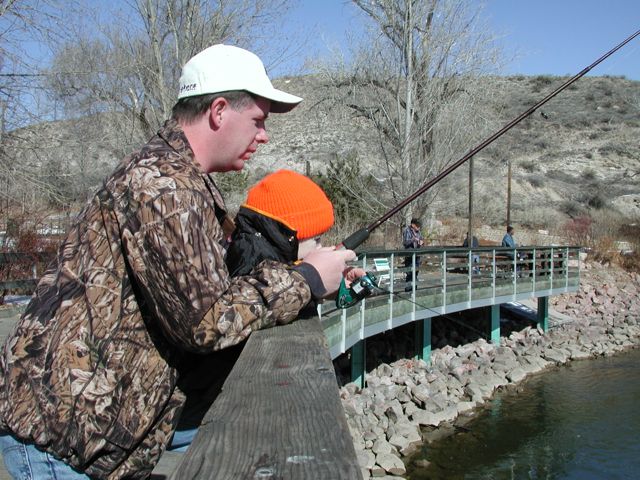
This fishing dock at the Pueblo Nature Center was funded by a grant developed by the collaborative planning group.

One of the great benefits of a collaborative effort is the opportunity to develop partnerships and package services together to create more holistic experiences. Lodging, food, transportation and attractions like zoos, museums, aquariums and nature centers can create experiences that might appeal to visitors more than figuring out the logistics piece-meal.

A collaborative planning group could also work on a collaborative interpretive plan that unites the community or multiple partners behind a central message and community experiences. Too often we work alone when we could be working together with community stakeholders who might all gain from working together.

Some group or individual has to be the catalyst. Invite your logical collaborators to a meal and meeting. Bring them together around a chance to work on a challenge or grant together. Success in this effort is intoxicating. Once you land money or do a project together, you will most certainly want to do more.

-Tim Merriman

Mto wa Mbu, A Great Cultural Tour in Tanzania

mto5February 5 to 16, 2013, we’ll be in Tanzania to host a photo safari/ecotour with World Discovery Safaris and Safari Legacy. One of my favorite stops on this particular itinerary is Mto wa Mbu, near the entrance to Lake Manyara National Park.

Mto wa Mbu (which translates to Mosquito River) is a community in central Tanzania with a unique Cultural Tourism Programme. This agricultural community includes representatives from more than 120 tribes who moved into the area to take advantage of the opportunities provided by an irrigation project in the 1950s. In 1995, SNV – The Netherlands Dutch Development Organisation assisted the Tanzania Tourism Board in developing programs to provide benefits to local people. The community was involved in planning the tours to be offered and they manage the tours.

On a previous tour of Tanzania, we took part in one of these tours and found a well-designed experience that began with a slow meander through the community marketplace where local women sit at wooden tables heaped with dried fish, fresh fruits, vegetables, chickens, eggs, clothing and household goods.

mto2Next we visited the home of a Chaga family who brews banana beer. There we learned the unique story of how this special brew is key in marriage negotiations and friendships. It is 1 to 2% alcohol and must be drunk “green” when it is one to two days old, because it goes bad quickly. We passed a mug of beer to share among our fellow travelers and the pleasant taste was unique, unlike any beer I’ve ever tasted.

We then walked to an open-air shop where our guide explained that woodcarvers are taught to create three-dimensional pieces that represent people from different tribes working and living together in harmony. The effort required by these complex carvings helps the craftsmen to hone their skills before carving simpler items offered in most sales outlets. Visitors can purchase the work direct from the woodcarvers working on site if desired. We also visited a cooperative where local artists demonstrated the traditional Tinga Tinga style of painting. Finally, our guide led us down a trail through a banana farm to learn about the many varieties grown for beer brewing, eating, and cooking as vegetables.

The tour of the farm ended in an outdoor shelter with local women preparing traditional dishes over open fires. When the food was ready mto1they interpreted each food dish before we served ourselves buffet style. We had white rice, brown rice with beef, okra, spinach, spicy beef in oil, eggplant, potatoes with cardamom and cinnamon, and pork ribs. The food was delicious, washed down with a cold soft drink or the local Tusker beer.

Our upcoming tour will allow us to visit at least three cultural communities and five national parks and conservation areas. We have just a few seats left for this tour at the height of the wildlife migration season in the Serengeti. If you have the time, desire and funds to take part, please join us for the trip of a lifetime.


Download the Tanzania Tour PDF Itinerary – Feb. 2013 12-Day Tanzania Safari – Questions – 970-231-0537 or tim@heartfeltassociates.com

– Tim Merriman

Interpret Your Town or City: What Makes It Special

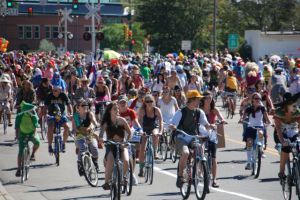
Bicycle events like New Belgium Beer's Tour de Fat are signature community outings and enjoyed by people of all ages.
Bicycle events like New Belgium Beer’s Tour de Fat are signature community outings and enjoyed by people of all ages.

We live in Fort Collins, Colorado, a very nice city of 100,000 or so people located at the edge of the foothills of the Rocky Mountains. Money Magazine recently named it the best place in America to live. Through the years it has earned a great deal of praise as a lifestyle city. And it is true that it is a pleasant place to live with great weather, beautiful bike trails, Old Town shopping and restaurants, many breweries and Colorado State University.

When you visit Fort Collins’ official tourism website it reads “Adventure Casual, and So Much More.” I don’t know what that means. I have worn no formal clothes on any adventure in my life. They have all been casual. Certainly casual clothing is the norm in Fort Collins. I don’t know how that tagline distinguishes the community in any way.

Cities like to declare themselves the capital of something. Austin is the “Live Music Capital of the World.” It does make a statement that is true. They have lots of live music venues, including Austin City Limits, a TV show held in great esteem. The Austin tourism website adds “What You Hear is True: Austin Always Dazzles.” Like “Adventure Casual,” it sounds good.  But I’m not sure it really means anything. I still like “Keep Austin Weird.” That’s a lot more interesting as a tagline and describes the eclectic mix of lifestyles that makes Austin such a unique place to live and work. Las Vegas brags, “What Happens in Vegas, Stays in Vegas.” I think that works in that it identifies Las Vegas as an adult playground. But some years ago when Las Vegas wanted to rebrand itself as a family destination, it found the tagline didn’t work in its favor.

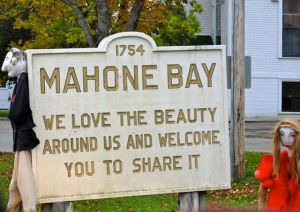
Mahone Bay in Nova Scotia has a welcome sign that tells us what matters to them.

City websites invariably give information about places to stay, eat, and visit, but unfortunately, many feel that is enough. Convention and Visitor Bureau websites sometimes take a stab at a brand or tagline to attempt to connect with a potential visitor. But most fail to say much about the real character of the place. Carmel by the Sea indicates it is a “world-renowned destination” with the sophistication of San Francisco and the glamour of Hollywood nestled into one of the most beautiful landscapes in the world. That gives some idea of what is there, but mostly it compares itself to somewhere else.

Instead of relying on weak taglines or simple information, communities could tie into their real attributes and history and the deeper meaning of being in that unique place to begin a lasting relationship with residents and visitors alike.

Brain research indicates that we create memories around experiences that touch our emotions. It is not information that tantalizes us. We make memories out of experiences that include information, but it was not the information that attracted us. We go to new places for romance, adventure, relaxation, inspiration and many other intangible reasons. Our memories are complex mixtures of the facts and the happenings. I won’t return to Paris or Amsterdam because they have more museums, restaurants and gardens than anywhere else, even though they do. Those are useful facts about the cities, but my memories of those places are less tangible and more romantic.

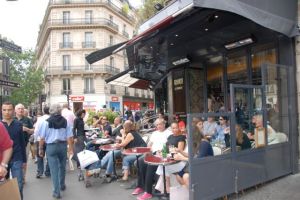
The charm and romance of Paris is on the streets, in the cafes, not easily portrayed with facts.

Crafting websites and taglines that actually interpret a place and begin building some understanding of what makes the place unique takes thoughtful planning that goes beyond catchy branding. You can interpret your community in a more enduring way by tying the image, tagline, website, and promotional materials to the real sense of place, the experiences, the emotions evoked.

I still love Fort Collins, but “adventure casual” would never be in my description when I tell someone else what makes this a great place to live. This community is a place to ride a bike along the river and enjoy a beer at a brewpub in Old Town or take friends from out of town on the New Belgium tour. I don’t think of life here as an adventure so much as a healthy relationship with nature that manifests in a largely outdoor lifestyle.

If your community needs an interpretive plan to help tie the local stories together into a central message or theme, we can help. It’s worth the effort . . . and better than a recycled tagline.

– Tim Merriman

Teach a Child to Give

Giving is a behavior that children learn from parents and role models. Giving gifts is one of the traditions built into our winter holidays. Some give toys, clothes and games to their kids. Some give their kids money. There are some other opportunities in this season that might be good to think about.

We can certainly give our kids some of the things they want and will enjoy. We could also add an amount of money that will be given to charities and involve the youngsters in making the decision about where to donate it. You might even let them deliver the check or enter the credit card information on a website and be directly involved in the transaction. Or it could be as simple as handing them change or currency at the grocery store to put in the familiar red buckets of the Salvation Army.

We could also look for that volunteer opportunity at a church or a community charity that delivers gifts to others. We could help prepare a meal shared with others who would not have it otherwise. We could go shopping for toys with our kids that they will turn around and donate to a holiday program that gives toys to kids not getting a holiday gift.

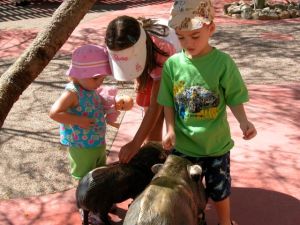
javelinaZoos, museums, nature centers, aquariums, and historic sites can create a holiday program that invites young people to contribute small items or small amounts of money. The Arizona Sonoran Desert Museum has a bronze javelina piggy bank on the entry plaza to their facilities, an obvious way to get kids to ask mom and dad for coins to drop into this familiar savings icon. Think about what you might do around these holidays so heavily built on gifts that shift the message from “What do I get?” to “What can I give?”

Recent events at a school in Connecticut and a theater in Colorado remind us of how fragile life is. Young people are barraged with messages that are all about getting more things. Many of us actually do not need more things as much as we need to reconnect with the value of helping others. In this holiday season, perhaps we can all look for that chance to help someone else. The gift we receive is one of understanding that the best “things” in life are not “things.”

Family, love, and sharing special moments with our children or friends is a gift. We transcend the meaning of giving ourselves when we teach our children to give. They will have a greater appreciation for and understanding of what is really important in life if they learn to give of themselves. And it could start this holiday season.

Happy Holidays to all of you. We hope you have a chance to give something special to your children, the gift of giving. It’s a gift that lasts a lifetime.

Lisa Brochu and Tim Merriman

Join Us On Safari Feb. 5-16 to Tanzania

An African elephant female cares for her youngster for years.

If a safari in Africa is on your bucket list, there will never be a better time than now to visit the Serengeti in Tanzania. A proposal to build a highway across this pristine plain could threaten the wildlife migrations of the future. We hope it will not be built but too often this kind of “progress” gets in the way of protection of great parks and the resources they contain.

February 5 to 16 is very special timing for visiting Tanzania because that is when more than a million animals migrate from the Serengeti to the Maasai Mara in Kenya. Hundreds of thousands of female wildebeests drop their young within a two or three day period in February. This is a protective synchronous birthing that puts so many young on the ground in a short period that predators cannot greatly hurt the population. However, lions, leopards, cheetah and hyena are abundant and visible along the way taking advantage of easy hunting as long as it lasts.

Download the PDF Itinerary – Feb. 2013 12-Day Tanzania Safari – Questions – 970-231-0537 or tim@heartfeltassociates.com

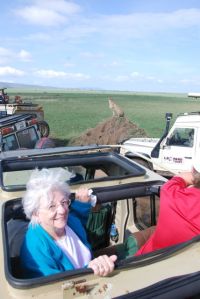
tanzaniaThe last time we were in Tanzania we watched a cheetah anticipating an easy meal when an unsuspecting baby Tompson’s gazelle began slowly wandering directly toward the waiting cat. We watched with trepidation for the gazelle and hopes for the cat finding a meal at the same time. When the gazelle, only a few days old, was just ten yards or so from the adult cheetah, the cat vaulted toward it and the chase was on. The cat would zig and zag as the gazelle changed directions, but in less than twenty seconds the small, but lightning fast prey animal took just one more sudden shift in direction and the cat was left far behind, still hungry. Even at two or three days old this gazelle was well-equipped to evade one of the most talented hunters on the Serengeti. I confess we all cheered when the gazelle escaped, though we hoped the cheetah would be more successful in the future.

This trip is appropriate for all ages from 12 and older.

Our 2013 ten-day journey across Tanzania begins on arrival in Arusha. We head immediately into Tarangire National Park, to find giraffes, baboons, zebras, and large numbers of elephants among giant baobab trees along with lions, leopards, and cheetahs. Just when you think it can’t get any better, it does, as we take a walk in Mto wa Mbu (Mosquito Creek) for a cultural tour through this town that has members of almost all of the 119 tribes of Tanzania. We drink banana beer, visit the local market, chat with artists and wood carvers and end up with a wonderful lunch prepared by local women. Then we’re off to Lake Manyara and a chance to see massed flamingos, hippos, elephants and possibly the tree-climbing lions of the area. Baboons, monkeys, eagles and colorful birds are abundant along the way.

The next couple of days are spent in the Ngorogoro Crater Wildlife Preserve and surrounding Maasai villages. The crater has rare black rhinos, lots of hyenas, lions, elephants, bustards, ostriches and jackals, all easily seen with opportunities for the photographs of a lifetime. A visit to a Maasai village gives you a unique understanding of the more than half million people who still live as herders of cattle and goats in the plains of Tanzania and Kenya.

We leave Ngorogoro and stop at Olduvai Gorge where Mary and Louis Leakey made amazing discoveries of extinct hominids. If you have heard of the origins of modern man traced to eastern Africa, here you get to see where hominid footprints were found and some of the oldest skulls and skeletons of man’s relatives were uncovered.

The zebra and wildebeest migration in the Serengeti is amazing.

Perhaps the highlight of the trip is the tent camp in Serengeti National Park. Each of the previous game drives will already have been incredibly rich, but here the wildlife show will make you feel as though you’ve stepped right into the pages of a National Geographic magazine spread. Hundreds of thousands of animals will be on the move. Your camera lens will be filled with zebras and wildebeest interspersed with large herds of Tompson’s and Grant’s gazelles. Big cats of all the kinds found in Africa are abundant here and easy to find. Our skilled guides from Safari Legacy have been taking people to see these incredible wildlife migrations for decades, so although the open safari vehicles provide clear access to photographs with nothing between you and the animals, you can feel safe and secure (as long as you stay in the vehicle).

Tent camping in the Serengeti has all the romance you might imagine. Each tent has either a double or two single beds with comfortable mattresses, a hot shower, a toilet, a sink and a nice seating area with incomparable views. The camp area includes a large open-sided lounge area with a bar and comfortable couches. You spend evenings eating great food together around a long table in the lounge area and enjoying a Tusker beer or glass of wine. There is no TV or radio, so conversation is broken only by the sounds of wildlife as the animals wander past (or sometimes through) the camp.

Leopard with its young.

At $4,995 for the tour experience, your lodging, vehicles, guides, meals and entry fees to parks are completely covered. You pay additionally for the flight to Arusha, guide tips, any alcoholic beverages, and of course, souvenirs or extra services such as laundry. This is a safe, comfortable experience that gives unparalleled exposure to the wildlife and people of one of the most amazing places on the planet. Sadly, it is all changing and a journey of this quality may not be possible for much longer.

Join us – we already have enough signed up to go, but we do have a few open seats in this small group. We hope you will consider taking one or two of them by yourself, or with a friend or significant other. Though we can never promise exactly what will happen since spontaneity is what characterizes this unique experience, we can promise it will become one of your most treasured memories. Download the complete itinerary and registration information or call us if you have any questions at 970-231-0537. Download the Feb. 2013 12-Day Tanzania Safari.

Tim Merriman and Lisa Brochu

hipposP.S. We need your firm reservation by Dec. 31, 2012.

Where Do I Come From?

Interpretation of natural and cultural heritage often makes us wonder, “Where do I come from?”  Especially for Americans, Canadians, Australians and the many other countries that have been cultural melting pots, history beyond the past generation or two can seem very distant. Now, helping people learn about their deepest roots has never been so easy.

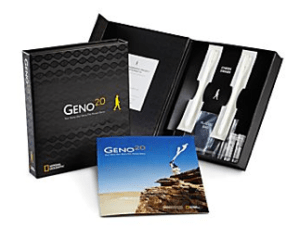
Screen Shot 2012-11-30 at 8.42.29 AMThe National Geographic Society has been working since 2005 on an amazing program, The Genographic Project (GP). Dr. Spencer Wells is the Harvard/Stanford educated population geneticist who directs this project. His research over two decades has taken him all over the world to collect genetic information from indigenous populations.  In 2005 the public was invited to send in their genetic information in the form of cheek cells and now more than 500,000 individuals are in the database.

I have done genealogical research into my own family roots and I lose my patrilineal line in Stewart County, Tennessee due to a courthouse that burned, destroying all records. I like tracking my recent ancestors, but this is not that kind of research. The GP does not track my individual genes back through recent ancestors. Ancestry.com offers some options for those interested in genetic testing of a more specific nature. This testing also does not check for medical markers used by 23andme.com to identify inherited diseases.

The Genographic Project 2.0 uses 150,000 genetic markers identified in the GP1.0. These markers identify specific gene sequences that map the route of migration your ancestors took over the past 200,000 years.  If you have ever wondered where you come from, you’ve had the answer inside you all along. Your genetic sequence includes markers from distant communities in which your ancestors lived in the past. You have your genetic footprints in the nucleus of every cell in your body.

The price of a Genographic 2.0 test kit is $199.95 and it will take you two months to get results. A simple swab of each of your inner cheeks collects cells, which contain the chromosomes needed for testing. You swab, push the swab tip into a tiny test tube they provide to preserve the cells, slip it all into a pre-addressed envelope and send it off to the lab in Houston. Six to eight weeks later you look up your assigned number and letter code on the Internet and get the results. We sent ours off this week and now must be patient as we wait to see where it all leads. Like many families in the U.S., we are very mixed in ethnic background and have heard that we might have some Native American ancestry. Do we really? I’ll find out through this.

Teachers can get a discount for using this program educationally and a special section of the Geno 2.0 website provides resources for the classroom. A portion of the fees for the test kit goes to the Genographic Legacy Fund that assists indigenous communities in a variety of ways, a feature that we like very much.

This is a non-profit program and the Frequently Asked Questions page of the website really fills in the blanks, if you wonder why this is useful and different from other forms of genetic testing. I’ll report back on what we learn on this journey into our genetic past. Just wish I had gotten the patience gene.

– Tim Merriman

When Being Third Place Is a Good Thing

An outdoor cafe, like this one in Tuscany, Italy, is a great place for local folks to gather daily.

When my dad was still living, I would visit him in my hometown, Vandalia, Illinois. I was amazed at how McDonalds by Interstate 70 had become the hangout for him and his buddies in the morning. I enjoyed going there with him for coffee and seeing his old friends of 70 years or more. Coffee was inexpensive, other food was available and the people he enjoyed would be there almost every day. The staff at McDonalds let folks linger as long as they wished and they stayed for hours at times. The hangout used to be a local café called Henry’s, but that was torn down to build another fast food outlet. Personally, I liked Henry’s better but the key ingredients for the Third Place are where people congregate, whether I care for the ambience or not. McDonalds had the right location with

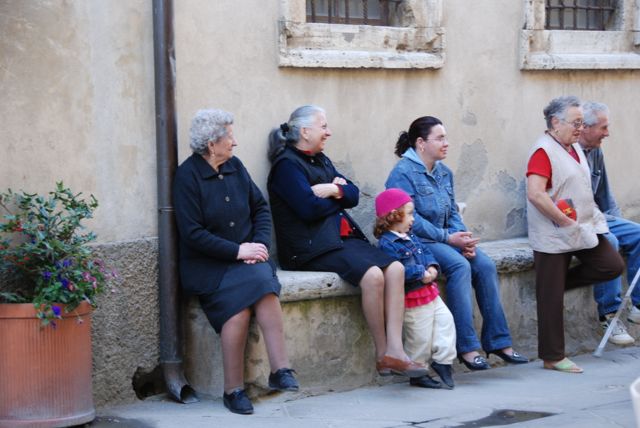
These streetside benches in San Quirico, Italy, serve well for neighbors to have a chat daily, while watching their children play soccer.

the essential ingredients, kind of like Floyd’s Barber Shop in Mayberry.

The Great Good Place by Ray Oldenburg (1989, 1991) suggests that “third places” are important in creating a community’s sense of place. They are hangouts of choice for locals. The home and business take the first two places, but many of us have favorite places we go that feel good due to their familiarity and social environment. Coffee shops, beauty shops, plazas and many other unique places can become near and dear to the hearts of local people. Oldenburg suggests that third places share these requisite traits:

▪   They are free or inexpensive.

▪   Food and drink, while not essential, are important.

▪   They are highly accessible, within walking distance for many.

▪   They have regulars – those who habitually congregate there.

▪   They are welcoming and comfortable.

▪   Both new friends and old should be found there.

The fishing deck at the Nature Center of Pueblo was easy access for kids and seniors and had picnic tables for folks to sit and watch or visit.

When I ran a nature center in Pueblo, Colorado, it had its regulars, folks who came to our waterfront each day on the Arkansas River, to sit on a bench or fish or chat at a picnic table. I was pleasantly surprised when we built a restaurant and it became even more important as a place for business lunches, coffee chats, and evening gatherings with nachos and beer. A restaurant is hard work and financially complicated, whether you run it or put it out on a contract. If I could go back in time, I would have built a very nice coffee and tea shop with snack foods. They make great “third places” or “third spaces” as some urban planners call them. We had the natural beauty that people wanted as a backdrop to their special place to relax. The beverage and food filled in that Maslowian basic need.

Tuscany in Italy and many other European communities have very popular plazas and outdoor cafes that serve as the Third Place. Sometimes it is just as simple as convenient places to sit in scenic spots convenient to local people.

Any community organization has its value as an attraction. You may operate a local destination for recreation or education, but are you the third place for people? Does your site have the kind of amenities that make it the place to go every morning or every evening or hang out on weekends? Member organizations often hope for this, but they sometimes lack that unique combination of qualities that makes it happen.

This seating area in the Natural History Museum at Colorado University is one of many developed as a Third Space for students to hangout, study and have a cup of coffee surrounded by interesting items from the museum collection.

I once visited a community that was building a bike trail system and doing major cleanup of molybdenum tailings. The downtown café that served as the “Third Place” for city councilmen, county commissioners and business people was used as the place to put up all of the concept drawings for the trails and amenities. They knew they had that special place locals loved, so they used it to increase local knowledge of their big plans. It seemed to work well and the café owner liked how the planning meetings and posted plan documents added to the attraction.

In bigger cities there are many such locations, some commercial businesses, some natural areas of great beauty, and some nonprofit centers with the right stuff. In some cases, the phenomenon occurs without any noticeable effort on the part of the host location. You may not be able to insure your place has that kind of appeal but you can plan to provide all the physical attributes that might help make

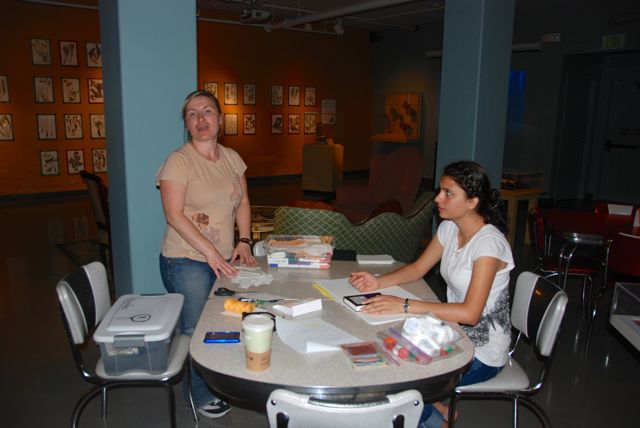
Tables at the museum in Boulder served as a great place for students to work on a group project, have a small meeting or just sit and chat while studying.

it happen. The Colorado University Natural History Museum deliberately created an “exhibit area” in their basement level that encouraged use as a third space by students and families. Once a few people had tried it, word got out, and the success of this exhibit has been measured by how people use it as a third place. It included free coffee and hot chocolate, comfortable seating, work tables, reading nooks, and constantly changing details in items being exhibited. By spending more effort on making a comfortable space and less on what facts could be recited after a visit, the museum increased overall attendance, exposing more students and families to natural history topics and piquing their interest for deeper involvement.

The museum also created nooks where parents and their kids could sit together and read a book.

People who value your space as their Third Place will be there when you need them as political advocates, donors or volunteers. They want to insure your organization survives and thrives because you are a part of their daily life and so have a place in their hearts.

If you need help in planning how to become that Third Place for your constituents, we would like to help. Let us know of your interest with a phone call or email.

–Tim Merriman

An Art Museum and So Much More

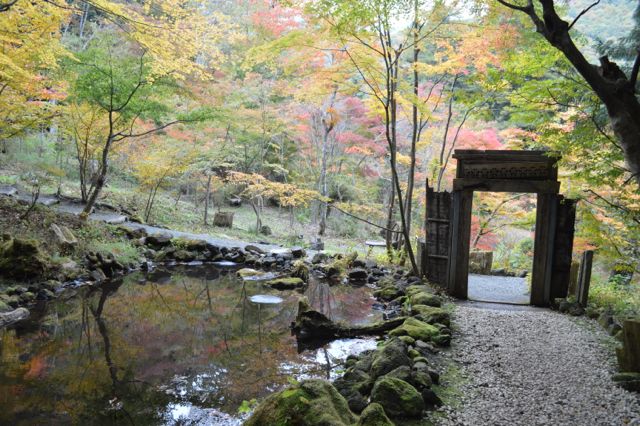
On a recent trip to Japan, we had the great fortune to visit the Itchiku Kubota Art Museum in the Yamanashi region near Mount Fuji. We had been out for a drive to enjoy the fall colors but when we turned up the road toward the museum parking area, everyone in the car gasped at the stunning scenery up the drive. Japanese maples, clothed in bright red leaves, lined the drive in such brilliance that it almost seemed unreal. If you were looking for a scene to illustrate the word “breathtaking,” this would be it.

The magic continued on entering the museum grounds. Like most Shinto shrines, a gate marks the entrance through which all must pass. At this museum, passing through the gate puts you directly into a natural forest setting with a stream and fern-filled grottoes lining the pathway to the building. Sculptures that double as seating provide places to sit and absorb the calm of the forest around you. Arriving at the museum door is not the jarring contrast often seen when architects build monuments to their own sense of style. Instead, the building seems to arise out of nature and encompass it, using natural materials that complement the surroundings. Limestone and thousand year old cedar trees form the basic structure of the building and walkways around it.

Inside, the facility contains a unique space in which to view a video about the life and work of the artist. Though I’m not usually a fan of videos in interpretive settings, this one intrigued me for the entire twenty minutes duration and helped me to better understand the art and the artist. Itchiku devoted his life to rediscovering and enhancing the ancient art of tsujigahana, a technique of tie-dying silk to produce subtle effects using color and texture. His work is nothing short of astounding. It is wearable textile art at its best, blending natural scenes evoking the landscapes of Japan with the grace and beauty of traditional kimono. The display inside the main room of the museum changes seasonally, but always features only Itchiku’s work. His vision for the kimono and the museum itself are what drove his designs and you can see his passion for the process and for the natural world in every nuance of both.

The museum includes a café and a tearoom, each of which is situated to take advantage of dramatic, yet serene natural views. The grounds include winding paths through the forest leading around and through streams, ponds, and a cave shrine. Walking about the museum and grounds, you have little sense of whether you are inside or outside. It’s a masterful expression of a central theme, reminding us that nature is both around us and within us – quieting the spirit is all that’s needed to feel the connection.

From a technical planning standpoint, this is the quintessential example of design balance – where interpretive media, architecture, and the site itself are juxtaposed in perfect harmony. From a tourism viewpoint, this is the only must-see art museum I’ve ever seen.

Exiting the building affords the opportunity to pass through the gift shop where a reminder of the experience can be purchased. For me, the memory of this place will always reside in a blood-red maple leaf, and the cool blues of the sky that surrounds Mount Fuji forever captured on a kimono so beautiful it brings tears to the eyes – reminders that nature lives in all of us, whether we choose to live in harmony with nature or not. The connection is inescapable.

– Lisa Brochu

Fall Festival at the Foot of Mount Fuji

We recently returned from speaking engagements in Korea and a visit with Masa Shintani and his family in Fujinomiya, Japan. Our friends lived in the town of Shibakawa until 2010 when it was incorporated into Fujinomiya, a city of about 130,000. Since 1942 this city has grown from the merging of several very old small towns at the foot of Mount Fuji, or Fuji-san as many refer to this sacred spot.

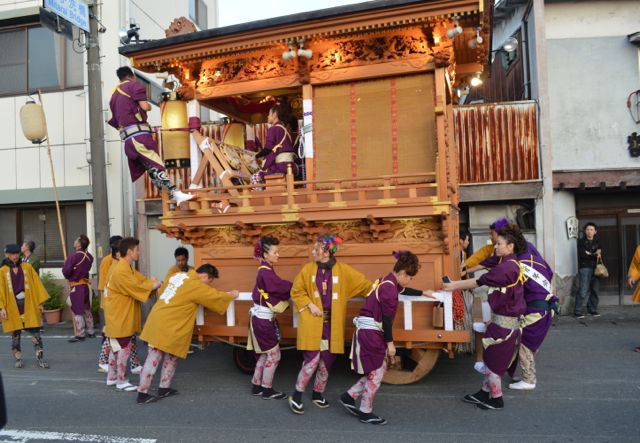
We were fortunate to be there during the Fall Festival, an annual event that brings about 20 of the distinct communities within the city together in a unique manner. As we walked toward the Shinto Shrine, the Fujisan Hongu Sengen Taisha, which serves as the center of the event, we encountered the first “dashi,” a kind of heritage float.

Dashis are about 9 feet wide by 12 to 15 feet long and ten to 12 feet high. They are made from wood and roll on steel-rimmed wooden wheels. Elaborate wood carvings adorned the dashi and a team of people dressed in traditional garb push and pull the dashi down the street using ropes and five-inch diameter tree limbs about four feet long for steering. Making turns requires a choreographed effort

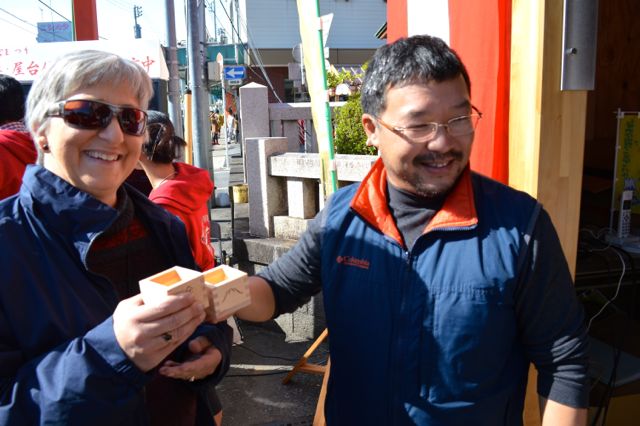
Lisa and Masa share a sake toast at the festival.

that involves pivoting the entire dashi atop a wooden platform jack. A front porch on the dashi rises about six feet above the street with three taiko drums mounted on the platform with space behind them for drummers and other musicians. This first one we saw was just making its way toward the shrine. By the end of the day, twenty dashi would be lining the streets.

We walked on to the shrine and found a hundred or more food and game booths on each side of several streets that converge on the shrine. Hundreds of people were there by 11 AM and there would be thousands by sunset. We stopped first to sample the sake in the administrative booth, which makes a donation to the event at the same time. Sake is served in small square cedar boxes, which gives it a distinctive woody flavor and scent.

We stopped first at the shrine to do a traditional prayer. That requires a small donation to the shrine tossed into a wooden altar followed by two bows, two hand claps, make a wish, and one more clap of the hands. We learned that it’s important that the wish be for someone other than yourself, which seemed entirely reasonable.

People gather at the Shinto Shrine to make a prayer.

After enjoying a light street food snack of chicken teriyaki on a stick, French fries, potato sticks, cotton candy and Asahi beer (shared between five people), we had a more substantial lunch of udon noodles and tempura at a local noodle house. It sounds like too much mismatched food and that’s accurate, but we enjoyed it as you would at any fair or festival.

By 4 PM the twenty dashis and their push/pull teams lined up on the streets right in front of the shrine in pairs, facing each other. After a meeting with the judge of their competition each team began beating drums, playing flutes and banging brass cymbals. They each rolled forward towards the other, until the frames of the dashis were almost touching, with musicians hanging off the front, glaring at each other while trying to put their opponents off beat. The battle of the bands continued for about eight minutes. Finally they rolled back 30 or 40 feet to catch their breath and then they charged each other again for another couple of minutes of close competition. This all included lots of enthusiastic noise from the push/pull teams who must be both reckless and careful to push and pull the dashis to get them rolling and then stop them when faces are just inches apart. Finally they rolled back for the judging, conducted by a team of observers, and the head judge announced a winner. Each team competes with all the other teams before the night is done. We witnessed two battles, each with judgments of a tie and expected some disagreements but the decisions seemed to please everyone as the team captains showed their respect to each other and toasted with sake in the center of the street.

Then the bon dancing began. Both teams and their community representatives gathered in long oval circles between the dashis. Music floated out of one of the dashis and they all danced in a coordinated manner with elaborate foot and hand gestures that had obviously been practiced with great care. Older women in matching kimonos would be a part of each line along with the men and women in matching team outfits as well. Children in similar outfits formed an inner circle and did their own variations of the dances.

It was incredibly fun and went on for five hours for three evenings, November 3rd, 4th and 5thwith the dashis being moved between bouts to take on a new foe. I suspect this is all highly coordinated by the festival committee, but it seemed liked slightly organized chaos at times. A gentleman in his 70s

Bon dancing is for people of all ages.

invited me into the bon dance and I gave it a try, proving I cannot learn any new dance in five minutes, but it elicited lots of smiles and handshakes nonetheless. It was fun.

Lisa and I went down a side alley of food services and enjoyed delicious pork stuffed buns with some cold green tea to cap off the evening. The festival was memorable in sights, sounds, smells, tastes and movement. All of our senses were a part of the feast. Our friends were with us through the day and evening so it was a special event in every way.

Traditions like the Fujinomiya Fall Festival are unforgettable, like the Fiesta de San Fermines and running in front of the bulls in Pamplona every July. They define the “brand” of the community and mark the passing seasons. If you get to Japan in November, don’t miss this one. Wear your dancing shoes and don’t eat before you get there. Take a camera. It’s a feast in every way.

– Tim Merriman

Enjoyable or Engaging?

One of the most commonly quoted characteristics of interpretation is “enjoyable.” Sam Ham was one of the first to mention this term as a trait of what he calls the “interpretive approach to communication.” This makes sense to me – after all, if people are in a leisure setting and have chosen to be there, they can just as easily choose not to be there if they are not enjoying the experience. But I believe there is a subtlety that some interpreters may miss if they focus on the usual connotation of the word “enjoyable.” Webster defines it as “giving delight or pleasure” and I’m not sure that’s entirely what Sam Ham and others mean when they use the term related to interpretation.

Certainly, there are topics and places to be interpreted that are not delightful or pleasurable . . . stories of war, genocide, destruction of homes and property by fires or floods caused by human carelessness or natural events are just a few examples of important stories that can or should be interpreted at an appropriate place and time for the appropriate audience. But one would be hard pressed to call immersion in such stories “enjoyable.”

Recently, I’ve spent time in two such places – the Anne Frank House in Amsterdam and the Kigali Memorial Centre in Rwanda. These museums have horrific, but important, stories to share. They both do it masterfully. And while I can’t say I enjoyed the experience at either location, I was completely engaged at both places. The stories and the compelling ways in which they were told, using a variety of media that was often simultaneously subtle and dramatically direct, were gripping. I’ve been haunted by both ever since, stimulated to learn more about the circumstances and the people involved. This is interpretation at its finest, engaging the audience in ways that keep the message (in this case, remarkably similar in both places) in the forefront of the minds and hearts of those who go through the interpretive experience.

There’s nothing wrong with using the term “enjoyable,” as long as interpreters and interpretive planners understand that the term encompasses more emotions than pleasure and delight. “Enjoyable” speaks to getting the right side of the brain involved in the experience to provide the necessary context for information to land and stimulate further thought or action. At least, that’s the way I’ve always thought of the term, but I’m aware that for some more literal-minded folks, the use of the term “enjoyable” locks them into feeling they must leave their audiences smiling rather than feeling whatever the audience chooses to feel. I’ve heard planners suggest that there must be a big “wow” factor that involves either an awesome building or some sort of expensive, high-tech media to light people up. Interpreters sometimes turn even the most serious of subjects into a series of slick comments and double-entendres designed to lighten the mood. While these may be the best approaches in some cases, they should not be relied on to substitute for finding more engaging ways to share the substance of great stories.

For that reason, “engaging” is the term we use in our HEART planning model for communities, businesses, and interpretive sites to emphasize the importance of developing appropriate communication strategies that accomplish stated objectives. To learn more about the HEART model and how it can be used to engage people in the stories of your community, business or interpretive site, we hope you’ll enjoy our recently published book, “Put the HEART Back into your Community: Unifying Diverse Interests around a Central Theme.”

– Lisa Brochu